Trump's Declaration on Strait of Hormuz Raises Market Concerns Over Middle East Stability
Trump’s plan to claim the Strait of Hormuz as U.S. territory escalates geopolitical tensions, impacting energy sectors and trading volumes on Wall Street.
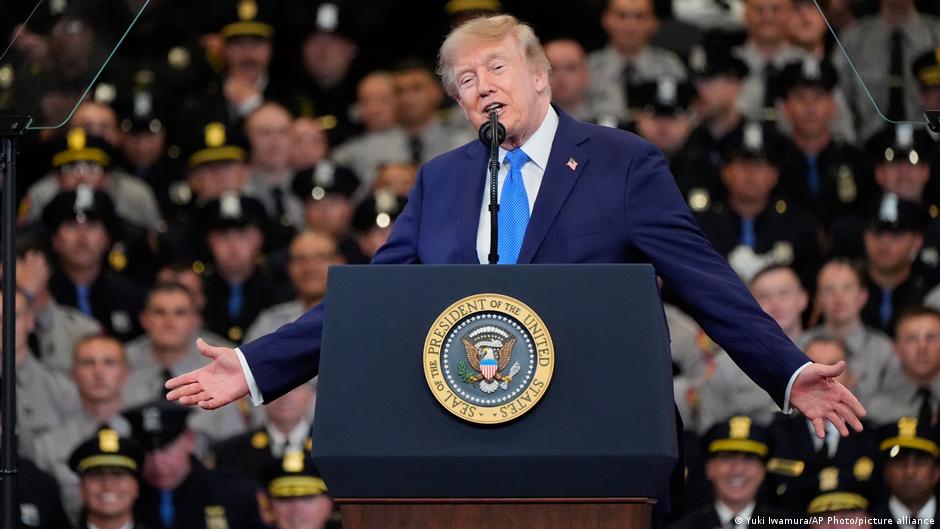
U.S. President Donald Trump announced plans to declare the Strait of Hormuz as American territory following what he described as a final victory over Iran. This provocative statement, made during a speech at a New York police academy, signals potential indefinite U.S. military deployment in the strategically vital waterway that serves as a critical chokepoint for global oil shipments.
Market Repercussions of Heightened Middle East Tensions
The Strait of Hormuz, connecting the Persian Gulf with the Gulf of Oman and the Arabian Sea, is a transit route for roughly 20% of the world’s oil supply. Disruptions or claims of sovereignty over this passage often provoke volatility in energy markets. Trump’s declaration has intensified concerns over supply stability, prompting sharp reactions in energy stocks and influencing broader sector rotations on Wall Street.
The announcement coincides with ongoing U.S.-Iran tensions and recent maritime confrontations in the region. Iran denies U.S. control over the strait, stating it maintains its own blockade efforts amid the broader conflict and sanctions dispute. These developments have pressured oil prices upward, with energy ETFs and oil exploration companies seeing increased trading volumes as investors reposition portfolios to hedge geopolitical risk.
“The U.S. assertion of control over the Strait of Hormuz suggests a prolonged military presence, which could reshape risk assessments for both energy markets and defense sectors,” said an equity analyst specializing in geopolitical risk.
Sector rotation has emerged as investors move away from traditionally safer assets toward energy and defense stocks, anticipating government contracts and supply disruptions. Meanwhile, equities in consumer discretionary sectors have experienced pullbacks, reflecting worries about potential economic slowdowns linked to energy price shocks.
President Trump’s earlier comments about U.S. ambitions regarding Greenland, the Panama Canal, and Venezuela as a “51st state” illustrate a broader strategy of expanding American strategic control, which may influence investor sentiment and equity research outlooks.
Trading volumes in energy-related equities have surged, particularly in firms involved in oil extraction and pipeline infrastructure, as the market prices in the heightened risk of maritime blockades and sanctions enforcement. Analysts recommend a cautious approach, highlighting volatility-driven opportunities amid uncertain geopolitical conditions.
In conclusion, Trump’s territorial claim over the Strait of Hormuz marks a significant escalation with direct implications for global energy markets and Wall Street trading dynamics. Investors should monitor developments closely, as prolonged tensions could reshape sector leadership and influence equity valuations.