Trump Orders Democratic Party Probe as Wall Street Weighs Policy Risk
The post-election confrontation puts policy-sensitive stocks and sector rotation in focus as investors assess renewed political uncertainty.
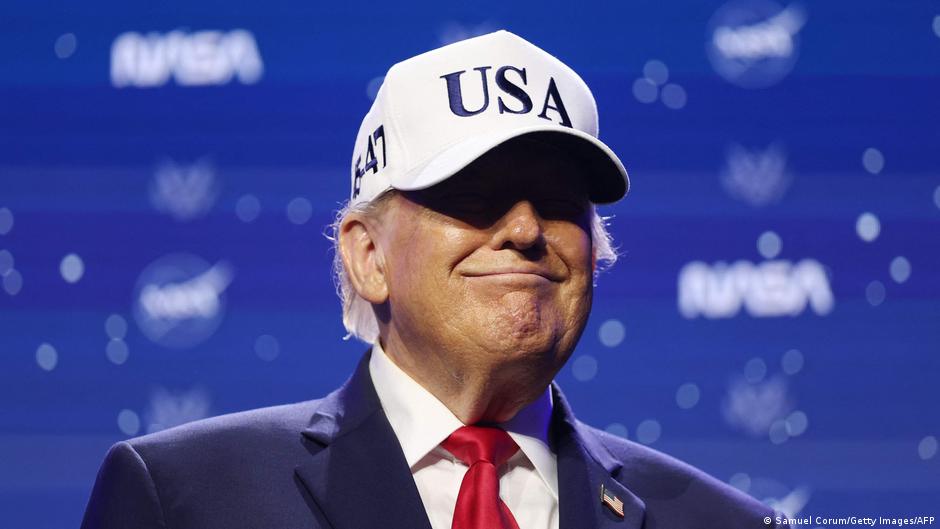
President Donald Trump has directed the US Justice Department to investigate members of the Democratic Party, accusing them of “blackmail” and pressure against the attorney general and other officials following the Democrats’ victory in the congressional midterm elections.
Trump announced the order on Saturday, November 7, through his Truth Social account. He said Democrats were threatening the US attorney general and other officials with impeachment and additional punishment without having grounds to take such steps.
“This is blackmail at the highest level, and they must be punished,” Trump said.
The move introduces a new layer of political risk for Wall Street after an election that shifted control of both chambers of Congress to the Democrats. For equity investors, the immediate issue is not a confirmed change in corporate fundamentals but the possibility that investigations, impeachment proceedings and a divided policymaking environment could affect sentiment, legislative priorities and trading activity in sectors exposed to Washington.
Policy-sensitive stocks move onto the watchlist
No specific stock-price moves or trading-volume figures were reported in connection with Trump’s announcement. Still, the confrontation gives investors a defined set of policy-sensitive areas to monitor. Defense contractors could draw attention because Republican Representative Thomas Massie of Kentucky, a Trump critic, said he wants to bring the impeachment of Defense Secretary Pete Hegseth to a vote.
Companies with substantial federal contracts may also face closer scrutiny if congressional investigations expand. Some Democrats have said they intend to initiate congressional inquiries into alleged abuses of power by Trump-appointed officials, including members of the president’s family. Such investigations do not by themselves establish wrongdoing or directly alter company earnings, but they can create headline risk for businesses tied closely to government procurement, regulation or politically contested projects.
Immigration-sensitive industries are another potential focus. Trump appointed Stephen Miller as White House chief of staff on the eve of his announcement. Miller supports restrictive immigration policies and a hard-line national-conservative agenda. Reuters described the appointment as a measure perceived as a challenge to Democrats.
For market participants, the appointment may sharpen debate around labor availability and compliance costs in industries that depend heavily on immigrant workers. That could keep agriculture, construction, hospitality and other labor-intensive sectors in view, although the source material reported no new policy measures or direct corporate impacts stemming from Miller’s appointment.
Sector rotation hinges on the path of investigations
The market implications will depend on whether the dispute remains largely rhetorical or develops into formal proceedings that consume congressional and executive attention. A prolonged confrontation could encourage rotation away from companies with high exposure to uncertain federal policy and toward businesses seen as less dependent on legislative outcomes. Conversely, any evidence that the administration and Congress can cooperate could limit the political-risk premium attached to US equities.
Contradictions inside the White House have intensified since the Republicans’ election defeat, Reuters reported. The prospect of pressure from both Democrats and Republican critics complicates the outlook for investors attempting to map the administration’s policy agenda. In equity research, this environment typically makes scenario analysis more useful than a single political forecast: analysts can examine earnings sensitivity to delayed legislation, tighter oversight or changes in agency leadership without assuming that any one outcome is certain.
Trump has also alleged that Democratic Party members are threatening Republican donors with prison terms because of their political views. He further accused Michigan Senator Elissa Slotkin of planning to prosecute young Americans for supporting the Republican Party. The source article provided no independent substantiation for those allegations.
For financial and technology companies involved in political fundraising, communications or online platforms, escalating claims about donors and political affiliation may increase reputational and regulatory attention. However, no companies were named, and there was no reported evidence of an immediate effect on earnings estimates, share prices or trading volumes.
Election acceptance offers a counterweight
Despite the escalation, Trump publicly acknowledged the election results after the Democrats’ decisive midterm victory. Some Democrats had feared he would challenge the outcome and attempt to overturn it, as he did following his defeat in the 2020 presidential election, Reuters reported.
Trump also said he was prepared to work with Democrats, who secured majorities in both the House of Representatives and the Senate. That pledge provides a potential counterweight to the investigation order and impeachment threats. Investors will be watching whether cooperation emerges on fiscal policy and other legislation or whether oversight battles dominate the agenda.
Trading desks may therefore focus on changes in volume and volatility around concrete developments rather than political statements alone. Key signals would include the opening of formal Justice Department cases, the scheduling of an impeachment vote, the launch of congressional investigations or evidence of bipartisan legislative negotiations. Until those events occur, the equity-market impact remains primarily a question of headline risk, sector positioning and confidence in Washington’s ability to govern.