Israel Coalition Mandate Puts Defense and Tech Stocks on Wall Street Watch
Gadi Eisenkot’s coalition bid introduces a new political catalyst for Israeli equities, although no market or trading-volume data were reported.
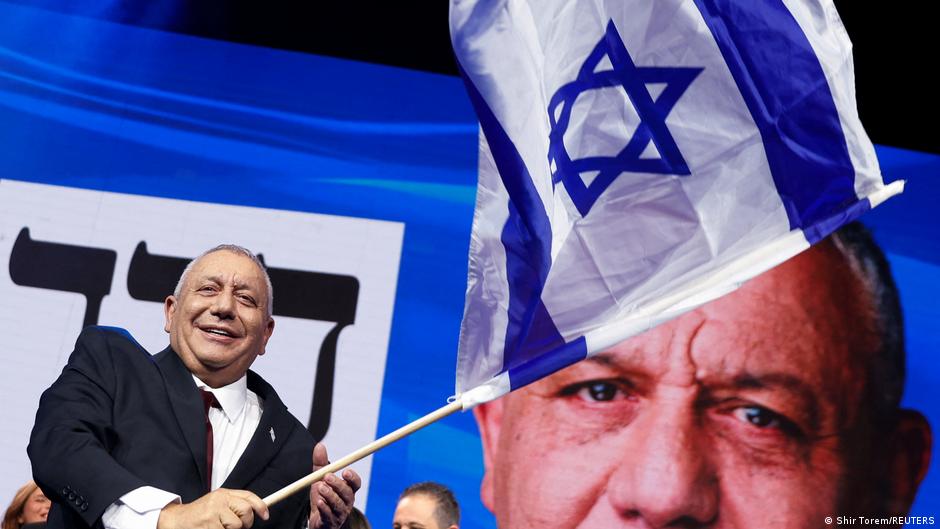
Israeli President Isaac Herzog will ask opposition leader Gadi Eisenkot to form a government following the country’s October 27 parliamentary election, opening a potentially consequential period for Israeli equities and US-listed companies with significant exposure to the country.
Herzog’s office said on Saturday, November 7, that the president would formally give Eisenkot the mandate at the presidential residence in Jerusalem on the evening of Sunday, November 8. The leader of the opposition Yashad party will then have 28 days to assemble a governing coalition. Herzog may grant an additional 14 days if necessary.
The mandate does not automatically make Eisenkot prime minister. If he cannot form a government within the allotted period, the opportunity could pass to another politician, including Benjamin Netanyahu, leader of the governing Likud party. Failure by a second candidate could lead to another election, extending political uncertainty and its potential risk premium for Israeli assets.
The immediate equity-market issue is not the mandate itself, but whether Eisenkot can build a durable coalition and reduce the prospect of another election.
Coalition arithmetic becomes the central market catalyst
Herzog made his decision after consultations with political figures and party leaders about their preferred candidate for prime minister. Eisenkot received 67 recommendations, compared with 46 for Netanyahu, according to The Times of Israel.
No political force secured the 61 Knesset seats required for a majority. The governing far-right coalition led by Likud lost its majority and obtained 53 seats, while the four-party alliance headed by Eisenkot’s Yashad holds 48. The decisive votes may therefore belong to two Arab parties, which together secured a record 19 seats.
Eisenkot has previously rejected an alliance with Arab parties, making their possible support the key uncertainty in coalition negotiations. Netanyahu earlier called for a national-unity government intended to prevent parties representing Israel’s Arab citizens, who have citizenship and voting rights, from participating in government.
For Wall Street investors, the negotiations create a binary political event rather than a confirmed change in economic policy. The source material reported no share-price moves, turnover figures or changes in analyst estimates. Any assessment of sector rotation or trading-volume effects must therefore remain prospective until the coalition’s composition and policy platform become clearer.
Defense, cybersecurity and Israeli listings enter the watchlist
US-traded Israeli companies likely to attract event-driven attention include Teva Pharmaceutical Industries, Check Point Software Technologies, CyberArk Software and Elbit Systems. The political development does not establish a direct earnings impact for any of those companies, but it may influence investor perceptions of country risk, fiscal priorities, security policy and relations with Western governments.
Defense contractor Elbit Systems is the most direct security-policy watch among those names. Cybersecurity companies such as Check Point and CyberArk could also see heightened investor scrutiny if coalition talks alter expectations for regional risk or government security spending. Teva offers a different exposure: as a large Israeli issuer in a defensive healthcare sector, it may be viewed separately from more politically sensitive defense and technology shares.
Investors may consequently watch for rotation between defense and cybersecurity stocks, domestically exposed Israeli companies, and globally diversified technology or healthcare issuers. However, no evidence of such rotation, unusual trading volumes or fund flows was included in the source report. An equity-research view at this stage would reasonably treat the mandate as a political-risk catalyst, not yet as a basis for revising company forecasts.
Eisenkot’s record shapes policy expectations
Eisenkot, a former chief of staff of the Israel Defense Forces, entered politics in 2022. After the Hamas attack on Israel, he temporarily joined Netanyahu’s war cabinet before returning to the opposition. He has sharply criticized Netanyahu’s governing style and the conduct of the military operation in the Gaza Strip.
He has also condemned violence by Israeli settlers against Palestinians in the occupied West Bank. Eisenkot argues that such violence contributed to strained relations between Israel and Western countries. That position could become relevant to investors monitoring diplomatic pressure, trade relationships and the broader international risk attached to Israeli securities.
Eisenkot’s political standing is shaped by both his military background and personal loss. His 25-year-old son was killed in fighting in Gaza in December 2023, followed by the deaths of two nephews. One of his principal campaign promises was to establish an independent state commission to investigate the security failures of October 7, 2023.
He is also associated with the Israeli military strategy known as the Dahiya doctrine. It calls for an asymmetric and disproportionately large response to security threats, including the destruction of civilian infrastructure in areas used by an adversary to fire on Israel. Eisenkot applied the doctrine against Hezbollah in Lebanon during the 2006 war.
The near-term market focus will remain on whether Eisenkot can reconcile his previous refusal to partner with Arab parties with the parliamentary arithmetic required for a majority. A workable coalition could reduce the immediate probability of another election, while failure would return attention to Netanyahu or a renewed national vote. Until those outcomes become clearer, political headlines rather than reported changes in corporate fundamentals are likely to define the Israeli equity risk debate.