Kyiv Power Crisis Puts Energy and Defense Stocks on Investor Watch
Ukraine’s leadership dispute over infrastructure failures highlights persistent risks for utilities, defense contractors and regional assets.
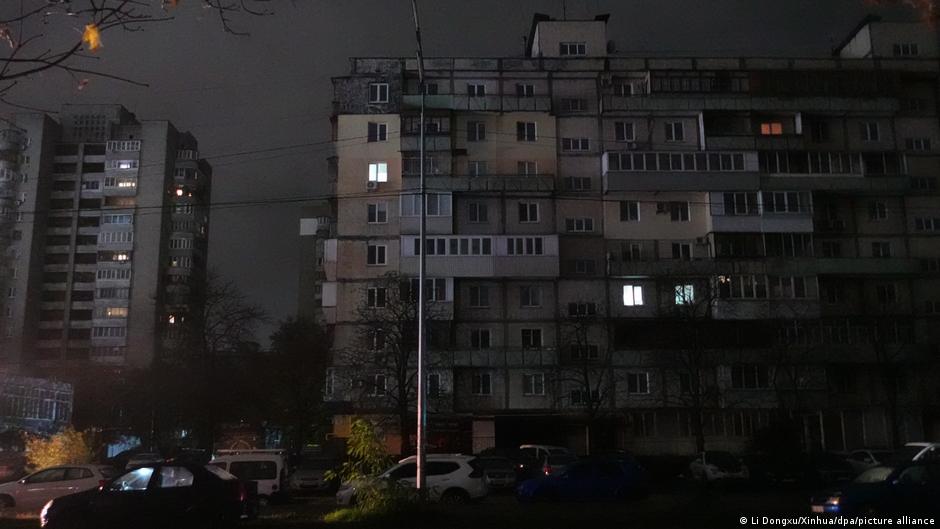
Escalating Russian attacks on Ukraine’s energy infrastructure and a public dispute between President Volodymyr Zelensky and Kyiv Mayor Vitali Klitschko have renewed attention on the economic consequences of prolonged power, water and heating disruptions. For Wall Street investors, the immediate significance lies less in a single listed company than in the wider exposure of European utilities, industrial businesses and defense contractors to an intensifying infrastructure war.
Zelensky criticized Kyiv’s municipal authorities on Friday, November 6, over extended electricity and water outages caused by Russian attacks. He said preparations had failed at the city level and argued that the disruption reflected both Russia’s campaign against Ukrainian energy facilities and the failure to implement decisions intended to prepare Kyiv for the heating season.
“At the city level, the preparations failed,” Zelensky said in his evening address.
The president said the Ukrainian government had discussed with energy-company representatives the need to deploy additional repair crews and accelerate restoration work. He later said the response to the increased Russian attacks would include more repair personnel as well as assistance from Ukraine’s armed forces in dealing with the consequences.
Infrastructure damage drives the market risk
Zelensky described Russia’s strategy as an effort to destroy electricity networks, transformers and distribution equipment. He said some regions continued to experience shortages even where generation was sufficient because damaged transmission and distribution assets prevented electricity from reaching consumers. Repairs, and the speed at which they can be completed, were therefore critical, he said.
That distinction matters for equity markets. Damage to grids and substations creates demand for replacement transformers, electrical equipment, engineering services and emergency power systems, while also raising operational risks for factories, telecommunications networks and other electricity-dependent businesses. The source material does not identify specific publicly traded suppliers, disclose procurement contracts or provide trading-volume data, leaving investors without a direct company-level catalyst from the statements alone.
Even so, the developments reinforce an established sector divide. Defense and infrastructure-equipment companies remain positioned around continued government spending, while energy-intensive and regionally exposed businesses face the possibility of higher costs and interrupted operations. European utility shares and regional risk assets may also remain sensitive to any widening of attacks or damage to infrastructure linked to cross-border energy flows.
Russian forces have intensified missile and unmanned aerial vehicle strikes against Ukraine’s energy infrastructure in recent weeks. Millions of Ukrainians have been forced to endure autumn cold without heating and have faced interruptions to electricity and water supplies. The scale of the disruption underscores the continued importance of air defense, grid repair and distributed backup systems in Ukraine’s wartime economy.
Political dispute complicates the recovery narrative
Klitschko responded several hours after Zelensky’s remarks, challenging the suggestion that municipal preparation could have prevented the consequences of Russia’s attacks. In a post on Telegram, the mayor asked how the capital was supposed to have stopped what the president called a Russian operation against Ukraine’s energy system. He also questioned why discussions about Kyiv’s preparations and response efforts were being held without representatives of the city authorities.
The mayor emphasized that Ukraine operates an interconnected national energy system. When that system is damaged across the country, he argued, it is unrealistic to suggest that some locations can remain fully illuminated while Kyiv’s mayor has independently allowed the capital to go dark.
Klitschko described the central government’s repeated portrayal of Kyiv as the country’s worst-performing city, together with what he called manipulation and lies, as a damaging pattern. He further accused the authorities of trying to remove him and said that, by failing to help the capital, the central government was effectively destroying Kyiv.
For equity researchers assessing the situation, the exchange introduces an additional governance consideration. Restoration depends not only on access to equipment and repair crews but also on coordination between national authorities, municipal officials, energy companies and the military. Public disagreement does not establish that repair operations will be delayed, but it raises questions about how responsibilities are divided during an emergency.
No clear single-stock signal yet
The episode offers no verified figures for the cost of the damage, the amount of generation or distribution capacity affected, repair budgets, contract awards, or changes in trading activity. As a result, it does not support a definitive earnings estimate or a direct call on any individual U.S.-listed stock.
The broader market signal is one of persistent geopolitical and infrastructure risk. Investors are likely to watch defense suppliers, electrical-equipment manufacturers and European utilities for evidence of new orders, government funding or operational exposure. Any meaningful sector rotation would require confirmation through company disclosures, public procurement decisions or measurable changes in trading volumes. Until then, the Kyiv outages primarily strengthen the strategic case for grid resilience and defense spending while adding uncertainty for businesses dependent on stable regional energy supplies.