Meloni’s EU Unity Warning Puts European Defense Stocks in Focus
Italy’s prime minister called for a single EU representative in Ukraine peace talks, sharpening investors’ focus on geopolitical risk.
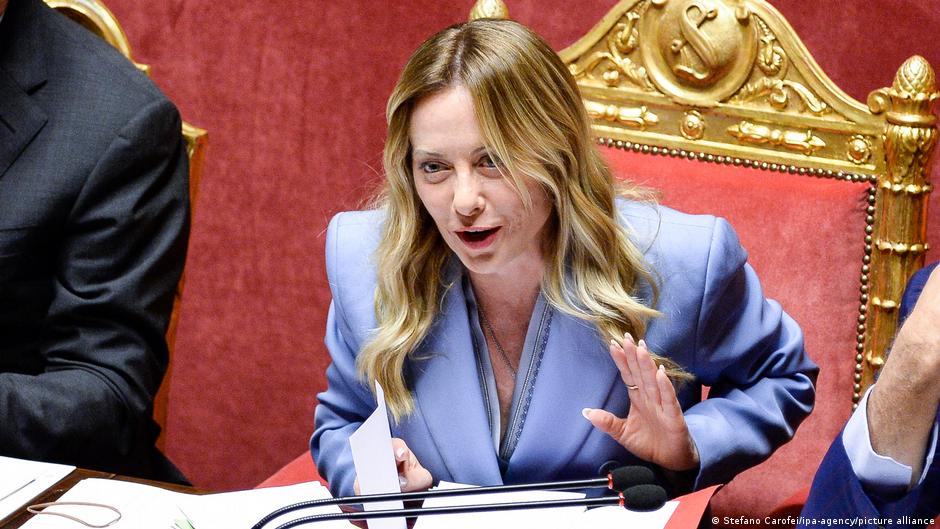
Italian Prime Minister Giorgia Meloni has urged European Union leaders to settle who will represent the bloc in negotiations aimed at ending the war in Ukraine, criticizing what she described as uncoordinated conduct among EU governments.
For equity investors, the intervention adds another political variable to a market already assessing the potential consequences of renewed diplomacy for European defense companies, energy-sensitive industries, banks and reconstruction-linked businesses. Meloni’s letter did not announce a policy change or a peace agreement, and the source material provided no stock-price or trading-volume data. The immediate market significance therefore lies in how investors may position around the coming diplomatic calendar rather than in a confirmed shift in corporate earnings.
“I continue to insist that it be decided once and for all who exactly will sit at the negotiating table on behalf of the European Union and with what mandate,” Meloni wrote to European Council President António Costa. The letter was cited by dpa on Thursday, Nov. 5.
Defense and energy remain key market sensitivities
Meloni’s criticism comes as European markets weigh whether negotiations could eventually reduce geopolitical risk or instead expose divisions that prolong uncertainty. Defense stocks would be among the clearest equity groups to watch because their valuations are sensitive to expectations for military procurement, national security budgets and the duration of the conflict. Any credible progress toward peace could prompt some investors to reassess crowded defense exposure, while inconclusive talks or greater political fragmentation could reinforce the sector’s strategic spending case.
Energy-intensive manufacturers and other cyclical companies also remain relevant to the market debate. A durable de-escalation could improve investor confidence in Europe’s economic outlook, while continued conflict would preserve uncertainty surrounding energy security, industrial costs and regional growth. Banks could similarly respond to changes in perceived macroeconomic and sovereign risk, although Meloni’s letter alone offers no basis for revising profit forecasts.
Construction, engineering and materials companies may attract attention if talks develop into a credible framework for postwar security and reconstruction. At this stage, however, such positioning remains speculative. The scheduled meetings concern diplomacy, security and humanitarian issues; no reconstruction contracts, financing commitments or corporate beneficiaries were identified.
Investors face a concentrated diplomatic calendar
Meloni proposed discussing EU representation at an informal European Council meeting in Dublin on Nov. 13. That discussion could allow the European Council to make a formal decision at its Brussels summit on Dec. 17-18 about who will speak for the bloc in peace negotiations concerning Ukraine, she added.
Before then, a new round of talks between Russia and Ukraine, mediated by the United States, is scheduled for Nov. 10-11 in Abu Dhabi. U.S. presidential special envoy Steve Witkoff said the meeting would address “postwar security, de-escalation, humanitarian initiatives and the next steps toward peace.”
The sequence creates several potential volatility points for European equities. Trading volumes could rise around official statements from Abu Dhabi, the Dublin meeting and the December summit as investors adjust exposure to defense, energy, industrial and financial shares. No actual volume figures were included in the source, making it premature to characterize current trading as unusually heavy or to attribute any individual stock move to Meloni’s remarks.
“I am convinced that, by presenting an image of Europe acting in disorder, we serve only the interests of those who want to continue this war,” Meloni wrote, according to AFP.
Meloni said uncoordinated behavior within the EU would help neither relations with allies nor efforts to persuade those who must be convinced to end what she called a senseless aggression. Her argument is that Europe’s negotiating authority depends not only on participation but also on a clearly defined mandate.
Research view hinges on policy credibility
From an equity-research perspective, the central question is whether EU leaders can turn the procedural dispute into a unified and credible negotiating structure. A designated representative with a formal mandate could reduce uncertainty over Europe’s role, but it would not by itself establish a ceasefire, settle security arrangements or change defense-spending plans.
Meloni has previously criticized separate initiatives by EU leaders that, in her view, dilute the bloc’s common position on Russia’s war in Ukraine. Rome specifically criticized a telephone conversation involving Finnish President Alexander Stubb, Norwegian Prime Minister Jonas Gahr Støre and Russian President Vladimir Putin.
That background suggests the dispute is broader than diplomatic protocol. Investors will be watching for evidence of policy coordination, the durability of any de-escalation plan and the implications for European fiscal priorities. Until those signals emerge, sector rotation based solely on the prospect of negotiations may remain vulnerable to reversal, with headline-driven trading likely to dominate over changes grounded in company fundamentals.