Crimea Detention Death Highlights Persistent Russia-Ukraine Market Risk
The death of a Ukrainian educator in Russian-annexed Crimea underscores geopolitical risks that continue to influence European equities.
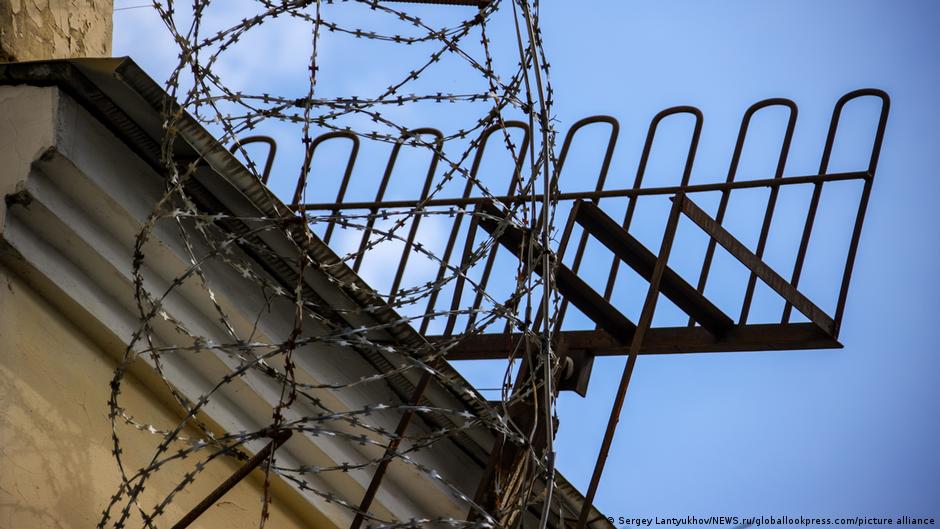
A 44-year-old Ukrainian language-school co-founder has died after being detained in Russian-annexed Crimea, according to her colleagues, adding another human-rights case to the geopolitical backdrop monitored by investors with exposure to Russia, Ukraine and European security.
Alexandra Kazarovitska, also known as Kolesnikova, co-founded the Professional language school in Kharkiv and served as its director of education. The school announced her death in a Facebook post on Wednesday, November 4, saying: “Russia killed her.”
Her colleagues said Kazarovitska travelled to Sevastopol in the summer of 2026 and expected to remain there for no longer than a month. She intended to help her parents sell their apartment and move to Turkey, according to the school’s account.
Kazarovitska was subsequently detained after authorities discovered messages she had exchanged with a volunteer dating back to the beginning of Russia’s full-scale invasion of Ukraine, her colleagues said. The school reported that she then spent three months in solitary confinement while awaiting trial.
“They found her correspondence with a volunteer from the beginning of the full-scale invasion. Then came three months in solitary confinement. Waiting for trial.”
Her colleagues said Russian authorities attributed her death to suicide. Human-rights advocates from the Support for Political Prisoners. Memorial project believe she died in one of two pretrial detention centres in Simferopol. The available account does not identify a specific facility or provide independent confirmation of the circumstances surrounding her death.
Limited Immediate Equity Impact, Broader Risk Remains
The report does not identify any publicly traded company directly connected to Kazarovitska, the Professional language school or her detention. It also provides no evidence of an immediate change in trading volumes, individual share prices or sector performance. As a result, the case on its own does not establish a company-specific catalyst for Wall Street.
Its relevance for equity investors lies instead in the continuing accumulation of political, legal and reputational risks associated with the Russia-Ukraine war and Russia’s annexation of Crimea. Such developments form part of the wider environment considered by investors assessing sanctions exposure, supply-chain resilience, defence spending and the durability of European risk premiums.
For portfolio managers, the principal transmission channels remain sectors already sensitive to the conflict. Defence and cybersecurity shares can respond to changes in perceptions of regional security and government spending priorities. Energy, shipping, commodities and European financial stocks may be affected when geopolitical developments alter expectations around sanctions, trade routes, insurance costs or cross-border capital flows.
However, the source account contains no new sanctions announcement, military development, commodity disruption or government spending decision. It therefore offers no factual basis for attributing a specific rotation among those sectors to this incident. Any near-term market reaction would need to be assessed against actual price action, volume data and subsequent policy responses rather than inferred from the report alone.
Research Focus Stays on Policy Transmission
From an equity-research perspective, the case reinforces the importance of separating significant geopolitical and human-rights developments from investable corporate catalysts. Analysts would typically look for a measurable transmission mechanism, such as new restrictions on Russian entities, tighter export controls, changes in European defence budgets or operational consequences for listed companies.
Absent those developments, the event is more likely to contribute to the persistent geopolitical discount attached to assets with direct or indirect exposure to the conflict than to trigger an isolated repricing. It may also sustain investor scrutiny of companies’ compliance systems, regional operations and disclosures concerning sanctions and political risk.
Kazarovitska’s death leaves a husband and daughter, according to Mediazona. Her colleagues’ allegation that Russia was responsible and the Russian authorities’ reported suicide explanation present sharply different accounts. The precise circumstances remain unclear in the information provided, while Memorial’s assessment places her suspected place of death in one of Simferopol’s two pretrial detention centres.
For Wall Street, the immediate conclusion is restrained: no specific stock, sector move or trading-volume shift can be verified from the report. The longer-term implication is that the conflict continues to generate events capable of sustaining political pressure and keeping geopolitical risk embedded in European and conflict-sensitive equity valuations.