Trump Offers U.S. Help as Russia Pneumonia Reports Put Health Stocks in Focus
Reports from Siberia drew a White House response and regional border precautions, giving investors another public-health risk to monitor.
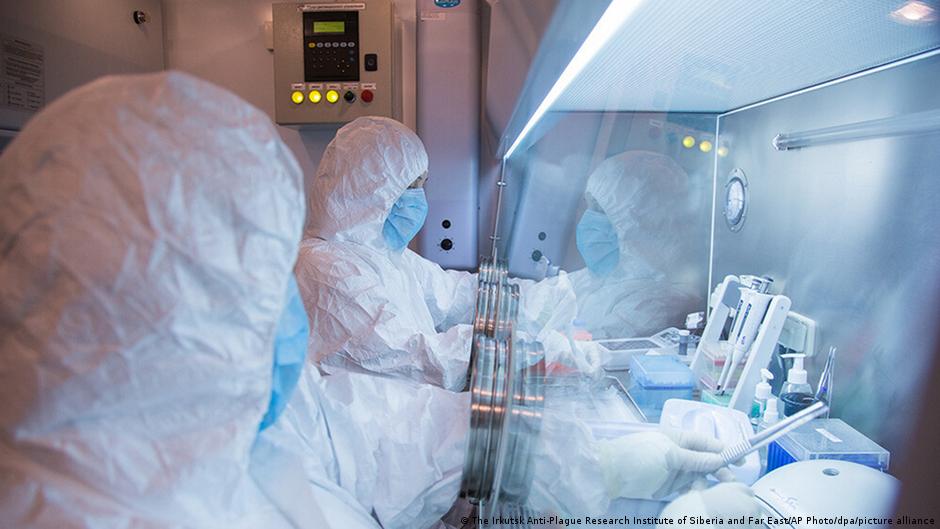
President Donald Trump said the United States was monitoring reports from Russia about a possible outbreak of a serious pulmonary infection in the Irkutsk region and would be prepared to help if needed, adding a public-health headline to a market already sensitive to geopolitical and sector-specific risk.
Speaking to reporters on Monday, October 5, Trump said the White House had only recently become aware of the reports and had not contacted Moscow directly. The comments followed Russian media coverage of the death of 28-year-old Darya Shipilova, an employee of the Irkutsk Anti-Plague Institute, who was hospitalized in late September and died on October 2. Russia’s consumer-health regulator, Rospotrebnadzor, described the cause of death as pneumonia of unknown etiology.
“We are watching what is happening very closely,” Trump said, according to the source article. “They are calling it pneumonia.”
For Wall Street, the immediate equity-market implications appear indirect but notable. Public-health scares can trigger fast rotation across health care, travel, logistics and commodity-linked names, particularly when official information is limited and neighboring countries begin tightening border controls. The source article did not report any confirmed secondary cases in the Irkutsk region, and no market-moving epidemiological data were disclosed. Still, the episode gives traders another reason to monitor diagnostic, vaccine, protective-equipment and hospital-supply stocks, while watching for pressure on travel-exposed and cross-border transport shares if precautionary measures widen.
Health Care and Risk-Off Rotation
Trump said he had not spoken with Russian officials about the matter, but repeated that the United States was ready to assist “anyone who has encountered such a problem.” His remarks framed the issue as a potential humanitarian and public-health matter rather than a direct diplomatic confrontation. That distinction matters for investors: a contained health incident may have little lasting impact, while a broader outbreak narrative can quickly lift volatility and create narrow pockets of momentum in health-related equities.
In past public-health scares, traders have often moved first into companies tied to testing, infection control, protective gear, antiviral research and medical infrastructure. The source article does not identify any company contracts, procurement plans or confirmed U.S. policy action, so any stock-specific response would be speculative at this stage. Equity research desks would likely treat the news as a watch-list item rather than a basis for revising earnings estimates unless official agencies confirm secondary transmission, border restrictions expand, or governments begin placing material orders for medical products.
The article said local media reported that around 200 people in the Irkutsk region were placed under quarantine after Shipilova’s death. It also said there had been no reports of confirmed secondary pneumonia cases in the region. The administration of Shelekhov, the city where Shipilova died in a hospital, posted a social-media appeal on October 3 urging people to refrain from traveling to the city, but the post was soon deleted.
That uneven communications backdrop is relevant to markets because uncertainty itself can drive trading volume. When official statements lag behind local reporting, investors tend to price optionality into the most obvious beneficiaries while reducing exposure to areas perceived as vulnerable to travel disruption. For U.S.-listed equities, the likely initial focus would be less on Russia-specific revenue exposure and more on sector baskets: health care suppliers, diagnostics, global airlines, freight operators and emerging-market risk proxies.
Border Controls Add to the Market Signal
The source article said silence from authorities had contributed to public concern and rumors, including an unverified claim that a test tube containing the plague pathogen had been broken in a laboratory at the institute. On October 5, journalists asked Kremlin spokesman Dmitry Peskov whether Moscow was monitoring events in the Irkutsk region. Peskov described Rospotrebnadzor as the competent authority and urged people to rely on its statements, without discussing the incident itself.
At least three countries neighboring Russia’s Siberian regions reported stronger precautions at their borders. Kazakhstan and Kyrgyzstan increased sanitary and quarantine controls, while Uzbekistan said services responsible for preventing the importation of infections had been placed on heightened readiness. Azerbaijan’s Health Ministry said it was aware of the reports from Russia but did not see a need to strengthen customs control. Mongolia is geographically closest to the Irkutsk region, and the article noted that it had already cooperated with Russia on preventing the spread of similar diseases because plague agents had previously been detected in the region.
For investors, border precautions are often more important than political statements because they can signal whether a health concern is moving from a local incident into operational risk. Even limited controls can affect sentiment toward travel, regional trade, freight and consumer activity. However, the source article does not state that borders were closed, that trade flows were interrupted, or that any company reported a financial impact.
The market impact, therefore, is best understood as a short-term monitoring issue rather than a confirmed earnings event. Health care names tied to infectious-disease preparedness could see headline-driven attention, while travel and transport shares may be more sensitive to any escalation in official measures. Broader indexes would likely require clearer evidence of transmission, sustained quarantine actions or coordinated international alerts before pricing in a material macro risk.
Trump’s offer of assistance may also temper geopolitical interpretation. The U.S. president expressed regret that Russia could be facing such an illness and said Washington would help if necessary. In market terms, the tone lowers the immediate risk of a confrontational diplomatic overlay, though it does not resolve the core uncertainty around the medical facts.
Until Russian authorities provide more detail, traders will likely watch three variables: confirmation or denial of secondary cases, whether quarantine numbers change, and whether neighboring countries move from enhanced screening to travel or trade restrictions. Without those developments, the story remains a public-health headline with selective sector relevance rather than a broad Wall Street repricing event.