German Draft Resistance Surge Puts Defense Recruitment in Market Focus
More than 12,000 Germans filed objections to military service in the first eight months of 2026, complicating Berlin’s manpower push.
Germany’s effort to rebuild military capacity is facing a visible social constraint, with at least 12,102 people declaring their unwillingness to serve in the armed forces between January and the end of August 2026. The figure, reported by the Funke media group on Monday, October 5, and attributed to filings received by the Federal Office for Family and Civil Society Affairs, marks a sharp escalation in formal objections to military service.
For equity investors tracking Europe’s defense cycle, the data add a labor and political-risk dimension to a sector narrative that has otherwise been driven by procurement budgets, long order books and NATO readiness targets. The source article does not report share-price moves, trading volumes or broker rating changes. Still, the trend is directly relevant to market debates around the durability of German rearmament spending and the operational capacity behind it.
The scale of the increase is striking. German authorities received 3,879 applications for conscientious objection during all of 2025. That means the number of objectors recorded in just the first eight months of 2026 was more than three times the total for the previous full year.
BAFzA said many objectors make mistakes in their filings, with applications often failing to meet the requirements for recognition and therefore having to be returned without review.
The surge has coincided with the rollout of questionnaires from Germany’s Defense Ministry under a recruitment reform law that took effect on January 1. Starting in 2026, 18-year-old men are required to complete a questionnaire asking whether they are willing to join the German armed forces. Young people also have the right to declare in advance that they object to military service.
Defense Stocks Face a Manpower Question
For Wall Street readers, the significance lies less in the objection filings themselves than in what they may signal for the German defense buildout. Investors have treated European defense as a structural growth theme as governments reassess security needs. Germany is central to that trade because it combines one of Europe’s largest economies with a clear policy objective to expand the Bundeswehr.
The source material does not identify listed companies or provide market data. However, the recruitment numbers matter for any equity research view on the broader defense supply chain because hardware orders and personnel capacity are linked in practice. Armored vehicles, electronics, ammunition, logistics systems and maintenance contracts depend on a military that can both expand and absorb equipment. If recruitment falls short, the market may need to distinguish between companies exposed mainly to procurement spending and those more sensitive to troop levels, training cycles and deployment capacity.
Germany suspended compulsory military service in 2011. Under the new reform framework, a limited return of mandatory service could be introduced by a Bundestag decision through what is described as conscription in case of necessity. That option is intended to be used if Germany fails to reach the required number of volunteers. The Defense Ministry’s planning target is for as many as 260,000 people to be serving in the Bundeswehr at the same time by 2035.
That target is a key input for the market’s medium-term read on German defense demand. A larger Bundeswehr would imply sustained need for equipment, infrastructure, training and support. But the rise in objections suggests the labor side of the strategy could become politically contested, potentially affecting budget sequencing, procurement timelines and the pace at which orders translate into operational readiness.
Recruitment Indicators Are Mixed
The latest objection figures do not mean Germany’s recruitment drive is failing across the board. At the end of July 2026, the Defense Ministry reported that the Bundeswehr had reached its highest personnel level in 13 years, with 186,700 service members. Compared with July 2025, that represented growth of more than 2%, or 3,700 personnel.
The ministry also said that of roughly 378,000 people who had been sent questionnaires since the start of 2026, about 2,630 completed the suitability assessment process in July alone. That was 35% more than in the previous month. By that point, around 12,100 volunteers and short-term contract personnel were already serving under the new recruitment system, about 6% more than a year earlier.
There was also a notable increase in applications and admissions for contract military service. In July 2026, 47,300 people submitted relevant applications, up 26% from the same month a year earlier. As of the end of July, the number of recruits stood at 15,400, a 12% increase compared with 2025.
For investors, that mix creates a more nuanced read than the headline objection count alone. The same system that appears to be prompting more young people to file objections is also producing higher assessment activity, more contract-service applications and a larger recruit count. In equity research terms, the data support neither a simple bearish view on German defense implementation nor an uncomplicated bullish one. Instead, they point to execution risk around manpower, with policy tools still available if voluntary recruitment proves insufficient.
The Bundeswehr has also broadened its search for recruits in recent years, including by setting up a stand at Gamescom, one of the world’s largest video game trade fairs, held in Cologne. That outreach illustrates how competition for young recruits has moved into civilian cultural spaces, a development likely to remain politically sensitive.
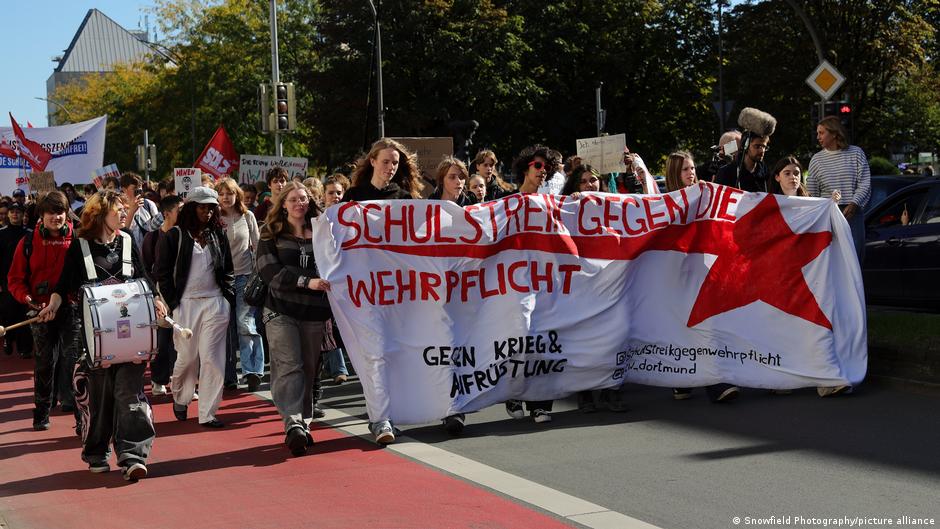
German school students have criticized the possible return of conscription in case of necessity. In September, major protests linked to the issue took place in several German cities. That public opposition is relevant for markets because defense spending themes can be disrupted not only by budget limits, but also by social resistance to the human requirements behind military expansion.
For now, the investment takeaway is that Germany’s defense buildout remains a major structural story, but one increasingly exposed to recruitment politics. The filings by more than 12,000 objectors in eight months do not alter procurement plans on their own. They do, however, give traders and analysts another variable to watch as they assess sector rotation into European defense names, the credibility of long-term capacity targets and the policy risk embedded in Germany’s rearmament cycle.