German BSW Lawmaker Plans Belarus, Russia Outreach With Limited Market Read-Through
Sven Hornauf’s planned delegations revive a politically sensitive channel, but investors are likely to see little immediate equity impact.
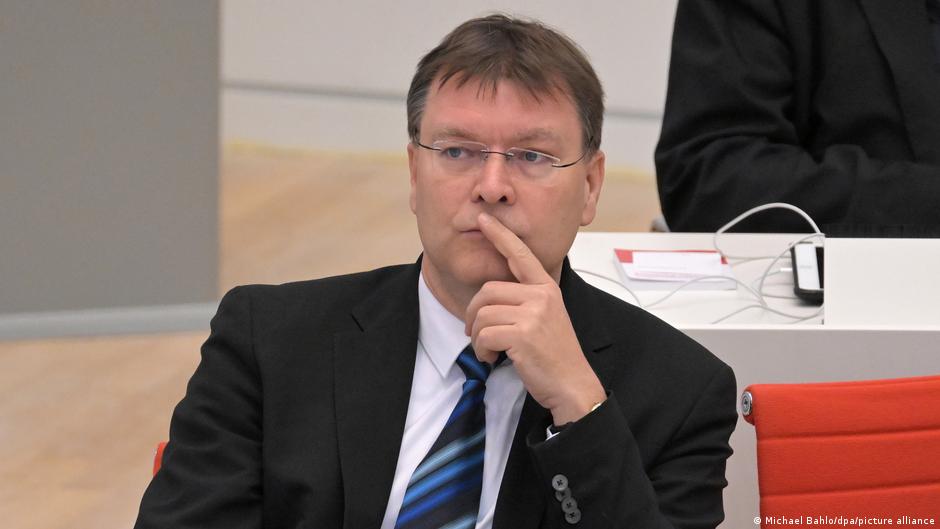
German regional lawmaker Sven Hornauf, a member of the left-populist BSW party, said he is assembling a delegation of German politicians and civil society representatives for trips to Belarus and Russia aimed at reviving contacts between twin cities, a move with political significance but limited immediate implications for publicly traded companies.
Hornauf, a member of the Brandenburg state parliament from the Alliance for Social Justice and Reasonable Economic Policy, known as BSW and formerly as the Sahra Wagenknecht Alliance, said he plans to travel by bus to Vitebsk in November with like-minded participants from different German parties. He made the remarks in an interview with the regional newspaper Märkische Oderzeitung on Saturday, October 3. The plans were reported the following day by larger German media outlets, including dpa, Tagesspiegel and Die Welt.
For Wall Street investors, the announcement is not a direct catalyst for German equities, defense contractors, industrial exporters or energy-linked names. It does, however, add another data point to the political debate in Germany over how far local-level contacts with Belarusian and Russian counterparts can continue after Russia’s full-scale invasion of Ukraine. Equity research desks are likely to treat the development as political noise rather than as a change in sanctions risk, export policy or defense spending assumptions.
Hornauf said the objective was to send a signal in favor of mutual understanding between peoples.
According to Hornauf, the priority is to restore cooperation between German cities and their twin cities in Belarus and Russia. He said it was important to establish normal, regular contacts again, directly at the level of people, and that the general political climate, regardless of side, should not prevent them. He also plans a visit to Russia in April 2027.
Market Impact Appears Contained
The clearest market read-through is indirect. German policy toward Russia remains a key factor for European defense, energy infrastructure, industrial supply chains and banks with regional exposure, but Hornauf’s initiative is being organized at a local and civil-society level rather than as a federal government policy shift. As a result, there is no factual basis in the source material to link the trip to changes in trading volumes, revenue forecasts, sector rotation or analyst price targets.
Stocks that investors often watch in connection with Germany’s security stance, energy transition and Eastern Europe exposure may still be monitored for broader political signals. But the details reported so far do not point to a change in Berlin’s defense procurement plans, sanctions framework or corporate access to Russian and Belarusian markets. In equity strategy terms, the announcement is more relevant to political-risk monitoring than to near-term earnings models.
The timing is nevertheless notable. Hornauf has criticized Germany’s stronger defense measures against the backdrop of Russia’s aggressive policy. In particular, he opposed the deployment of the U.S.-Israeli Arrow 3 missile defense system at the Bundeswehr base in Holzdorf. That missile defense system entered combat duty in Germany at the end of 2025.
Defense names and suppliers tied to European rearmament have benefited from sustained expectations of higher security spending since 2022. Hornauf’s position underscores that German defense policy remains contested domestically, including at the regional level. Yet the article provides no evidence that his initiative has altered budget decisions, procurement timelines or investor expectations around the sector.
Delegation Details
Hornauf said 30 to 40 people are expected to take part in the trip to Belarus, most of whom are not members of any political party. At the same time, he named several BSW members among the participants, as well as representatives of the Greens and the far-right Alternative for Germany, or AfD. He said the final composition of the delegation would be determined during preparatory meetings.
According to Hornauf, a delegation from his hometown of Frankfurt an der Oder will visit Vitebsk from November 6 to November 11. Other participants in the trip intend to travel to Minsk and several other Belarusian twin cities. In each case, the stated reason for the visit is the desire to restore twin-city ties.
Many twin-city relationships among German, Belarusian and Russian municipalities were suspended after Russia’s full-scale invasion of Ukraine. However, according to a 2026 survey conducted by the Redaktionsnetzwerk Deutschland media group among about 100 German cities and municipalities, only one had fully terminated its partnership with a Russian twin city.
RND reported that informal contacts with Russia, including invitations to representatives of Russian cities to visit Germany, continued after 2022 in about 40% of the municipalities surveyed. In 42% of responding German municipalities, officials supported resuming partnerships with Russia in the event of a peace settlement in Ukraine.
Those findings may help explain why the issue is politically visible even without becoming a market-moving event. Municipal diplomacy can shape public debate and party positioning, but it does not by itself reopen corporate channels or change the legal restrictions that determine whether companies can trade, invest or operate in Russia and Belarus.
Political Context for Investors
Hornauf previously made headlines in spring 2026, when he was one of the initiators of a visit by BSW members and supporters to the Russian embassy in Berlin. He had also earlier faced criticism for supporting several AfD initiatives.
For investors, that background matters mainly because it places the planned trip inside a broader political contest over Germany’s stance toward Russia, defense policy and local-level engagement. The involvement of figures from different parties, including BSW, the Greens and AfD, could draw attention from German media and policymakers. Still, the source material does not indicate any formal role for listed companies, institutional investors or federal economic agencies.
The practical conclusion for markets is restrained. The planned delegations may generate headlines in Germany and could feed into debate over regional diplomacy with Belarus and Russia. But until there is evidence of a federal policy shift, sanctions change, procurement reversal or corporate exposure, Wall Street is likely to view the story as a political-risk item rather than a tradable equity event.