Schröder’s Globus Russia Role Puts German Retail Risk Back in Focus
The former German chancellor’s move to Hyperglobus has drawn criticism in Berlin and renewed investor attention on Russia-linked European retail assets.
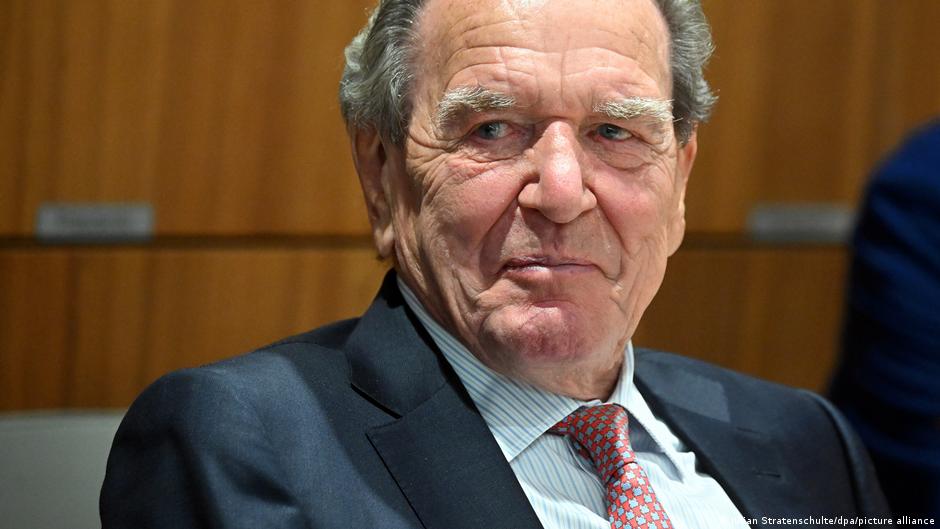
Former German Chancellor Gerhard Schröder has joined the supervisory board of Hyperglobus, the company operating the Globus hypermarket chain in Russia, according to confirmation provided by the company’s press service to DW on October 2. The appointment, framed by Hyperglobus as involving oversight of the retailer’s “strategic development,” has triggered sharp criticism from German politicians and economists and is likely to keep investor attention fixed on the residual Russia exposure of European consumer and retail groups.
For Wall Street, the direct trading impact is limited because Hyperglobus is not presented as a publicly traded company in the source material, and the article does not identify any listed equity tied directly to the Russian operator. Still, the political response matters for investors tracking European retailers, cross-border sanctions risk, and corporate governance scrutiny around assets that remain connected to Russia after the 2022 invasion of Ukraine and subsequent Western corporate exits.
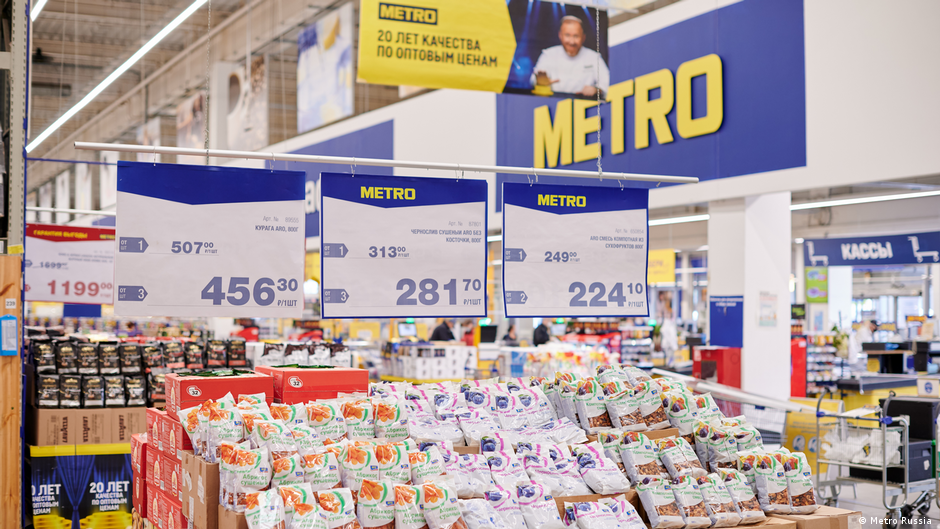
The criticism also arrives against the backdrop of broader market sensitivity to political intervention in Russian subsidiaries of foreign companies. German economist Janis Kluge, head of a research department at the Berlin-based German Institute for International and Security Affairs, argued that adding Schröder to Hyperglobus management amounts to the firm buying “lifelong insurance” against suffering the same fate as German retailer Metro, whose Russian assets were transferred to temporary management by decree of Vladimir Putin.
“Schröder is once again monetizing his access to Putin,” Kluge wrote on X.
Governance Risk Re-enters the Retail Screen
Schröder’s appointment drew immediate political criticism in Germany. Roderich Kiesewetter, a Bundestag member and foreign policy expert for the governing Christian Democratic Union, described the former chancellor’s new role as “a betrayal of Europe and his own country” in a post on X on Saturday evening, October 3. He added that anyone publicly and demonstratively shaking Schröder’s hand was seeking to signal a position.
Thomas Jäger, a political science professor at the University of Cologne, also criticized the move on X, writing that Schröder had received a new “lobbying assignment” in Russia. Jäger asked whether German President Frank-Walter Steinmeier knew about it when he greeted Schröder a few days earlier.
The reference by Kiesewetter and Jäger appeared to concern the September 28 ceremony in Karlsruhe marking the 75th anniversary of Germany’s Federal Constitutional Court. Steinmeier attended the event and, on entering the hall, shook hands with several attendees, including Schröder, who was seated in the front row as an honorary guest.
Jan Schnellenbach, a German economist and professor of microeconomics at Brandenburg University of Technology in Cottbus, accused Schröder of “shamelessness.” In a post on X, he referred to earlier statements that the former chancellor was too ill to appear before a German court and asked whether Russian money had healing powers.
For equity investors, the central issue is less Schröder’s personal standing than the governance signal. Research desks following European staples and discretionary retail are likely to read the episode as another reminder that Russia-linked operations can carry political, legal and reputational risks that do not show up cleanly in sales multiples or margin models. When local operations remain tied to German owners or legacy brands, those risks can extend beyond operating performance into valuation discounts and engagement pressure from institutional shareholders.
Metro Comparison Frames Investor Concern
Kluge’s comparison with Metro is the most market-relevant part of the German reaction. The article states that Metro’s Russian assets were transferred into temporary management by order of Vladimir Putin. That example underscores the potential downside for companies with Russian operations: assets may remain economically relevant while being exposed to state intervention, reputational scrutiny, and limited management control.
In that context, Schröder’s new board role can be read by market participants as a defensive political hedge by Hyperglobus, even though the source does not provide financial terms, ownership percentages, revenue figures, store counts, valuation data, or trading volumes. Without those metrics, investors cannot quantify the immediate equity impact. But the appointment provides a fresh signal for analysts to revisit Russia exposure in European retail coverage, especially where ownership and operational separation are complex.
According to Isabel del Alcazar von Buchwald, spokesperson for Globus Gruppe, the Russian business of the Globus network has been “legally and organizationally independent” since January 1, 2025. At the same time, the shareholders of Russia’s Hyperglobus are the same German businessmen as those of the rest of the group, the article states.
That distinction is important for market interpretation. Legal and operational independence may reduce direct consolidation risk, but common shareholder ownership keeps the issue relevant for corporate governance and reputational analysis. For private companies, the impact may be felt less through daily share prices and more through banking relationships, supplier scrutiny, consumer perception, and political attention. For listed peers, the episode may reinforce a sector rotation preference toward retailers with cleaner geographic exposure and fewer unresolved Russia-linked holdings.
Schröder has long been viewed by many observers in Germany as a lobbyist for Russian enterprises. The former chancellor previously held senior roles at Rosneft and at the operator of the Nord Stream pipeline. His move into Hyperglobus therefore adds another data point to a broader pattern that has remained controversial in Germany’s political and economic debate.
From a Wall Street perspective, the immediate takeaway is not a single-stock trade but a renewed risk lens for European consumer names. Investors already weighing energy prices, weak consumer demand, and margin pressure in the region now have another reminder that corporate Russia exposure can create idiosyncratic headlines capable of influencing analyst tone, investor positioning, and relative valuation across the retail sector.