Foreign Retailers’ Russia Assets Face State Control Risk as Metro Draws Scrutiny
Temporary administration of Western retail assets in Russia is becoming a market-risk signal for listed retailers and peers with legacy exposure.
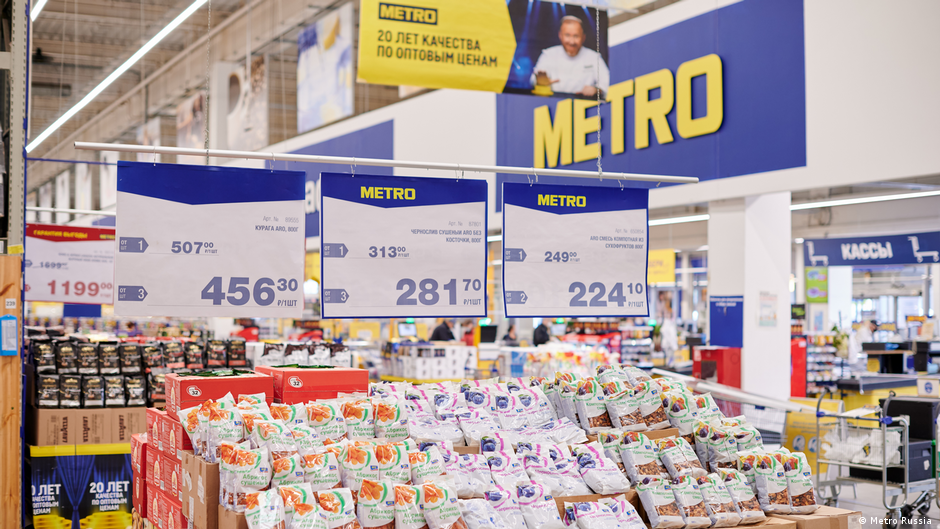
Foreign retail groups with Russian assets are facing a growing risk that they may lose operational control over businesses they once managed directly, sharpening a governance and valuation issue for investors tracking European consumer, retail and building-supply stocks. Assets linked to several Western retailers, including France’s Auchan and Leroy Merlin and Germany’s Metro, have been placed under temporary administration in Russia, leaving owners without access to those assets.
The developments raise a question with direct relevance for equity markets: whether the Russian businesses of foreign retailers could face nationalization or remain under forms of state-directed temporary management. For investors, the distinction matters less in the near term than the practical outcome. Where an owner cannot access, direct or monetize an asset, analysts are likely to treat the exposure as impaired, stranded or politically encumbered, depending on the company’s disclosures and accounting treatment.
Metro is the most visible listed name among the companies cited, making it the clearest public-market proxy for the Russia retail-asset risk. Auchan and Leroy Merlin are privately held within broader ownership structures, which limits direct stock-market transmission. Still, developments around these brands can influence sentiment across European staples retail, cash-and-carry operators, do-it-yourself chains, logistics landlords and suppliers that once viewed Russia as a long-term consumer growth market.
Russia Exposure Becomes an Equity-Risk Filter
The immediate market impact is not simply about whether Russian stores continue trading. It is about control, cash access and the ability of parent companies to make capital-allocation decisions. Temporary administration means that foreign owners may no longer be able to manage assets inside Russia, even if the business itself remains operational. That changes how investors read asset quality, enterprise value and geopolitical risk.
For sell-side analysts, the issue is likely to sit inside three familiar valuation buckets: legal title, economic benefit and exit optionality. A retailer may still be associated with a Russian operation historically or legally, but if management cannot access it or exercise authority over it, equity research models may assign limited or no value to the asset. In more cautious frameworks, analysts may also consider whether there are residual liabilities, reputational costs or future legal disputes.
For public markets, the central question is whether Russian assets still represent recoverable value or have become politically controlled exposures with little visibility.
That uncertainty can feed into stock-specific risk premia. A company with a cleaner exit from Russia, or no remaining Russia exposure, may trade at a relative premium to peers still facing unresolved asset-control questions. Conversely, companies with legacy operations, franchise structures, minority holdings or unresolved separation processes may face investor pressure for clearer disclosure.
Sector rotation may also reflect the changing risk map. Investors seeking defensive consumer exposure could prefer food retailers and consumer-staples names with geographically simpler footprints. Retailers with emerging-market complexity, cross-border legal exposure or large fixed assets in politically sensitive jurisdictions may be screened more aggressively. The same logic can extend beyond grocery and cash-and-carry into building materials retail, warehouse property, wholesale distribution and consumer logistics.
Schroeder’s Role Adds a Governance Dimension
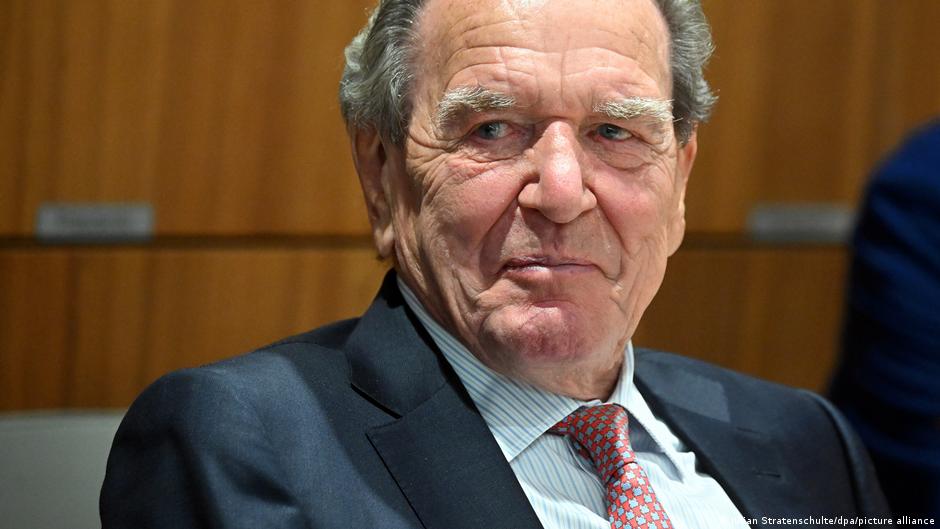
The former Russian subsidiary of German holding company Globus has also drawn attention after former German chancellor Gerhard Schroeder joined its supervisory board. The appointment adds another layer to the governance debate around Western brands, former subsidiaries and Russian corporate structures. For market participants, the presence of a high-profile political figure on the supervisory board of a former Russian subsidiary is not only a corporate-governance detail; it is a signal of how sensitive and politically connected these assets can become.
Globus is not the same kind of public equity signal as Metro, but the case matters because investors often read governance developments across a sector, not in isolation. If former subsidiaries, local management boards or newly appointed supervisors become central to the future of assets once tied to Western retailers, analysts may ask whether comparable situations exist elsewhere. That could make corporate structures, board composition and asset-transfer histories more important in research notes than same-store sales or margin trends for Russia-linked operations.
Trading volumes in directly exposed listed companies may rise around any new administrative orders, court decisions, ownership changes or corporate statements. Metro shares, in particular, could attract event-driven attention because the company provides a public-market reference point for German retail exposure. However, without new financial figures, investors are likely to focus less on short-term earnings contribution and more on whether any remaining Russia-linked value is recoverable.
For broader European retail equities, the read-across is likely to be selective. Food retail is typically defensive, but geopolitical asset risk can override the usual defensive characteristics when stores, warehouses, supply chains or cash balances sit in jurisdictions where foreign owners may lose control. Building-supply retailers may face a similar discount where large physical networks are difficult to extract or sell.
Research Focus Shifts to Disclosure and Recoverability
The key questions for equity research teams are now likely to be practical rather than rhetorical. Which assets remain tied to parent companies? Who controls local operations? Can cash be upstreamed? Has the company written down the asset? Is there any credible exit route? And could temporary administration become a step toward permanent transfer or nationalization?
The Russian developments involving Auchan, Leroy Merlin, Metro and other companies show how foreign retail exposure can move from an operating issue to a capital-markets issue. Investors do not need a formal nationalization decision to reassess value. Loss of access alone can be enough to change how an asset is modeled.
For now, the market impact is most likely to appear in stock-specific discount rates, peer comparisons and governance-focused research rather than in a broad retail-sector selloff. But the direction of travel is clear: Western retailers with unresolved Russian exposure face a higher burden of proof. They must show not just that the stores exist, but that shareholders retain a meaningful economic claim on them.