Brazil Vote Heads to Runoff as Flavio Bolsonaro Leads Lula in First Round
The result puts investors on alert for a volatile October runoff, with Brazil policy risk back in focus across banks, state-linked assets and local equities.
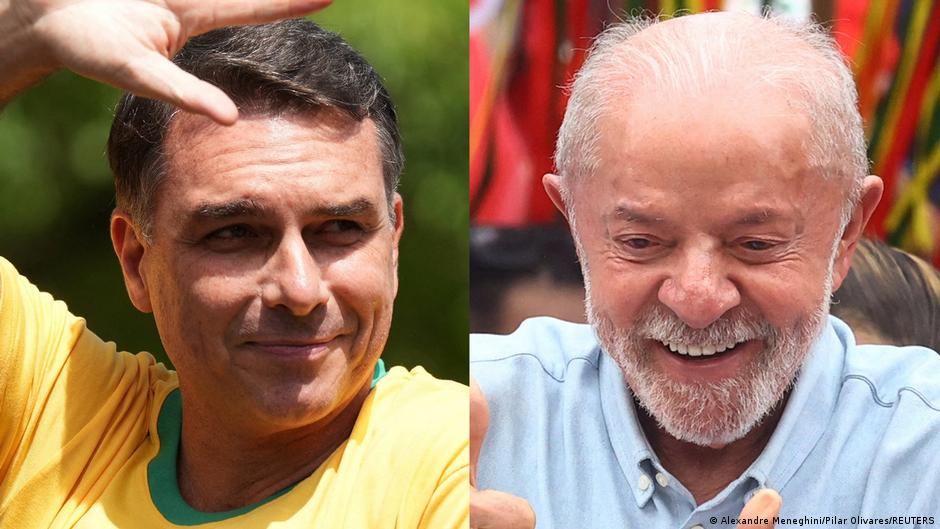
Brazil’s presidential election is headed to a second round after Senator Flavio Bolsonaro, the eldest son of former President Jair Bolsonaro, finished narrowly ahead of incumbent President Luiz Inacio Lula da Silva in the first-round vote, according to data from Brazil’s electoral authority cited in the source report.
With 99.99% of ballots counted, Flavio Bolsonaro received 47.03% of the vote, while Lula, the leftist incumbent, won 45.16%. Turnout stood at 78.92%. Because no candidate crossed the 50% threshold, the race will move to a runoff scheduled for October 25.
For Wall Street investors, the result reopens a familiar Brazil trade: political risk around fiscal policy, state influence in major companies, bank-sector oversight and the direction of capital flows into one of Latin America’s largest equity markets. The first-round margin gives Bolsonaro a lead, but not a decisive one, leaving traders to price several weeks of headline risk before the final vote.
Runoff Risk Returns to Brazilian Assets
Brazilian presidential contests have repeatedly required runoffs since the early 2000s, and the latest vote continues that pattern. The market focus now shifts from first-round polling to the policy assumptions investors attach to each candidate. Lula represents continuity with the current administration. Flavio Bolsonaro, by contrast, carries the political brand of his father, Jair Bolsonaro, whose own defeat to Lula in the 2022 runoff led to a contested aftermath.
In 2022, Jair Bolsonaro refused to recognize the result after losing to Lula, and his supporters took to protests. He was later sentenced to a lengthy prison term for an attempted coup, according to the source article. That history matters for investors because any dispute over the October 25 runoff could affect sentiment toward Brazilian equities, the currency and sovereign risk, particularly if the result is close.
The source report does not provide trading volumes, price moves or brokerage forecasts. Still, the market channels are clear: investors are likely to scrutinize shares in large Brazilian banks, state-linked companies, exporters and consumer-facing stocks for signs of sector rotation as the runoff campaign sharpens. Financials are especially sensitive given the separate investigation described in the report involving Banco Master.
With 47.03% for Flavio Bolsonaro and 45.16% for Lula, the runoff campaign begins with a narrow first-round lead but without a mandate settled by the opening vote.
Banco Master Case Adds Financial-Sector Overhang
The election story is also colliding with a separate financial investigation. Brazil is continuing to investigate Banco Master and its largest shareholder, Daniel Vorcaro, over alleged fraudulent investment raising from public and private funds through promises of high returns that could not be fulfilled. The source article describes the case as involving tens of millions of dollars and says it may amount to the creation of a financial pyramid scheme.
For equity investors, that portion of the report places the banking sector under a sharper political lens. It does not identify listed securities directly affected, and it does not provide market pricing data. But allegations involving a bank, public and private funds, and politically connected figures would typically increase attention on regulatory risk, due diligence standards and exposure to nontraditional credit structures.
Vorcaro is also described as one of the producers of “Dark Horse,” a complimentary biographical film about Jair Bolsonaro. According to the source article, the film’s narrative develops the former president’s claims about “stolen elections.” Media outlets have previously published correspondence between Vorcaro and Flavio Bolsonaro that, according to the source, may suggest the politician knew about the alleged fraudulent scheme and may have helped facilitate it, including through a “cover” in the form of supposedly costly film production.
Those claims, if they remain central to the runoff debate, could become a market variable. Equity research desks covering Brazil will likely be watching whether the campaign becomes primarily a macro-policy contest or a governance and corruption-risk story. The difference matters for valuation: macro-policy risk can be modeled through interest rates, spending expectations and sector regulation, while corruption and institutional-risk narratives tend to widen uncertainty across a broader set of assets.
Bolsonaro Family Legal Issues Remain in Focus
The political backdrop is complicated by legal problems involving members of the Bolsonaro family. In June 2026, Brazil’s Supreme Court sentenced Eduardo Bolsonaro, another son of the former president and also a political figure, to four years and two months in prison. The case stemmed from Eduardo’s calls for the United States to impose sanctions on Brazil over the sentence handed to his father. Eduardo lives in the United States, and the case against him was heard in absentia, according to the source article.
Flavio Bolsonaro, who is 45, campaigned in part on promises to fight crime. But the source report notes that he has himself previously been suspected of corruption and misappropriation of funds. In 2019, cases were opened against him over alleged payments to nonexistent people listed among his subordinates and over suspicious transfers to his bank account.
For markets, that combination creates a dual-track risk: one track is economic policy under either Lula or Bolsonaro, and the other is institutional stability around a candidate whose family and political network remain tied to legal controversies. Investors will be watching whether the runoff campaign moderates or intensifies those risks before October 25.
The immediate takeaway for Wall Street is that Brazil’s election is not resolved, and the first-round result gives neither side a clean market signal. Bolsonaro leads, Lula remains within striking distance, and the runoff timeline leaves nearly three weeks for polling shifts, legal headlines and sector-specific repricing. Until the final vote is counted, Brazilian exposure is likely to trade less on fundamentals alone and more on the changing probability investors assign to political continuity, policy reversal and institutional stress.