Steinmeier’s Remarks on Europe’s Response to Russia and US Influence Impact Market Sentiment
Steinmeier’s call for a principled European stance reverberates amid sector rotation and volatility on Wall Street.
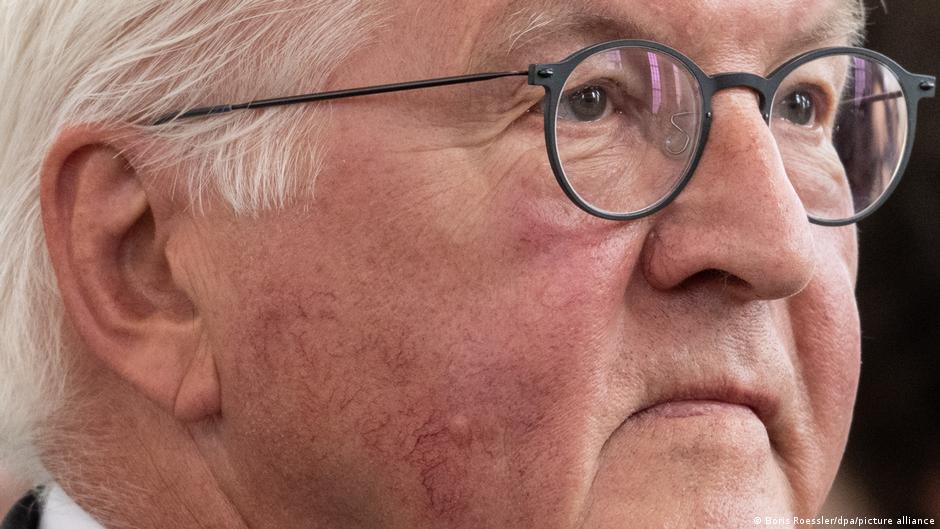
In a recent interview with ZDF, German President Frank-Walter Steinmeier emphasized the need for Europe to counter the "new spirit of ruthlessness" he attributes to Russia and the United States. This geopolitical stance is influencing investor sentiment and sector rotation on Wall Street, as traders reassess risks linked to international tensions and political developments.
Market Impact: Sector Rotation and Trading Volumes
Steinmeier’s remarks come at a time when equity markets are sensitive to geopolitical narratives. The president underscored that Europe must uphold international order and legal frameworks, distancing itself from the tactics he associates with great powers Moscow and Washington. This call for a "European model" highlights the ongoing tension between geopolitical risk and market stability.
On Wall Street, these political developments have contributed to a noticeable rotation from sectors seen as vulnerable to global instability, such as industrials and energy, into defensive and social sectors. Notably, the social reforms recently advanced by Germany's ruling coalition under Chancellor Friedrich Merz, which Steinmeier praised as potentially significant for economic growth, have attracted investor attention towards European social infrastructure and healthcare stocks.
Trading volumes in European equities have also seen spikes as investors digest these political shifts. The emphasis on pragmatism in US-Europe relations, as highlighted by Steinmeier, has eased some immediate fears of a complete rupture between the transatlantic partners. However, the ongoing uncertainty regarding the US leadership approach continues to prompt cautious positioning, especially in sectors sensitive to regulatory and diplomatic dynamics.
"We cannot live without rights and rules; we need an international order," Steinmeier stated, underscoring the foundation for stable markets.
Additionally, Steinmeier’s comments on the rising support for the far-right Alternative for Germany (AfD) party ahead of key regional elections have implications for political risk premiums embedded in European assets. Although he noted that polling does not equate to final election results, the potential for increased political fragmentation in Germany could weigh on investor confidence, influencing equity research outlooks that emphasize governance and policy stability as critical factors.
Equity analysts are integrating these geopolitical and political risk assessments into their models, adjusting earnings forecasts and valuation multiples particularly for German and broader European equities. The ongoing elections in Saxony-Anhalt and other federal states are watched closely for their impact on domestic policy direction, which in turn affects sectors such as financials, industrials, and consumer discretionary.
In conclusion, Steinmeier’s statements resonate beyond diplomacy, affecting market psychology and sector-specific flows. Market participants should monitor developments in European political stability and social reform execution closely, as these will be key drivers of equity performance and sector rotation in the coming months.