Russian Strikes on Kyiv, Odesa and Sumy Put Ukraine Risk Back in Focus
The overnight attacks injured civilians including children, adding fresh geopolitical risk for investors watching defense, energy and logistics equities.
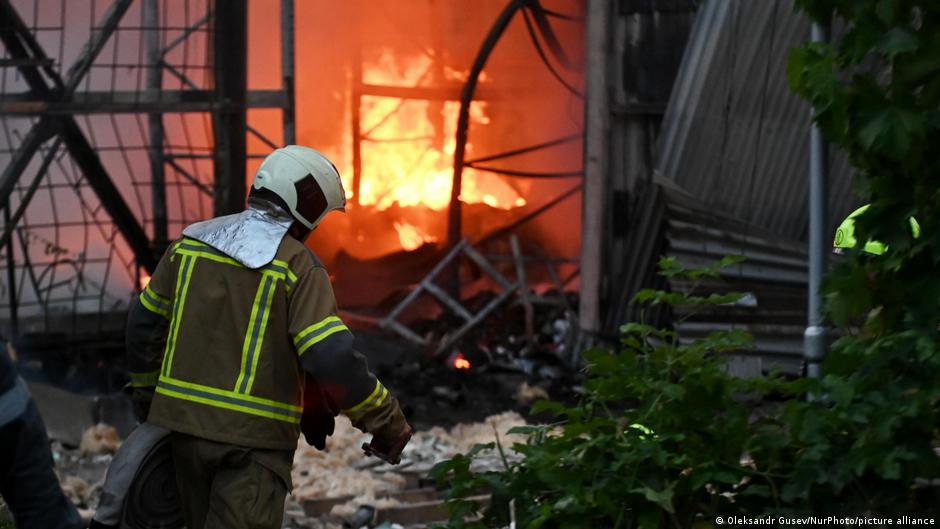
Russia carried out a large overnight missile attack on Kyiv early Thursday, September 17, while separate strikes hit Odesa and Sumy, Ukrainian officials said, underscoring a geopolitical risk factor that remains relevant for global equity markets even when the immediate damage is local and civilian.
According to Kyiv Mayor Vitali Klitschko, at least 12 people were injured in the Ukrainian capital, including children aged 10 and 12. He said nine of the injured were in hospitals. The Kyiv city military administration separately said on Telegram that the 10-year-old child injured in the Russian attack was a girl.
In Odesa, the head of the city military administration, Serhiy Lysak, said at least three people were injured, including a four-year-old child. In Sumy, Ukraine’s State Emergency Service said one person was killed and nine others were injured, including two children, after Russian airstrikes the previous evening.
“All are receiving the necessary medical assistance,” Lysak said in a Telegram post about the injured in Odesa.
For Wall Street, the direct read-through from an attack on Ukrainian cities is not a conventional earnings event. There were no company-specific financial disclosures in the Ukrainian reports, and the source material did not identify listed firms affected by the strikes. Still, the pattern of attacks may matter for trading desks that price geopolitical risk into sectors tied to defense demand, regional energy security, shipping routes, construction materials and insurance exposure.
Urban Damage and Civilian Infrastructure
By Thursday morning, Ukrainian authorities had reported damage in several districts of Kyiv. The Kyiv city military administration said warehouse premises were damaged in the Solomianskyi and Dniprovskyi districts. It also said a residential building in the Dniprovskyi district was affected.
Klitschko said glazing and the facade of a three-story office building were damaged in the Dniprovskyi district, while windows were blown out in several residential buildings. In the Sviatoshynskyi district, according to Klitschko, a non-residential building was damaged.
Ukraine’s State Emergency Service also reported damage in Kyiv’s Holosiivskyi district, where the facade and glazing of a four-story university building were affected. The institution was not named. The agency’s statement indicated there were no deaths or injuries from that particular incident.
Ukraine’s Air Force had reported on Telegram during the night of September 17 that missiles were moving toward Kyiv. The reports from the capital came as officials in Odesa and Sumy described damage and casualties from separate Russian attacks.
In Odesa, Lysak earlier said a multi-story building had been damaged in the Russian attack. The official casualty figure later cited at least three injured people, including the four-year-old child.
In Sumy, the State Emergency Service said Russian guided aerial bombs destroyed and damaged private homes, outbuildings and civilian vehicles. One person was killed and nine were injured, among them two children.
Market Lens: Risk Premium Rather Than Single-Stock News
The events do not provide enough information to assign impact to any individual U.S.-listed company. No publicly traded contractor, shipper, insurer, bank, energy producer or commodity trader was named in the Ukrainian official reports summarized in the source article. For equity research teams, that distinction matters: the attack is a macro and sector-risk item, not a company filing or guidance update.
Even so, recurrent Russian strikes on Ukrainian urban areas can feed into the investment themes that have surrounded the war since its escalation: sustained defense spending, the durability of European security budgets, possible disruption concerns around Black Sea logistics, and market sensitivity to any perceived escalation. Those themes can affect sector rotation when investors move between cyclicals, defensives, energy, aerospace and defense, and infrastructure-related shares.
Trading volumes may also respond around headline risk, particularly in exchange-traded funds and large-cap stocks used as liquid proxies for geopolitical exposure. But the source report contains no trading data, no price moves, and no analyst notes. Any Wall Street interpretation therefore remains a framework for investors rather than a factual market reaction recorded in the article.
The human toll was clear in the Ukrainian accounts. Across Kyiv, Odesa and Sumy, officials reported injured children, damaged homes, damaged commercial or institutional buildings, and one death in Sumy. For markets, the significance is that the conflict continues to produce overnight shock headlines capable of shifting attention back to geopolitical risk, even on days when investors are otherwise focused on central banks, earnings, or domestic economic data.
Equity analysts following defense and aerospace names are likely to keep such developments within a broader view of government procurement trends and allied support for Ukraine, rather than treating a single night of strikes as a standalone catalyst. Energy and transport analysts may similarly watch whether attacks translate into infrastructure disruptions or shipping constraints. The source report, however, described damage to civilian and urban buildings, not energy facilities, ports, rail assets, or industrial plants.
That limitation is important for investors. The factual record in the Ukrainian statements points to casualties and property damage in Kyiv, Odesa and Sumy. It does not show a direct hit to a listed company’s assets, a supply-chain interruption, or a measurable change in commodity flows. As a result, the market impact is best understood as an addition to geopolitical risk pricing rather than as a basis for a precise stock-specific call.
The latest reports nevertheless keep Ukraine-related risk on the board for portfolio managers. As long as missile and air attacks continue to affect major cities, traders may remain alert to potential knock-on effects across defense equities, European risk assets, energy-linked names and transportation stocks. The immediate facts from Thursday’s reports, however, remain centered on civilians: 12 injured in Kyiv, three injured in Odesa, and one killed with nine injured in Sumy.