U.S. Terror-Finance Case Against Russians Puts Security Risk Back in Market Focus
The Justice Department allegations add a geopolitical risk marker for investors tracking defense, cybersecurity and European infrastructure exposure.
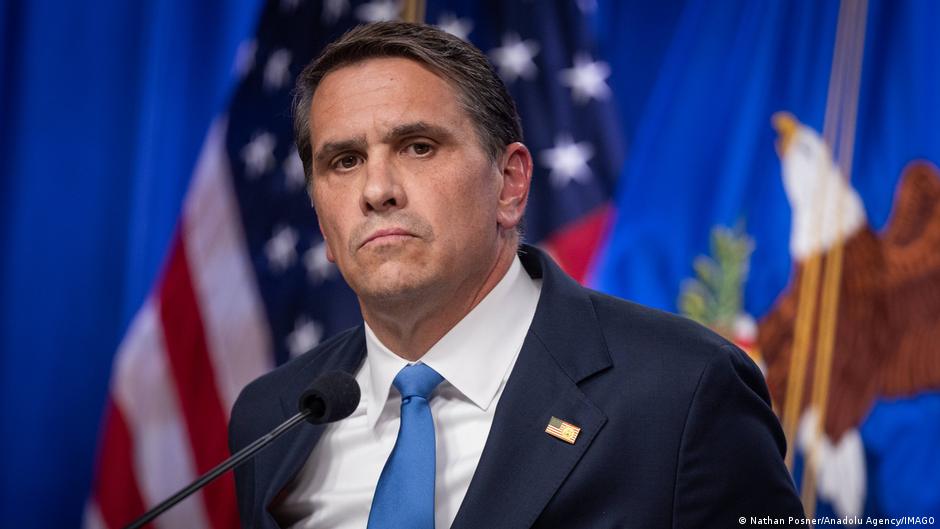
U.S. prosecutors in the Southern District of New York have brought charges against several Russian citizens accused of financing terrorism and conspiring to carry out contract killings around the world, including on U.S. territory, according to a Justice Department press release published Tuesday, September 15. The case centers on alleged activity by RIS Network, which U.S. authorities describe as a global assassination network operating under the direction of Russian intelligence services.
For Wall Street, the indictment does not create a conventional earnings event or a direct revenue catalyst for a named public company. Its relevance is instead in the way it adds another data point to an already persistent market theme: geopolitical security risk tied to Russia, Ukraine, European infrastructure and the protection of dissidents, defectors and other politically exposed individuals. That theme has repeatedly shaped investor attention across defense contractors, cybersecurity firms, intelligence-services vendors, surveillance technology providers and companies with large European infrastructure exposure.
According to the allegations summarized by U.S. authorities, the defendants paid individuals in the United States and other countries to conduct preliminary reconnaissance and targeted killings. Prosecutors also allege that associates were instructed to carry out, and attempt to carry out, terrorist attacks against civilian and military infrastructure in European countries that support Ukraine or are perceived as supporting Ukraine. The Federal Bureau of Investigation took part in the investigation.
U.S. officials allege the network attempted to recruit U.S. citizens and foreign nationals to commit killings on behalf of the Kremlin.
Market Impact Is Indirect, but Sector Signals Are Clear
The charges arrive in a market environment where investors have become increasingly sensitive to state-linked threats, sabotage risk and hybrid warfare. Equity desks are likely to treat the news less as a single-stock driver and more as a reinforcement of sector-level narratives. Defense and security-related stocks can attract attention when governments face renewed pressure to protect critical infrastructure, strengthen counterintelligence capacity and fund security partnerships.
Companies in the defense and aerospace complex may be watched for any shift in policy tone, particularly those exposed to European rearmament, surveillance, border security and military infrastructure programs. Cybersecurity shares may also remain in focus because alleged foreign-directed networks operating across borders tend to heighten concern about operational security, government systems and critical infrastructure protection. The source material does not name any public companies, contracts, trading volumes or analyst price targets, so any market reaction would depend on broader investor interpretation rather than a specific corporate linkage.
The case also intersects with an existing sector-rotation debate. Investors have periodically moved between growth technology, defensive industrials, energy, financials and security-linked equities as geopolitical headlines have shifted. Allegations involving attacks against infrastructure in Ukraine-supporting European countries could keep attention on companies tied to physical security, infrastructure monitoring, secure communications and intelligence analysis. At the same time, portfolio managers may distinguish between headline sensitivity and investable fundamentals, especially where valuations already reflect elevated defense and security spending expectations.
Alleged Network and Defendants
U.S. authorities say the defendants acted within RIS Network, described in the Justice Department material as a global assassination network that also operated inside the United States. Assistant Attorney General for National Security John Eisenberg said the defendants tried to recruit U.S. citizens and foreign nationals to commit murders at the Kremlin’s direction.
ABC News, citing U.S. Attorney General Todd Blanche, reported that the charges also relate to alleged attempts to murder an unnamed Russian dissident whom the accused believed was located in Washington, D.C. The allegations broaden the case beyond overseas activity and place it within the domestic-security framework that investors often associate with federal law-enforcement budgets, intelligence priorities and homeland-security spending.
According to the Justice Department, RIS Network is a unit of the Russian state apparatus involved in attacks abroad, including assassinations. The network is alleged to have focused on Russian dissidents and defectors and, more recently, on countries considered allies of Ukraine.
Among those charged, U.S. authorities identify three as holding senior positions inside RIS Network. Yuri Khrameev, also known as “Colonel Yuri,” is described as a former colonel in Russian intelligence services who participated in recruiting people to carry out killings of Russian dissidents. His son, Kirill Khrameev, is described by U.S. prosecutors as an officer of the Federal Security Service, or FSB.
Another defendant is Oemis Romagoza Durruti, a Cuban national living in Russia, who is suspected of coordinating the network’s attacks. Also named among those suspected of recruiting people to perform tasks for the network are Cuban national Yaidel Delgado Suarez, known as “Viking,” and Venezuelan citizen Angel Eduardo Castro.
The terrorism-financing charge carries a potential prison sentence of up to 20 years for the five named defendants. Yuri Khrameev, Suarez and Castro are also charged with conspiracy to commit murder-for-hire, which carries a potential sentence of up to 10 years. The defendants are currently wanted by authorities.
Equity Research Lens
From an equity research perspective, the most immediate conclusion is that the indictment adds to the risk premium surrounding Russia-linked security threats without producing company-specific financial estimates. Analysts covering defense, cybersecurity and government-services providers may cite such developments as part of the background supporting medium-term demand for intelligence, counterterrorism and infrastructure-protection capabilities. However, the source material contains no new procurement decisions, budget appropriations or contract awards.
That distinction matters for traders. A geopolitical headline can lift attention, options activity or intraday volumes in security-related baskets, but durable share-price performance typically requires confirmation through orders, margin expansion or guidance. Investors may therefore monitor whether the case influences policy language in Washington or European capitals, especially around protection of infrastructure and countering foreign-directed networks.
For now, the market takeaway is measured but notable: the allegations reinforce the strategic importance of security spending at a time when Russia-related risk remains embedded in global portfolios. The legal process will proceed through U.S. courts, while investors assess whether the case remains a law-enforcement matter or becomes part of a broader policy response with consequences for defense, cybersecurity and infrastructure-security equities.