Russian Oil Product Output Falls 22% in June Amid Sector Disruptions and Market Adjustments
June data shows a sharp year-over-year decline in Russian oil product production, highlighting sector challenges and potential impacts on market dynamics.
Russia's oil product production index dropped by nearly 22% in June compared to the same month last year, according to official statistics published by Rosstat. This significant contraction reflects ongoing challenges within the sector and adds complexity to the fuel market landscape amid geopolitical tensions.
The production index for oil products, which is part of the broader industrial production index, declined by 21.8% year-over-year in June 2026. This figure marks a deeper fall than the 13.5% drop recorded in May, indicating that the contraction in output accelerated as the summer progressed.
The index measures the value of a representative basket of oil products, calculated by multiplying quantities produced by prices, all adjusted to constant prices from the 2023 base year. Notably, the Russian government does not publish production volumes in physical terms, limiting transparency in the sector.
Market Impact and Price Trends
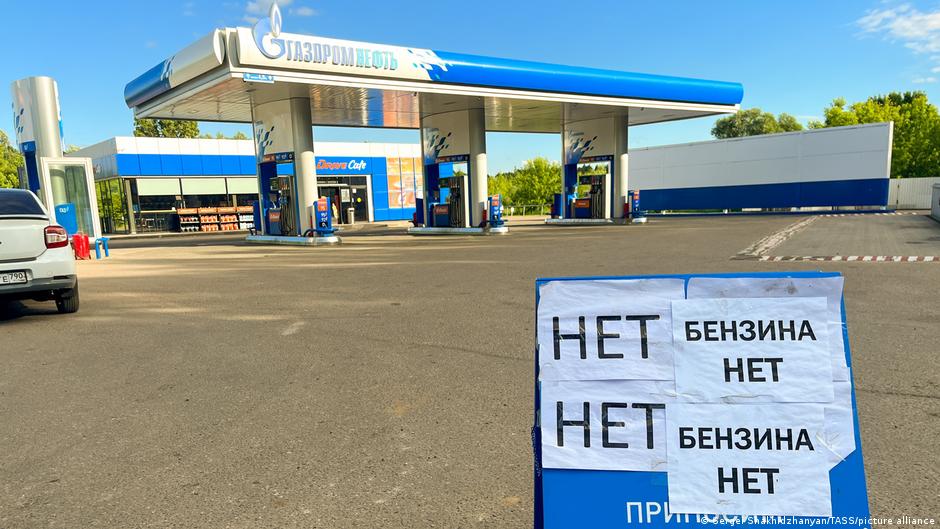
Despite the steep decline in production, Russian authorities maintain that the fuel market has "partially stabilized." Nonetheless, price data from Rosstat reveals that fuel prices are still rising, albeit at a slower pace. For the week ending July 20, gasoline prices increased by 1.7%, down from a 2.3% increase the previous week. Diesel prices followed a similar pattern, rising 1.9% compared to 3.2% the week prior.
"The fuel market’s partial stabilization comes amid significant production disruptions and regional supply constraints," analysts note.
The production shortfall and price adjustments are linked to intensified Ukrainian drone strikes targeting Russian oil storage facilities and refineries this summer. These attacks have reportedly damaged or disabled approximately 25% of Russia’s refining capacity, exacerbating fuel shortages that have not been seen since the full-scale conflict began.
In several Russian regions, authorities have imposed restrictions on fuel sales to manage the scarcity. These developments are of particular interest to investors and market watchers, as they could influence sectoral rotation and trading volumes on Wall Street, especially among energy stocks with exposure to Russian operations or linked global oil supply chains.
Equity Research Perspective
From an equity research viewpoint, the sharp contraction in Russian oil product output signals potential volatility for energy stocks internationally. Companies reliant on Russian oil inputs might face supply chain disruptions, while alternative suppliers could benefit from higher demand and pricing power.
Moreover, reduced output combined with ongoing geopolitical risk factors may impact investor sentiment. Market participants should monitor refining sector performance, trading volumes of oil-related equities, and sector rotation trends as capital reallocates in response to evolving supply dynamics.
Overall, this data underscores the persistent challenges facing the Russian oil sector and suggests that global energy markets remain sensitive to geopolitical developments and production capacity shocks.