Putin Sees Opening for Ukraine Peace Talks as Zelensky Awaits U.S. Envoys
Fresh comments from Moscow and Kyiv revived focus on diplomacy, a development investors would parse for defense, transport and broader Europe-sensitive trades.
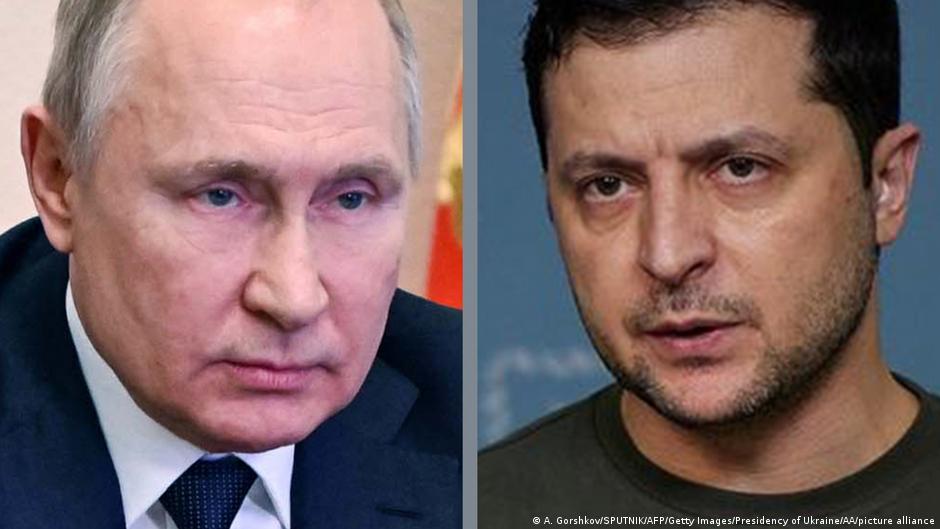
Russian President Vladimir Putin said he sees a chance for peace in Ukraine through diplomacy, while Ukrainian President Volodymyr Zelensky said U.S. representatives are expected to visit both Kyiv and Moscow for discussions that could include a potential peace framework. For markets, the renewed diplomatic signaling is unlikely to settle the conflict outlook on its own, but it adds a fresh catalyst for investors tracking defense names, transport-linked risk and Europe-exposed cyclicals.
Putin made the remarks on Thursday, September 3, on the sidelines of the Eastern Economic Forum. He said Russia and Ukraine must be the parties that directly agree on ending the war, while other countries should support that process. He also thanked those attempting to contribute to a settlement and said that, in his view, there are chances for peace.
"Russia and Ukraine should first of all come to an agreement between themselves. And all other countries are ready to support and help. ... Are there chances? In my view, yes, there are," Putin said.
Putin also said Moscow and Kyiv have maintained contacts through their intelligence services, though he did not say how much that could help deliver peace. At the same time, he cited Ukrainian attacks on transport vessels in the Black Sea and statements from Kyiv about the safety of Russian airspace, saying such factors complicate the possibility of bilateral peace talks.
Later the same day, Zelensky said prospects for renewed talks with Russia would be part of upcoming contacts involving U.S. representatives. In his evening video address, the Ukrainian leader said there are preliminary dates and that Kyiv expects representatives of the U.S. president to arrive in the Ukrainian capital. He added that there is already confirmation of meetings in both Moscow and Kyiv.
Zelensky said Ukraine remains in constant contact with the American team. A few days earlier, he reported a phone call with U.S. President Donald Trump’s special envoys, Steven Witkoff and Jared Kushner, during which he told the American representatives that Russia’s battlefield gains are insignificant.
Why equity desks will watch the diplomacy signal
For Wall Street, the immediate question is not whether peace is close, but whether the rhetoric is credible enough to alter sector positioning. In practical terms, any increase in perceived odds of negotiations could pressure the most conflict-sensitive defense trades while supporting selective rotation into industrial transport, airlines, European banks and other risk assets tied to lower geopolitical stress. That does not require a deal to be imminent; it only requires investors to believe that the probability distribution around the war is shifting.
Defense stocks such as Lockheed Martin, RTX and Northrop Grumman would likely be at the center of that conversation, even if no immediate repricing follows from a single round of comments. The market’s usual pattern in such moments is to distinguish between long-duration structural demand for rearmament and shorter-term headline risk tied to negotiations. That means equity research desks are likely to frame any weakness in prime contractors as a debate over timing rather than as a clear change in the multi-year spending outlook.
Transport and shipping names could draw a second layer of attention because Putin explicitly referred to attacks on transport vessels in the Black Sea. Investors would be watching whether any diplomatic track lowers perceived risk around shipping routes, insurance costs and broader regional logistics. That lens can extend beyond pure shipping plays to rail equipment, freight forwarding and European industrial exporters whose sentiment is sensitive to disruptions in regional trade corridors.
Airlines and aerospace suppliers may also remain in focus after Putin referenced statements from Kyiv on the safety of Russian airspace. Even without an operational change, markets tend to react to any sign that airspace risk could either intensify or ease. The same applies to energy-linked equities, where diplomatic momentum can influence assumptions about sanctions durability, commodity risk premia and Europe’s macro backdrop.
Another market layer is trading volume. Headlines involving the war, the White House and potential summitry often lift turnover in defense, energy and exchange-traded funds tied to Europe and emerging markets. If U.S. envoys do travel to both capitals as Zelensky indicated, traders would likely monitor whether volumes broaden beyond the usual geopolitical hedge trades into more cyclical equity groups. That would be an early signal that investors are treating diplomacy as more than a one-session headline.
Discussion of renewed negotiations accelerated after an unannounced visit by CIA Director John Ratcliffe to Moscow in late August. According to Axios, a representative of the Trump administration proposed, among other ideas, a trilateral meeting involving the presidents of the United States, Russia and Ukraine to discuss ending the war through diplomacy.
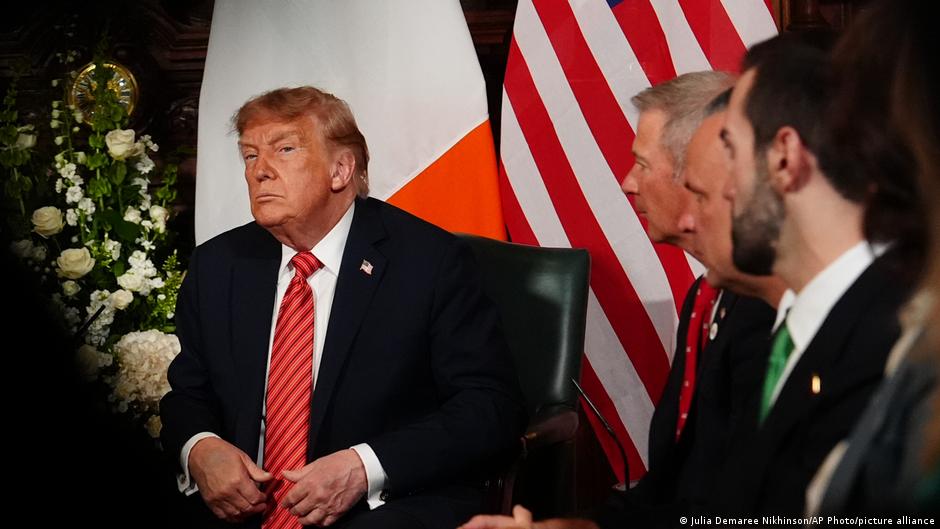
After those media reports, Trump told reporters he rejected the idea of holding such a trilateral summit in the near term. Trump said Putin would agree to such a meeting if Trump wanted it and that Washington could organize a summit immediately. But he added that he wants to hold a meeting when the sides are ready to conclude a peace agreement.
Trump said Putin and Zelensky should stop the "stupid war," while again assigning blame for the continuing fighting to both Moscow and Kyiv.
Trump also said the obstacle to peace is the personal hostility between Zelensky and Putin, arguing that this is why the conflict he had promised to end in a day has proved harder than the eight wars he says he stopped in less than two years in office.
For Stock Press readers, the core takeaway is that diplomacy is back as a market variable, even if the underlying battlefield and political constraints remain severe. Equity strategy teams are likely to treat the latest statements as a headline-sensitive rotation trigger rather than a confirmed change in fundamentals. In that framework, specific stocks matter, but so does the breadth of the move: whether flows stay concentrated in defense and energy hedges, or begin to spread into transport, industrial and Europe-facing risk assets. Until a concrete negotiating format emerges, that distinction may be the clearest signal markets can trade on.