Putin Says Armenia’s EU Bid Would Mean Exit From Eurasian Trade Bloc
Russia and Armenia sharpened their dispute over Yerevan’s EU ambitions, a political clash investors may read through to regional risk, trade alignment and cross-border exposure.
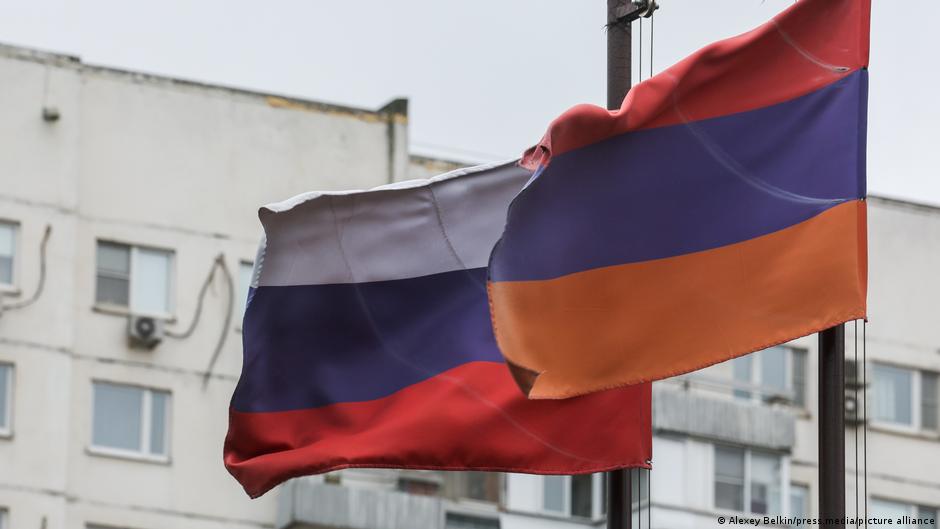
Russian President Vladimir Putin told Armenian Prime Minister Nikol Pashinyan that Armenia’s move to start the process of joining the European Union would, in practical terms, amount to leaving the Eurasian Economic Union, sharpening a geopolitical dispute that investors are likely to view through the lens of regional trade risk and cross-border commercial exposure.
The exchange took place during a meeting on the sidelines of the Shanghai Cooperation Organization summit in Bishkek, according to a transcript published on the Kremlin’s website on Tuesday, September 1. The main topic was Yerevan’s plan to submit an application to join the EU, an initiative Pashinyan said on August 24 would begin in the near term.
Putin argued that the two integration tracks cannot coexist.
“You said that you had not announced withdrawal. The adoption of a law on the start of accession to another economic organization in fact means a statement of withdrawal from ours, because staying there and there is incompatible. That is the problem,”he said, referring to the EU as the “other organization” and the Eurasian Economic Union, or EAEU, as “ours.”
For investors, the significance is less about an immediate market-moving decree and more about the policy signal: Moscow is again drawing a hard line around EAEU membership, while Yerevan is pressing ahead with a European course. That raises the prospect of a longer period of policy friction that could influence trade routes, customs treatment and commercial planning for companies with exposure to the South Caucasus.
Pashinyan pushed back, saying Yerevan had reviewed the treaty framework governing Russia-Armenia relations as well as the agreements that operate inside the EAEU and had found no violations of Armenia’s obligations to either Russia or the bloc. He added that, with the adoption in 2025 of a law on European integration, Armenia had effectively moved away from the idea of holding a referendum on choosing between the EU and the EAEU.
Investor Read-Through Centers on Regional Exposure
That distinction matters for market participants because it suggests Armenia is trying to keep its legal footing inside the EAEU even as it opens a political path toward Europe. For equity investors and sector analysts, the immediate takeaway is that the story remains a medium-term geopolitical and regulatory one rather than an event tied to a disclosed change in tariffs, earnings guidance or listed-company operating forecasts.
Still, the rhetoric may feed into broader risk positioning across emerging Europe and frontier markets. A harder Russian stance could keep attention on sectors most sensitive to border frictions and trade administration, including food imports, transportation, logistics and companies dependent on regional supply chains. Financial institutions with cross-border activity in the region may also remain in focus if political pressure starts to translate into policy action.
Putin again called for a referendum in Armenia on the country’s relationship with the EU and the EAEU, saying the issue should be put directly to the public. Pashinyan, however, indicated that the legal and political direction adopted in 2025 had already changed the calculus around such a vote.
The European Commission, responding after Pashinyan’s August 24 remarks, said Armenia is now “closer to the European Union than ever before,” while also stressing that EU accession takes place through a clearly defined, merit-based process. That formulation offers little support for investors looking for a near-term institutional shift, but it does reinforce the sense that Brussels sees Armenia as moving deeper into the European orbit.
Pashinyan had already said in June that there were no grounds for holding a referendum on joining the EU. That statement came as a response to a joint declaration by the leaders of Russia, Belarus, Kazakhstan and Kyrgyzstan. Putin had previously argued that EU and EAEU membership cannot be combined and had also said that the “Ukrainian scenario” allegedly began with Kyiv’s attempt to join the EU.
From a market-structure perspective, the lack of concrete measures announced at the Bishkek meeting limits the case for an immediate stock-specific reaction. No company names, trading volumes or official research revisions were cited in the source material, and no new sanctions, trade restrictions or policy deadlines were disclosed in the transcript excerpt. That means the equity impact, especially for Wall Street investors, is likely to be indirect for now and filtered through sovereign-risk assessments, regional allocation decisions and sentiment toward businesses with Eurasia-linked operations.
At the same time, investors will remember that political pressure has already had commercial consequences. Before Armenia’s parliamentary elections on June 7, Moscow increased pressure on Yerevan, including by banning imports into Russia of several Armenian products. Pashinyan’s Civil Contract party ultimately won that election, and the meeting in Bishkek on September 1 was the first face-to-face encounter between Pashinyan and Putin since the vote.
For portfolio managers, that sequence underscores the practical issue: diplomatic disputes between Moscow and Yerevan can spill into trade policy. Even without a direct Wall Street ticker attached, the episode is relevant to analysts covering regional transportation, agriculture-linked exporters, border trade and banks with exposure to political developments across the post-Soviet space.
The core message from Bishkek was straightforward. Russia is treating Armenia’s EU path as incompatible with continued membership in the EAEU. Armenia, for now, is insisting it remains within its obligations while advancing its European agenda. Until either side turns that dispute into a concrete policy move, investors are likely to read the story as a geopolitical warning rather than a fully priced market event.