Polish Opposition Leader Calls to Block Ukraine’s EU Accession Talks Amid Diplomatic Rift
Jarosław Kaczyński urges Warsaw to halt negotiations over Kiev’s EU membership, intensifying tensions with Ukraine and impacting regional markets.
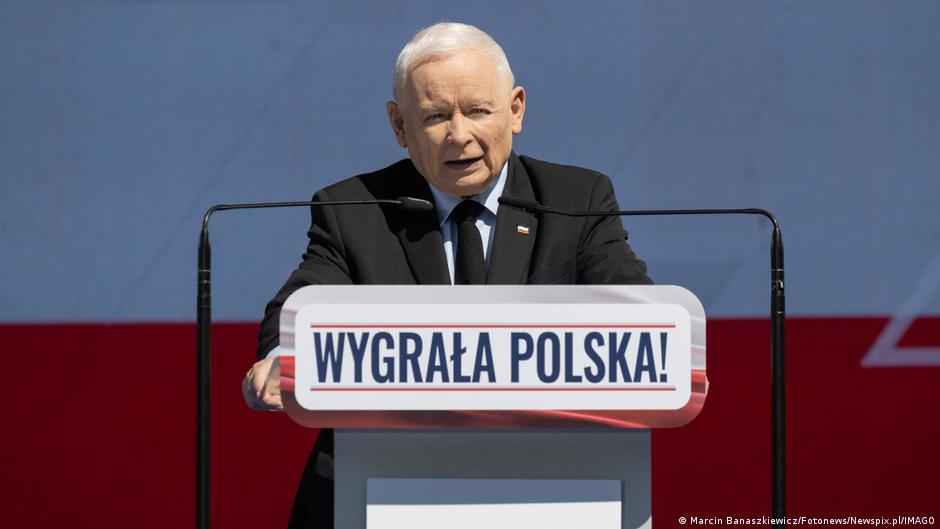
Jarosław Kaczyński, leader of Poland's opposition Law and Justice party (PiS), has publicly called on the Polish government to block accession talks between Ukraine and the European Union. This announcement, reported on June 27, signals a significant escalation in the diplomatic friction between Warsaw and Kiev as geopolitical uncertainties ripple into financial markets.
Political Context and Market Relevance
Kaczyński's call to block Ukraine's EU membership negotiations stems from his accusations that Kiev has exacerbated tensions with Poland. The controversy centers around Ukraine's recent decision to name a military unit after the Ukrainian Insurgent Army (UPA), a move that provoked a sharp response from Polish leadership, including the revocation of the Order of the White Eagle from Ukrainian President Volodymyr Zelensky.
"The conflict is not merely about Ukraine’s relations with Europe but also about historical grievances impacting current political stability," analysts note.
This political discord contrasts starkly with the supportive stance of Polish Prime Minister Donald Tusk, who recently hosted the Ukraine Recovery Conference 2026 in Gdańsk. The event culminated in signing over 160 agreements valued above €10 billion, aimed at Ukraine’s post-conflict economic reconstruction. The divergence of views within Poland’s leadership creates a complex backdrop for investors evaluating regional risk.
Looking ahead to Poland’s October 2027 parliamentary elections, Kaczyński appears to be appealing to domestic constituencies skeptical of Ukrainian integration. His rhetoric targets Polish farmers concerned about competition from Ukrainian agricultural imports and broader public unease about the cost of hosting Ukrainian refugees. Such political positioning could influence the Polish government’s foreign policy direction and, by extension, impact EU-Ukraine trade dynamics.
For Wall Street and global equity markets, the geopolitical tension introduces a layer of uncertainty in Eastern European sectors, especially in agribusiness, energy, and infrastructure companies with exposure to regional supply chains or reconstruction projects. Analysts are monitoring trading volumes for stocks linked to Polish and Ukrainian markets, as well as sector rotations favoring defensive equities amid potential volatility.
Additionally, the diplomatic strain may affect currency markets, with the Polish złoty and Ukrainian hryvnia experiencing sensitivity to political developments. Equity research teams recommend caution in Ukrainian-related equities, considering both the political risks and the ongoing conflict context, while emphasizing opportunities in EU-backed infrastructure and energy transition sectors.
In summary, Kaczyński’s stance reflects deeper historical and political narratives influencing current EU enlargement debates. Market participants should weigh these developments carefully as they could reshape regional trade and investment flows, affecting sector allocations and risk assessments on Wall Street.