Leipzig Sabotage Probe Puts Logistics, Defense and Sanctions Plays in Focus
Latvia says a suspect in the Leipzig airport sabotage investigation had been living in Russia, adding a geopolitical layer for investors tracking transport and security stocks.
Latvia said a Latvian citizen suspected of involvement in the sabotage case at Leipzig airport had been living permanently in Russia for the past several years, a disclosure that sharpens the geopolitical dimension of an incident already tied by Berlin to Moscow and likely to keep European transport, defense and sanctions-exposed names on investors’ radar.
The statement, reported Thursday, September 3, by Latvian news agency Leta and attributed to Latvia’s State Security Service, came as Riga confirmed it is cooperating with German investigators and providing necessary support. The Latvian agency declined to comment further, citing the ongoing investigation. Germany’s federal prosecutor had not issued official public comment on the investigation.
For markets, the immediate relevance is less about direct earnings exposure and more about risk pricing across logistics operators, aviation infrastructure, security suppliers and companies sensitive to any further tightening of European measures against Russia. The incident also reinforces a broader investor theme: physical security risks linked to the war in Ukraine can spill into transport corridors and affect how traders position around European industrial, shipping and defense names.
German investigators had earlier identified two suspects in the attempted sabotage case, according to reporting cited from Süddeutsche Zeitung and broadcasters NDR and WDR. Those reports said the attempted attack on a Ukrainian transport aircraft involved a Russia-born suspect holding Latvian citizenship and a Belarusian suspect holding Russian citizenship.
The second suspect reportedly entered the Schengen area on an Italian tourist visa issued in late April by Italy’s diplomatic mission in Minsk. After that information emerged, Rome said it would examine the circumstances under which the visa had been issued.
“An investigation will be conducted,” Italian Foreign Minister Antonio Tajani said, according to Euractiv, adding that the case underscored attempts by some countries to act against the EU using individuals without criminal records who do not arouse suspicion.
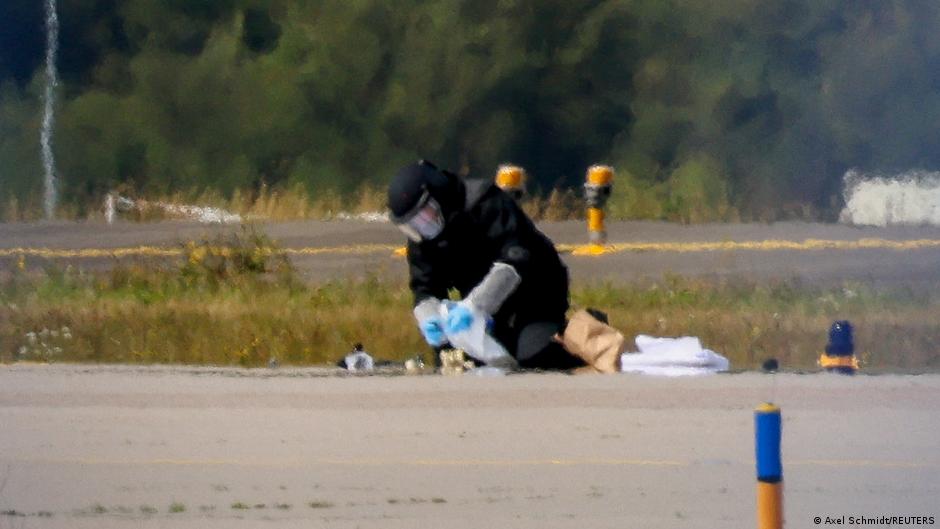
The alleged sabotage attempt against a Ukrainian Antonov An-124 cargo aircraft took place on August 4. According to investigators, at least three drones were involved. One drone carrying explosives was found near several Ukrainian cargo aircraft. A second likely crashed into a DHL cargo plane minutes after the first was discovered. A third drone was found 10 days later, on August 14, in a field west of the airport. Investigators found about 50 grams of a substance nearby that was initially assessed as hexogen.
Market Read-Through for European Equities
From a Wall Street perspective, the case matters because it could drive another round of sector rotation inside Europe-sensitive portfolios. Transport and logistics names may face renewed scrutiny over operational resilience and insurance implications, while defense and security-related companies could attract incremental interest if investors conclude governments will respond with more surveillance, border-control and counter-drone spending.
DHL is the most directly identifiable listed corporate name mentioned in connection with the incident, though the reporting does not indicate material operational disruption beyond the event itself. Even so, any headline linking a cargo aircraft to an alleged sabotage attempt is enough to draw short-term trading attention to logistics stocks, particularly those with European air-freight exposure or large cross-border networks. Airport operators, freight forwarders and aerospace suppliers could also move on sentiment as investors reassess geopolitical risk premia.
Berlin has placed responsibility for the incident on Russia. In response, the German government decided to close Russia’s consulate general in Bonn and terminate the agreement governing the Russian House in Berlin. Germany also said it would tighten entry controls for Russian citizens and strengthen measures against Russia’s “shadow fleet,” which Moscow uses to circumvent EU sanctions linked to the war against Ukraine.
That policy response broadens the equity angle beyond transport. Any stepped-up enforcement against the shadow fleet can matter for shipping, energy logistics, marine services and insurers with exposure to sanctions implementation. Investors will also watch whether tougher entry controls and diplomatic retaliation trigger reciprocal steps that affect cultural, educational or commercial channels between Germany and Russia.
For defense and homeland security stocks, the read-through is more straightforward. An investigation centered on drones, explosives and airport infrastructure is likely to reinforce demand narratives around counter-UAS systems, perimeter surveillance, airfield protection and intelligence-sharing capabilities. While the article does not cite specific procurement measures, the direction of travel is clear enough for equity analysts: incidents like this tend to support premium valuations for companies aligned with European security priorities.
At the same time, the case adds another layer of political risk for companies with residual Russia exposure or businesses vulnerable to sanctions escalation. Research desks are likely to focus less on immediate revenue damage and more on whether the event accelerates already established de-risking trends inside European portfolios. In that setup, investors may prefer defense, cybersecurity and selective infrastructure exposure over sectors seen as more operationally exposed to cross-border disruption.
Moscow has rejected the accusations of organizing sabotage in Leipzig. In response to Berlin’s move against the Russian House, Russian authorities said they would close Goethe-Institut branches in Russia, located in Moscow, St. Petersburg and Novosibirsk.
For Wall Street investors, that leaves the Leipzig case as another reminder that geopolitics can create trading catalysts far beyond the directly affected asset. The absence of official public comment so far from Germany’s federal prosecutor means the investigative picture is still incomplete. But the facts already in the public domain are enough to keep attention on logistics resilience, security spending and the next turn in Europe’s sanctions regime.