Kyiv Strikes Put Defense, Logistics and Ukraine Risk Back in Market Focus
Russian drone and ballistic missile attacks on Kyiv renewed investor attention on geopolitical risk, infrastructure exposure and defense-linked equities.

Russian forces launched overnight strikes on Kyiv using drones and ballistic missiles on September 8, according to the Kyiv City Military Administration, putting the war in Ukraine back into focus for markets already sensitive to geopolitical risk, energy security and defense spending expectations.
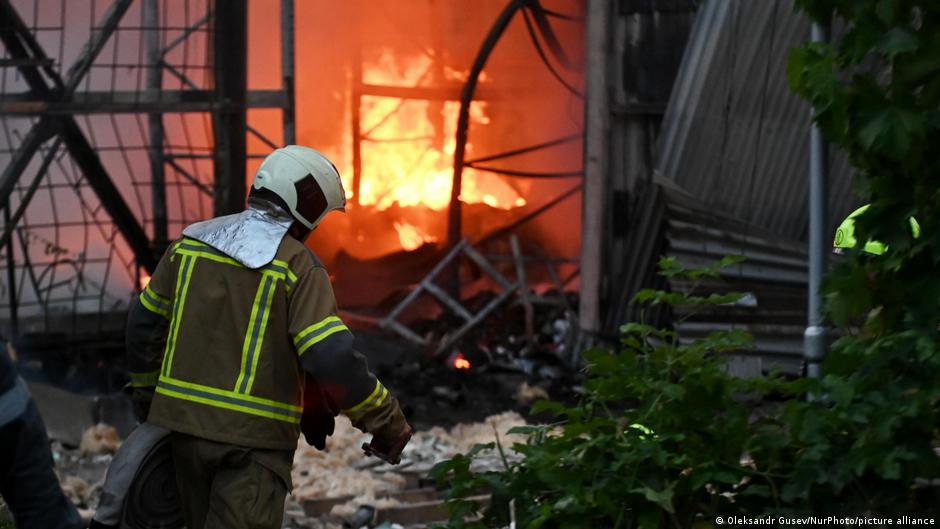
The reported damage was concentrated across several districts of the Ukrainian capital. In the Solomianskyi district, debris fell on a five-story residential building, the city military administration said on Telegram. A separate three-story residential building was also damaged, and a fire broke out in a warehouse facility. Kyiv Mayor Vitali Klitschko said medical teams had been dispatched to Solomianskyi district and, according to preliminary information, six people were injured in the shelling.
For Wall Street, the immediate read-through is not a single-stock event, because the source reports did not identify publicly traded companies, insurers, logistics operators or defense contractors directly affected. But the attacks still matter for the equity tape because they reinforce several market themes that have repeatedly shaped sector rotation since Russia’s full-scale war in Ukraine began: demand for air defense and missile systems, pressure on logistics and industrial infrastructure, and the persistence of geopolitical risk premiums in European-exposed assets.
Defense and Infrastructure Exposure Remain Central to the Trade
The Kyiv City Military Administration said a vehicle was damaged in the Darnytskyi district after debris fell. Klitschko said fires also broke out in non-residential areas of the Podilskyi and Darnytskyi districts. The city administration said garages and cars were burning. In the Holosiivskyi district, Klitschko reported a fire on the grounds of an educational institution. Preliminary information also indicated that people were trapped inside a residential building.
Those details are important for investors not because they point to a specific earnings revision, but because they illustrate the recurring pattern of damage that underpins Ukraine-related investment flows: residential buildings, vehicles, warehouses, garages, industrial facilities and logistics infrastructure remain exposed to drone and missile attacks. Equity strategists have generally treated such developments as supportive of longer-term defense budgets and reconstruction needs, while also highlighting operational risk for companies with supply chains, assets or customers in the region.
Late on September 7, Russian forces also struck the Boryspil and Fastiv districts of Kyiv region using drones, Ukraine’s State Emergency Service said on Telegram. In Boryspil district, fires broke out at industrial enterprises. At one of them, the fire destroyed seven trucks. The emergency service also said a building at one logistics complex was attacked twice. Rescuers arrived quickly and extinguished the fires.
For investors, the reported damage to industrial enterprises, trucks and a logistics complex keeps attention on supply-chain resilience rather than on a single immediate earnings hit.
Trading desks are likely to monitor European defense names, aerospace suppliers, cybersecurity contractors, logistics operators and insurers for any follow-through in sentiment. In U.S. markets, the broader defense complex can see renewed attention during escalations involving drones and missiles, particularly when the news flow emphasizes air-defense requirements and urban infrastructure vulnerability. Still, the source material does not provide weapons-system procurement data, contract awards, company names or trading-volume figures, so any equity-market interpretation remains a sector-level view rather than a company-specific conclusion.
Diplomacy Adds a Second Layer for Investors
The strikes occurred around a diplomatic backdrop that could also shape market expectations. U.S. President Donald Trump’s special representatives, Steve Witkoff and Jared Kushner, left Kyiv overnight on September 7, according to the source report. After the meeting, Ukrainian President Volodymyr Zelensky said Ukraine was ready for trilateral talks in a Ukraine-U.S.-Russia format.
Moscow also did not rule out the possibility of resuming a trilateral negotiation format. Kremlin spokesman Dmitry Peskov said, however, that it was premature to speak about the place and timing of such talks. For investors, that combination of military escalation and tentative diplomatic language creates a familiar tension: defense and security-linked sectors may draw support from continued conflict risk, while any credible path toward negotiations can affect energy, materials, European banks, industrials and reconstruction-linked equities.
The market impact will therefore depend less on the existence of the latest attack alone and more on whether the event changes assumptions about the conflict’s duration, the scale of Western support, and the probability of negotiations. Without confirmed corporate exposure or disclosed trading data, investors should be cautious about overstating direct stock implications. The more defensible takeaway is that the strikes keep Ukraine risk active in equity research models, particularly for companies tied to defense procurement, logistics networks, industrial property, transport equipment and regional infrastructure recovery.
The Kyiv reports also reinforce why analysts continue to distinguish between headline-driven trading and fundamental revisions. Damage to trucks, warehouses and industrial sites can influence sentiment toward logistics and infrastructure themes, but earnings estimates generally require company disclosures, insurance details, customer exposure or confirmed contract changes. None of those appeared in the source material.
As of the reported events, the factual record is that Russian forces used drones and ballistic missiles against Kyiv overnight on September 8; debris and fires were reported across multiple districts; six people were preliminarily reported injured; industrial fires occurred in Kyiv region after drone strikes late on September 7; seven trucks were destroyed at one enterprise; and a logistics complex building was attacked twice. The diplomatic track remains unresolved, with Kyiv indicating readiness for a trilateral format and Moscow saying details remain premature.