Italy’s Foreign Minister Cancels US Visit Amid Trump’s Comments on Italian PM Meloni
Antonio Tajani cancels planned US trip after President Trump’s remarks about PM Giorgia Meloni spark diplomatic tensions.
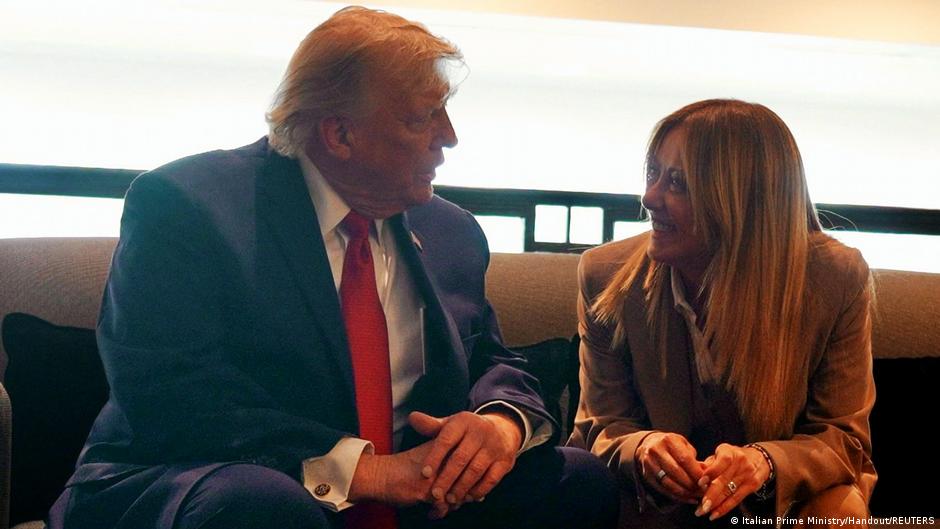
Italy’s Foreign Minister Antonio Tajani has canceled his scheduled visit to the United States following controversial remarks made by former US President Donald Trump about Italian Prime Minister Giorgia Meloni. The decision highlights escalating tensions between Italy and the United States, which could have implications for transatlantic diplomatic and business relations.
Impact of Diplomatic Strain on Market Sentiment
Tajani was expected to attend an Italo-American forum on business, investment, science, and innovation in Miami on June 21-22, where he was also set to meet with US State Department official Marco Rubio. The cancellation was announced via Tajani’s social media on June 19, citing Trump’s comments as "serious and offensive" to both Meloni and Italy as a whole.
"Serious and offensive statements by President Trump against Prime Minister Giorgia Meloni are an insult to all of Italy," Tajani said in his announcement.
Trump claimed in a June 19 interview that Meloni had "begged" him for a photo at the recent G7 summit in Évian-les-Bains, France. Meloni promptly refuted these allegations, expressing shock and disappointment at Trump’s behavior toward an ally. She also criticized Trump for displaying more conciliatory attitudes towards adversaries of the West than to its allies.
These diplomatic tensions come amid a broader backdrop of fluctuating market dynamics. Investors closely monitor geopolitical relations for signs of stability or risk, particularly involving key NATO allies like Italy and the United States. The abrupt cancellation of diplomatic engagements and public disputes can result in increased volatility in European equity markets, especially within sectors exposed to international trade and defense.
Following this episode, stocks of defense contractors and firms with significant US-Italy business exposure could experience short-term fluctuations driven by concerns over deteriorating relations. Additionally, sectors such as luxury goods and automotive, critical components of the Italian economy, may face pressure if diplomatic strains affect trade agreements or investment flows.
Sector Rotation and Trading Volumes
Market analysts observe that such political frictions often trigger sector rotations, with investors shifting capital toward safer havens or defensive stocks during periods of uncertainty. Trading volumes in European equities, particularly Italian blue chips, might see heightened activity as traders react to news headlines and reassess risk premiums.
Equity research firms advise monitoring developments closely, recommending cautious exposure to stocks sensitive to Italy-US relations until diplomatic clarity is restored. The diplomatic spat also underscores the importance of geopolitical risk factors in portfolio construction and asset allocation strategies.
Looking forward, the trajectory of Italy-US relations will be a key variable influencing investor confidence across transatlantic markets. Although the immediate impact is political, the ripple effects may affect cross-border capital flows and corporate earnings forecasts.