Germany’s Record Defense Spending Boosts NATO Budgets Amid Market Sector Shifts
Germany announces unprecedented €124.7 billion defense budget for 2026, influencing sector rotation and trading volumes ahead of NATO summit.
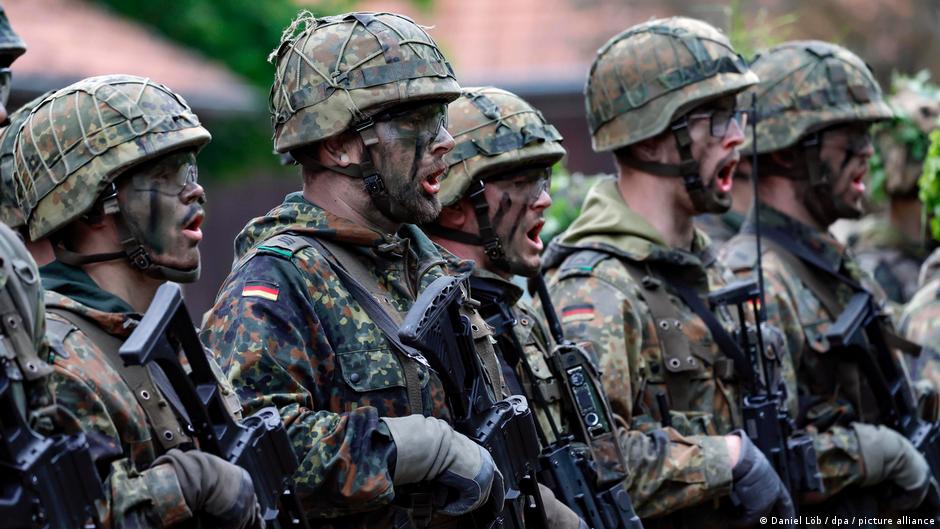
Germany has declared a record defense budget of €124.7 billion for 2026, marking a 25.5% increase from the previous year and signaling a significant shift in European defense spending within NATO. This substantial rise, the largest absolute increase for Germany, positions the country as a stronger player in global defense markets and is likely to impact related stocks and sector dynamics on Wall Street.
Implications for Market Sectors and Equity Trading
The German government's commitment to increased defense expenditures reflects broader geopolitical pressures and alliance expectations. With defense spending projected to reach 2.69% of Germany's GDP in 2026—up from 2.22% in 2025—the move is expected to channel substantial capital into defense manufacturing, technology, and infrastructure sectors.
Wall Street investors are closely monitoring these developments as Germany plans to raise over €800 billion by 2030 via state bonds, with €200 billion earmarked for 2027 alone, a 12.5% increase from the current year. This surge in capital allocation towards defense could intensify trading volumes in European defense equities listed on U.S. exchanges, as well as stimulate sector rotation towards industrial and technology stocks with military contracts.
"European allies and Canada increased their defense spending by nearly 20% last year, adding $139 billion," said NATO Secretary General Jens Stoltenberg. "Together with 2025 and 2026, the growth totals $258 billion, underscoring a strong commitment to collective security."
Despite this growth, European defense budgets remain well below the United States, which plans to invest approximately $850.2 billion in defense for 2026, significantly overshadowing combined NATO partners’ budgets. The U.S. continues to lead globally in defense expenditure, outpacing rivals such as China and Russia, while Germany ranks fourth worldwide.
Market analysts suggest that Germany’s increased defense spending could accelerate mergers, acquisitions, and innovation within defense-related firms, attracting investor interest and potentially prompting reallocation of portfolio assets towards this sector. Furthermore, the issuance of large government bonds to finance these expenditures is poised to influence fixed-income markets, with potential ripple effects across global financial markets.
Several NATO countries are also on course to meet or exceed NATO’s target of spending at least 3.5% of GDP on defense by 2035, with Greece, Poland, Latvia, Lithuania, and Estonia expected to hit the 5% mark in 2026. Conversely, some nations, including Belgium, Spain, and the Czech Republic, will maintain defense spending at around 2% of GDP, with Slovenia falling below the NATO threshold.
These diverging defense expenditure trajectories within NATO could lead to differentiated market performances among defense contractors servicing various member states, influencing stock valuations and sector momentum on Wall Street.
Overall, Germany’s unprecedented defense budget sets a new benchmark for European military spending, embedding increased defense sector activity into broader market trends and investor strategies heading into and beyond the upcoming NATO summits.