Germany’s Alternative for Germany Party Surges Amid Divided Public Opinion, Impacting Market Sentiment
Alternative for Germany leads CDU/CSU by 8%, while public opinion remains split on banning the far-right party, influencing sector rotation and investor sentiment.
Recent polling data from the German sociological institute Insa reveals a significant shift in political preferences that is beginning to impact market dynamics on Wall Street, particularly in sectors sensitive to geopolitical and regulatory changes in Europe.
Political Landscape and Market Implications
The far-right party Alternative for Germany (AfD) continues to gain traction, now leading the conservative CDU/CSU bloc by 8 percentage points, with a 29% support rating compared to the latter’s 21%. This rise in popularity comes despite ongoing investigations by Germany’s Federal Office for the Protection of the Constitution, which has been monitoring the AfD since February 2021 for alleged right-wing extremism.
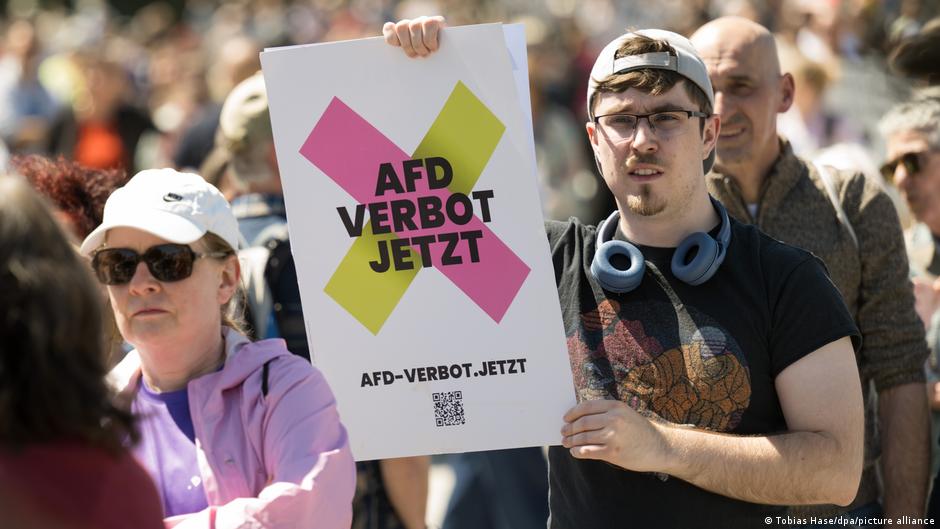
The recent Insa poll indicates that only 40% of Germans support banning the AfD, while 45% oppose such a measure, and 15% remain undecided. Furthermore, 42% back the political isolation strategy known as the 'Brandmauer'—a firewall to prevent cooperation with the AfD—while 39% disagree with this stance.
"We are the new people’s party in Germany," proclaimed Alice Weidel, co-chair of the AfD, during the party congress in Erfurt, signaling the party’s ambition to assume political leadership.
These political developments have reverberated in financial markets, affecting sector rotation and trading volumes. The ascendancy of the AfD has heightened uncertainty over Germany’s policy direction, particularly regarding fiscal conservatism and regulatory frameworks, which has led investors to reassess exposure to German and broader European equities.
Market analysts suggest that sectors closely tied to government policy—such as financials, industrials, and utilities—have experienced increased volatility. Investors appear cautious, as rising far-right influence could disrupt the European Union's cohesion, leading to potential regulatory shifts or increased trade tensions.
Equity Research and Trading Trends
Equity research teams emphasize that the AfD’s growing support complicates the political backdrop just as Germany’s federal government grapples with historically low approval ratings—only 13% approval for the current federal government and Chancellor Friedrich Merz’s popularity dropping to 13%, a record low.
This political uncertainty has prompted a rotation away from German equities that are heavily reliant on stable government policies, toward sectors perceived as more resilient or defensive, such as consumer staples and healthcare. Trading volumes in stocks linked to German infrastructure and technology sectors have seen fluctuations as investors weigh the potential impacts of a shift in the political landscape.
Additionally, the Social Democratic Party (SPD) and the Greens have seen modest gains, each holding 13% support, while the Left Party remains steady at 10%, adding further complexity to coalition possibilities and policy forecasts.
Investors and market watchers will continue to monitor Germany’s political developments closely, as prolonged volatility could influence risk appetite and asset allocation strategies globally.