German CDU/CSU Support Drops to 2021 Levels, Signaling Potential Market Impact
Declining backing for Germany's CDU/CSU coalition may influence sector rotation and investor sentiment ahead of regional elections.
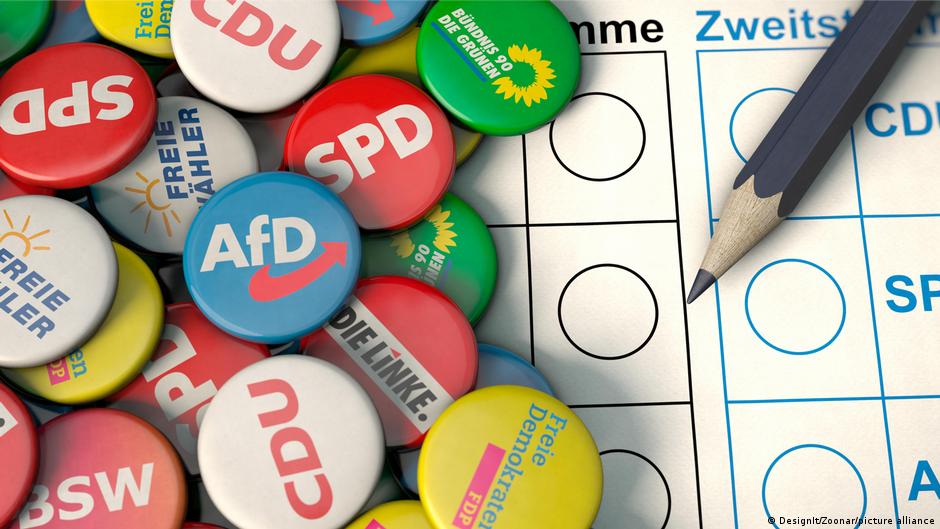
Recent polls indicate that support for Germany's conservative bloc, consisting of the Christian Democratic Union (CDU) and Christian Social Union (CSU), has fallen to 20%, marking its lowest point in five years. This development emerges as the far-right party Alternative for Germany (AfD) leads the polls with 28%, according to the INSA institute's weekly Sonntagstrend survey.
Political Shift and Market Implications
The weakening position of the CDU/CSU coalition, part of the current governing alliance, coincides with an increasingly fragmented political landscape. The Greens maintain consistent support at 13%, while both the Social Democratic Party (SPD) and the Left Party hold steady at 12%. The liberal Free Democratic Party (FDP) is polling just above the 5% threshold needed to enter the Bundestag, whereas the left-populist "Sarah Wagenknecht Alliance" is below the threshold with 3%.
"Polling results reflect voter sentiment at a specific moment and are not definitive predictors of election outcomes," experts note, emphasizing the volatility ahead of the September regional elections in Saxony-Anhalt, Mecklenburg-Western Pomerania, and Berlin.
Market analysts are closely monitoring these shifts as the September regional elections approach, where the AfD stands a credible chance to form a regional government in Saxony-Anhalt for the first time. This political volatility has implications for sector rotation and trading volumes on Wall Street, particularly in sectors sensitive to European political risk such as automotive, banking, and renewable energy.
Equity research teams anticipate that the decline in support for traditional centrist parties like CDU/CSU may trigger increased investor caution, potentially leading to short-term volatility in stocks with significant European exposure. Conversely, sectors aligned with the Greens’ agenda, such as clean energy and technology, might experience sustained or increased investor interest.
Furthermore, the uncertainty regarding coalition compositions and policy directions complicates forecasts for regulatory environments, impacting investor confidence. Traders are advised to monitor developments closely as voter decisions increasingly occur close to election day, limiting the predictive power of polling data.
Overall, the current political dynamics in Germany underscore a broader trend of shifting voter loyalties and fragmentation, which could reshape market sentiment and sector performance in coming months on global equity markets.