Finland Completes 200-Kilometer Russia Border Fence With Security Stocks in Focus
The NATO member finished one of its largest infrastructure projects as investors watch defense, surveillance and border-security demand.
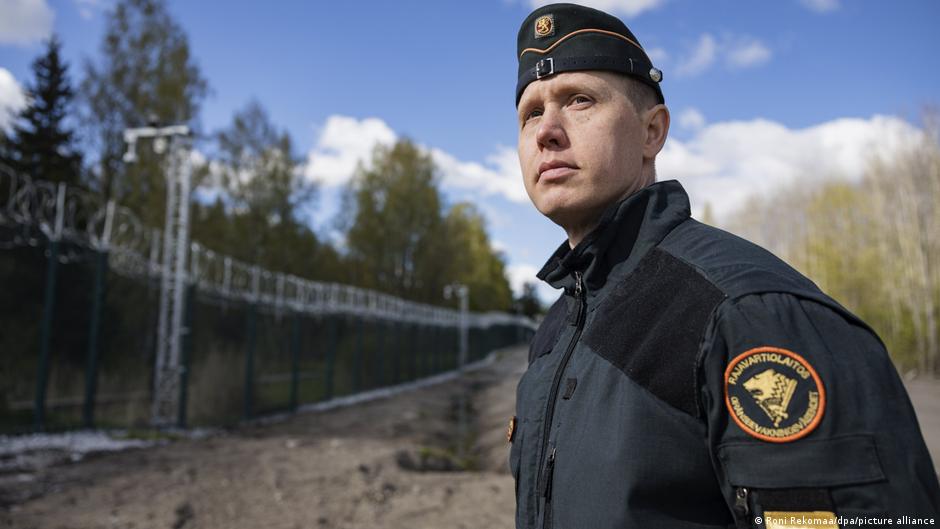
Finland has completed a 200-kilometer barrier along its border with Russia, a security infrastructure project that underscores how Europe’s geopolitical risk cycle continues to influence public spending priorities and investor attention across defense, surveillance and civil-engineering supply chains.
The Finnish Border Guard, part of a NATO member state, said on Monday, September 7, that construction of the barrier had been completed. Interior Minister Mari Rantanen described the eastern-border wall as a necessary part of national security policy in a period of elevated uncertainty.
“The main task of the state is to ensure the security of its citizens,” Rantanen said, calling the border wall “an integral part of an effective border security system in these unpredictable times.”
For Wall Street, the announcement is not a single-company catalyst. The source material does not identify publicly traded contractors, suppliers or technology vendors tied to the project. That limits any direct read-through to specific listed equities. Still, the completion of one of Finland’s largest infrastructure projects reinforces a broader market theme: European governments are continuing to convert security concerns into physical assets, technical monitoring systems and long-duration procurement programs.
Security Infrastructure Remains a Policy-Driven Market Theme
The barrier consists of a 4.5-meter-high fence, a technical surveillance system, a road network and a 25-meter-wide cleared strip. That mix of physical construction, sensor infrastructure, access roads and monitoring capacity places the project at the intersection of several equity market categories: defense technology, perimeter security, construction services, engineering equipment and communications systems.
The Finnish Border Guard said hundreds of companies were involved in the initiative. As many as 600 people and 150 pieces of equipment worked at construction sites each day. Those figures point to the scale of the public works component, although the absence of disclosed contractor names means investors cannot assign revenue contribution to individual stocks from the available information.
The project began in March 2023, after Russia’s war against Ukraine had reshaped Finland’s security posture and accelerated concerns in Helsinki that Moscow could use migrants as a form of pressure against the country. The completion therefore fits into a multi-year European trend in which border control, resilience, surveillance and defense readiness have become recurring budget priorities.
That backdrop has supported investor focus on companies exposed to government security spending, even when individual projects are too localized or undisclosed to move earnings estimates. For equity research analysts, the relevant question is less whether Finland’s completed fence changes near-term forecasts, and more whether similar projects across NATO and Schengen-area borders create a durable addressable market for surveillance equipment, command-and-control systems, secure communications and infrastructure contractors.
Sector Rotation Implications
In sector terms, the news is most relevant to defense and security technology, industrial engineering, heavy equipment, construction materials and infrastructure services. It also speaks to the policy risk embedded in European equities: government demand can expand quickly when geopolitical pressure rises, but procurement details are often opaque, national, and subject to budget cycles.
For U.S. investors, the most practical market read-through is thematic rather than ticker-specific. Large defense primes, security-technology providers and industrial companies with European government exposure may continue to attract attention when NATO members expand border, surveillance and military-adjacent infrastructure. However, the Finnish project itself does not provide named order flow, contract values or margin assumptions for any listed company.
Trading volumes in related shares would therefore be expected to depend more on broader defense-sector momentum, analyst notes and government budget headlines than on this single completion milestone. The announcement may still reinforce investor preference for companies tied to long-cycle public security budgets at a time when some market participants are rotating between growth technology, cyclicals, energy and defense-linked industrials.
Finland’s role as a Schengen member adds another layer to the market interpretation. Rantanen said the country bears its share of responsibility for security at the external borders. In equity-market terms, that framing matters because it positions border infrastructure not only as a national program but also as part of a wider European security architecture. That can support the idea of repeatable demand across countries facing similar border-management concerns.
Local reaction has been more restrained than celebratory. In Imatra, a city near the construction area, Mayor Matias Hilden previously told DW that residents were not enthusiastic about the project but had accepted it. “It is a little sad that we need this,” he said.
The human and political context remains central to the investment story. In September 2022, many Russians fled to Finland after Russian President Vladimir Putin announced a partial mobilization. Finland later moved ahead with construction amid fears that migration could be used to pressure the country. Those facts highlight why the barrier is being interpreted as part of a broader security response rather than a conventional infrastructure upgrade.
For portfolio managers, the key takeaway is measured. Finland’s completed border fence is a visible marker of sustained security spending in Europe, but it is not, based on the disclosed information, a direct stock-specific revenue event. The stronger market signal lies in the continued normalization of border-security, surveillance and resilience projects as government priorities across the region.