EU Defense Panel Delay Puts Europe’s Rearmament Trade Back Under Scrutiny
Kaja Kallas canceled a planned high-level defense group after German and Italian resistance, complicating the policy backdrop for European defense stocks.
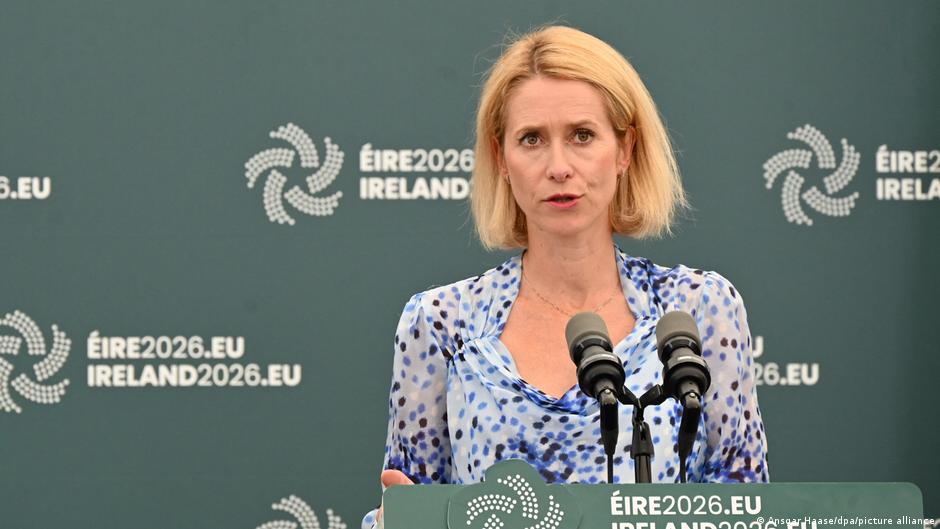
European defense policy suffered a visible setback on Monday, Sept. 7, after EU foreign policy chief Kaja Kallas canceled the planned launch of a high-level expert group intended to accelerate work on the continent’s military capability gaps. For equity markets, the decision adds a layer of political uncertainty to one of the most closely watched sector themes in Europe: the durability of higher defense spending and the speed at which that spending turns into orders for listed contractors, suppliers and technology groups.
According to dpa, Kallas called off the presentation “at the last minute” after opposition from several governments, including Germany and Italy. The group had been expected to develop proposals on how Europe could close gaps in military capabilities faster and more efficiently, with a report containing specific recommendations. Its membership was to include senior political and military representatives from several EU countries, as well as the United Kingdom and Ukraine.
The launch event had been planned for the morning of Sept. 7. Instead, the initiative was halted after discussions with EU defense ministers. A European Union official in Brussels told dpa late on Sept. 6 that some member states did not consider the step appropriate at this point.
“Some member states felt that this was not the right step at the moment,” the EU official told dpa.
The immediate market issue is not the cancellation of a single working group in isolation. Investors have generally treated European rearmament as a multi-year structural theme, supported by higher threat perceptions, NATO commitments and national procurement plans. But the episode highlights a familiar risk for the sector: Europe’s defense ambitions remain divided across EU institutions, NATO planning processes and national capitals, and those divisions can slow the conversion of political declarations into executable programs.
Defense Stocks Face a Policy Timing Question
For stocks tied to defense procurement, timing matters. Equity research teams covering European aerospace and defense names often focus on order intake, backlog conversion, budget visibility and the ability of governments to coordinate demand. A high-level EU group with participation from Ukraine and the UK could have been read as another signal that Brussels wanted to push capability planning beyond routine institutional channels. Its cancellation, by contrast, may reinforce a more cautious view: spending momentum remains intact, but policy coordination is uneven.
The reported resistance from Berlin and Rome is particularly relevant for investors because Germany and Italy are central to European industrial capacity and procurement politics. dpa reported that the German and Italian governments had opposed the creation of the expert group. In Germany’s case, one possible reason cited was Berlin’s critical stance toward Kallas personally as head of the EU foreign policy service. German authorities are said to prefer relying on NATO planning processes in defense policy. At the same time, Germany currently supports merging a significant part of the EU External Action Service, which Kallas oversees, with the European Commission.
That institutional tension can affect how investors frame the defense trade. If Europe channels more work through NATO planning and national procurement rather than a new EU-led expert process, the beneficiaries may still be many of the same industrial companies. But the pace, sequencing and visibility of contracts could differ. Markets tend to reward defense firms when policy commitments become identifiable programs. Delays in coordination can make analysts more careful about extrapolating political rhetoric into near-term earnings estimates.
The announcement also lands in a broader context of sector rotation. European defense shares have been supported by expectations that governments will continue to address shortfalls in air defense, ammunition, drones, logistics, command systems and other military capabilities. Any sign of political fragmentation can prompt traders to reassess whether the next leg of the trade depends more on national budgets than on EU-level initiatives. That distinction matters for liquidity and positioning, especially when defense names have already attracted significant investor attention around rearmament, Ukraine support and NATO-related spending.
Ukraine’s Role Remains Central to the Debate
Kallas had announced on Sept. 1, after an informal meeting of EU defense ministers in Wicklow, Ireland, that Ukraine would be brought into the search for solutions to strengthen Europe’s defense capabilities. Kyiv was expected to join the new high-level group alongside senior political and military figures from EU countries and the UK. That feature gave the initiative a market-relevant technology angle because Ukraine’s wartime experience has become central to discussions of drones, battlefield innovation and rapid adaptation.
At the Wicklow meeting, a DW correspondent asked Kallas who would represent Ukraine in the new group, noting that former Ukrainian defense minister Mykhailo Fedorov had been brought in by Italy as a defense adviser. Kallas did not name the Ukrainian representative or representatives, saying instead that the full composition of the group would be presented on Sept. 7.
Kallas also noted that most EU countries are members of NATO, while stressing that capability gaps remain inside the alliance and must be filled by European countries. She argued that Europe had been moving too slowly despite a rising threat level. She said Ukraine was being included because it has extensive experience, describing Kyiv as a world leader in battlefield innovation.
For listed defense and security technology companies, Ukraine’s inclusion would have underscored the shift from legacy procurement cycles toward faster battlefield-driven innovation. The cancellation does not remove that theme, but it delays a formal EU vehicle that could have helped translate lessons from Ukraine into policy recommendations. Investors may therefore continue to separate companies with direct national procurement exposure from those whose upside depends on broader European coordination.
The EU foreign policy service still intends to examine new ways to cooperate with EU countries on defense policy, according to dpa. The same EU source said the diagnosis had not changed: Europe must move faster on defense. The official warned against focusing so heavily on where Europe should be by 2035 that it misses what needs to be done by 2027.
That message is unlikely to be lost on markets. The strategic direction remains supportive for defense spending, but Monday’s canceled launch shows that the political route is not linear. For traders and analysts, the practical question is whether European governments can align quickly enough to sustain order growth across the sector, or whether institutional disputes will keep the rearmament theme more dependent on individual national decisions than on EU-wide execution.