Colombia Earthquake Triggers Emergency Declaration, Impacting Market Sentiment and Sector Rotation
A 7.4 magnitude earthquake in Colombia leads to a national emergency and prompts shifts in sector performance and trading volumes on Wall Street.
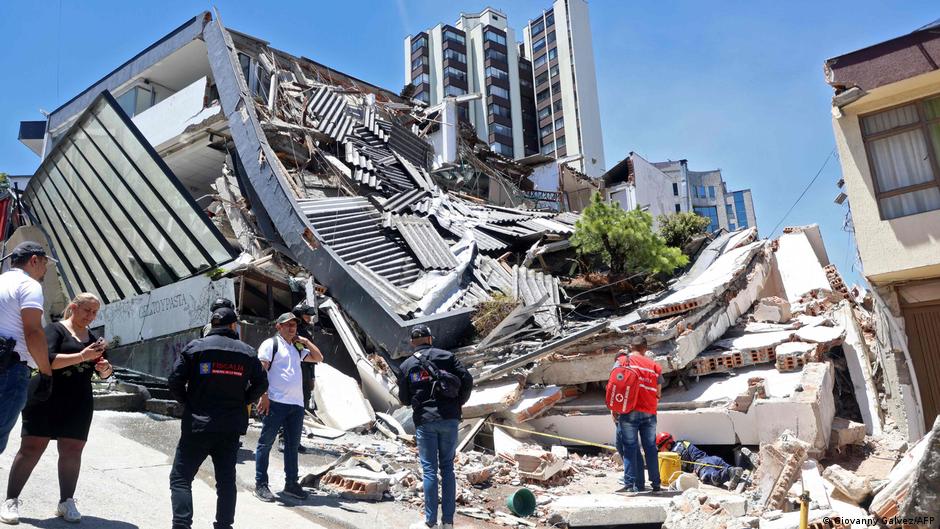
On August 10, Colombia experienced a devastating earthquake measuring 7.4 on the Richter scale, prompting President Abelardo de la Espriella to declare a nationwide state of emergency. This natural disaster has had significant humanitarian consequences and is beginning to influence investor sentiment and sector dynamics on Wall Street.
Market Impact and Sector Rotation
The earthquake, which struck near San José del Palmar at a depth of approximately 103 kilometers, resulted in at least 132 fatalities and over 570 injuries. More than 1,500 homes, 18 hospitals, and 52 schools sustained serious damage, with approximately 60 buildings completely collapsing. The severity of the disaster has reverberated through financial markets, primarily affecting sectors tied to infrastructure, construction, and insurance.
Investors have reacted by rotating out of sectors vulnerable to prolonged disruption, such as consumer discretionary stocks with exposure to Latin America, into more defensive sectors like utilities and healthcare. Trading volumes in construction-related equities and materials stocks have soared as market participants anticipate increased demand for rebuilding efforts and related supplies.
Insurance sector stocks have experienced volatility as analysts weigh the potential payout impact from claims against the expected premium increases that often follow such disasters. Meanwhile, energy stocks with operations in Colombia have also seen mixed reactions given concerns over infrastructure damage and supply chain interruptions.
"This earthquake represents not only a humanitarian tragedy but also a catalyst for sector realignment in equity markets, affecting everything from construction to insurance," said a Wall Street equity analyst specializing in emerging markets.
U.S. Response and Political Context
The U.S. Department of State swiftly pledged $15.5 million in emergency aid to Colombia, indicating strong bilateral cooperation under the new administration of President de la Espriella, who assumed office just days prior. The aid package signals an intention to stabilize Colombia's economy and infrastructure swiftly, factors closely monitored by equity researchers for their potential to mitigate long-term market disruptions.
President de la Espriella’s focus on military action against armed groups and economic deregulation is expected to influence Colombia’s investment climate. His administration’s plan to construct large-scale prisons akin to Salvador’s model aims to curb crime and improve security, which could have positive implications for foreign direct investment and market confidence in the medium term.
Given the strategic importance of Colombia in regional trade and U.S. geopolitical interests, Wall Street is paying close attention to developments. Secretary of State Marco Rubio’s recent outreach underscores expectations for enhanced regional cooperation on security and economic issues, potentially translating to market stability.
Outlook for Investors
Equity research suggests that while the immediate aftermath of the earthquake has introduced volatility, sectors involved in reconstruction and security may see increased capital inflows. Investors are advised to monitor government response speed, international aid effectiveness, and infrastructure rehabilitation progress as key indicators for market recovery.
Furthermore, the evolving political landscape under President de la Espriella is likely to shape Colombia’s economic trajectory, influencing sector-specific opportunities and risks. Traders should consider the balance between short-term disruption and long-term growth potential when adjusting portfolios with exposure to Latin American markets.