Army Secretary Driscoll Exit Adds Pentagon Uncertainty for Defense Stocks
Daniel Driscoll’s reported resignation after clashes with Defense Secretary Pete Hegseth sharpens investor focus on Pentagon leadership risk and procurement priorities.
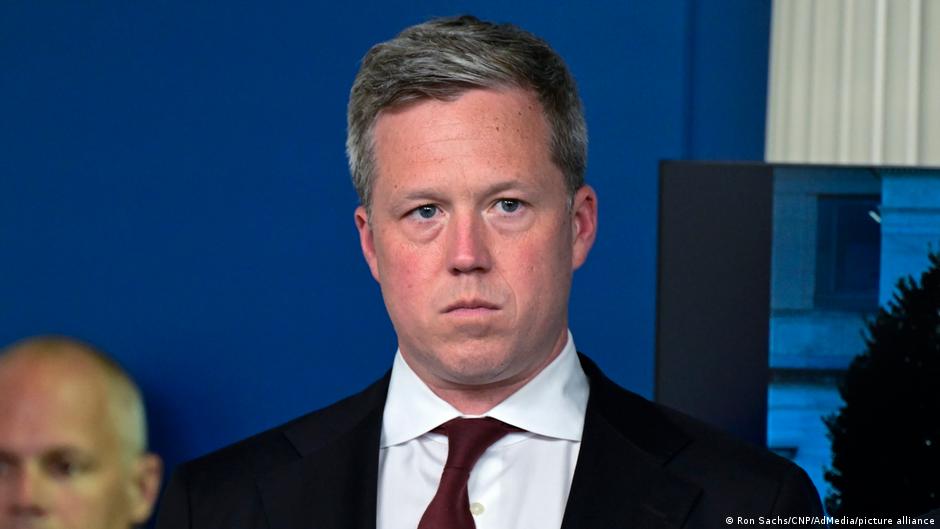
U.S. Army Secretary Daniel Driscoll has asked President Donald Trump to accept his resignation after months of disagreements with Defense Secretary Pete Hegseth over the direction of the U.S. military and the dismissal of several officers, according to reports published overnight by The Wall Street Journal and later matched by Reuters and the Associated Press.
NBC News, citing sources, said the White House has accepted Driscoll’s resignation. According to the Journal, Driscoll is expected to leave the Pentagon in the coming days, a timeline that would add another abrupt leadership change to the Defense Department during Trump’s second term.
For Wall Street, the development matters less as a personnel story in isolation than as a signal about policy continuity, procurement priorities and the balance of power inside the Pentagon. Investors in defense names typically look for stability in budget direction, program execution and chain-of-command discipline. A resignation tied to a prolonged internal conflict with the defense secretary raises questions on all three fronts.
“Secretary Driscoll effectively advanced President Trump’s program to make America strong again at the Department of the Army, showing outstanding leadership during historic military operations and restoring priority to combat readiness and the destructive power of weapons, while helping negotiations between Russia and Ukraine and in many other areas,” White House deputy press secretary Anna Kelly said in a statement cited by the Journal and AP.
The immediate market lens is likely to fall on major U.S. defense contractors and suppliers exposed to Army procurement, munitions demand, battlefield modernization and lower-cost weapons systems. Driscoll, according to Reuters, backed a “flexible approach,” argued for the Army to buy cheaper weapons and criticized large manufacturers. That posture is important for investors because it suggests an internal push toward affordability, faster acquisition cycles and potential pressure on legacy platforms or premium-priced programs.
His departure therefore introduces uncertainty over whether that line of thinking will persist, be diluted or be replaced by a procurement stance more aligned with Hegseth’s preferences. In stock terms, that does not automatically point in one direction for the sector. Instead, it may reinforce rotation within defense: companies tied to traditional large-ticket platforms could be assessed differently from firms positioned around expendable weapons, tactical systems, readiness support and cost-efficient equipment.
Pentagon turnover becomes a market variable
The resignation would also fit into what journalists described as a broader reshaping of leadership across the Pentagon during Trump’s second presidential term. Reuters, placing the move in that context, recalled the dismissal in April of Army Chief of Staff Randy George and several other senior military officials. For equity investors, cumulative turnover at the top of the department can become a market variable in its own right, especially when it affects visibility on strategy, personnel authority and execution of military priorities.
The Journal had reported as early as August 21 that Driscoll was planning to resign at the end of the year because of his conflict with Hegseth. At that time, Reuters noted that Driscoll’s exit would leave the Army without a Senate-confirmed leader while the United States seeks to end the war against Iran that it began together with Israel nearly six months earlier. That observation sharpens the stakes for markets: leadership gaps during an active external conflict can heighten sensitivity around operational decision-making, replenishment demand and budget timing.
Investors will now be weighing two parallel interpretations. The first is that the White House and Pentagon are consolidating control, which could eventually produce a clearer command structure and reduce internal friction once a successor is in place. The second is that repeated turnover reflects unresolved strategic disputes, making it harder for analysts to model long-term procurement priorities with confidence. In practice, the near-term research view is likely to stay selective rather than uniformly bullish or bearish on defense.
That selectivity matters because Driscoll’s known policy leanings touched a live debate in the industry. If the Army had continued moving toward cheaper weapons and a more flexible acquisition posture, investors might have favored companies able to deliver at lower cost and shorter cycle times. If his exit weakens that emphasis, the market may revisit the relative positioning of larger incumbents that have faced criticism from reform-minded officials but remain central to Pentagon supply chains and force structure.
Driscoll’s political profile adds another dimension. He is a friend and former Yale Law School classmate of Vice President J.D. Vance. In November 2025, he was appointed as President Trump’s special envoy for Ukraine, replacing Keith Kellogg. He has served as Army secretary since February 2025. Those roles gave him both a national security portfolio and a place within Trump’s broader foreign-policy apparatus, meaning his resignation may be read not only as a Pentagon management issue but also as part of a wider internal realignment.
For traders, the practical question is whether the resignation changes expected flows into defense stocks or simply adds noise around a sector already supported by geopolitical risk. Without fresh budget guidance or procurement announcements, the more immediate effect may be on sentiment, relative performance and analyst framing rather than on fundamental earnings estimates. Still, a change at the top of the Army can matter quickly if it alters perceptions of which capabilities will be prioritized, how aggressively officers and programs will be reshuffled, and whether acquisition reform will retain political backing.
The next catalyst for the group is likely to be clarity from the White House and Pentagon on succession, as well as any indication of whether Driscoll’s cost-conscious procurement stance survives his exit. Until then, the reported resignation adds another layer of uncertainty to the defense trade, with leadership instability now part of the investment case alongside conflict exposure, readiness spending and the prospect of further changes across the Pentagon hierarchy.