AfD Win in Saxony-Anhalt Draws EU Alarm as Markets Weigh Political Risk
Poland, France and Czech leaders reacted sharply after preliminary results gave Alternative for Germany 44% in Saxony-Anhalt.
Political risk in Europe moved back into focus for global investors after preliminary results showed the far-right Alternative for Germany, or AfD, winning the state parliamentary election in Saxony-Anhalt with 44% of the vote, drawing immediate reactions from senior officials in Poland, France and the Czech Republic.
The result is local in formal terms, but for Wall Street it adds to a broader European risk map already shaped by fiscal pressure, coalition fragmentation and questions over the durability of centrist policy consensus in the European Union. Germany remains the region’s largest economy, and any signal of deeper political polarization there can affect investor views on European equities, the euro, industrial policy, defense spending and cross-border regulation.
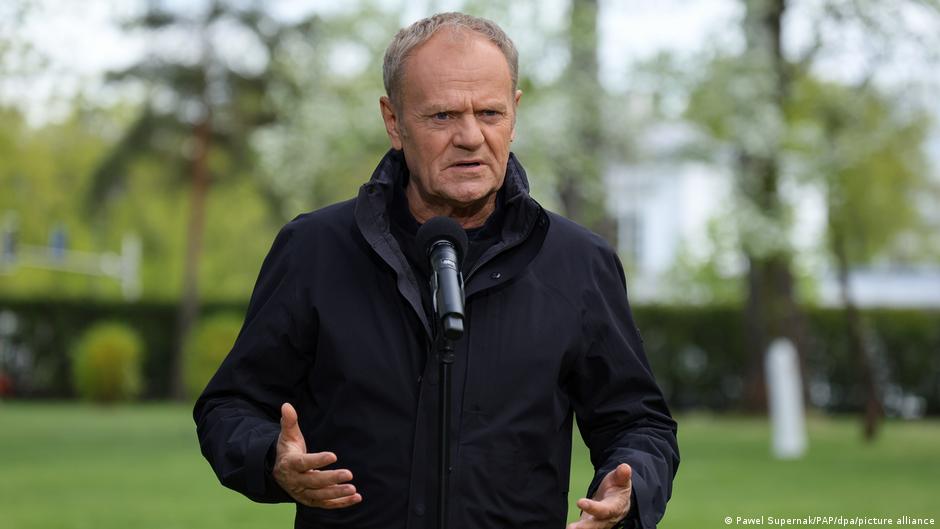
Polish Prime Minister Donald Tusk expressed shock at the AfD’s success and used unusually blunt language in a post on X late Sunday, September 6. According to the source article, Tusk said that in Poland only “idiots or traitors” could celebrate the triumph of the AfD in Germany. He added that a number of such figures had accumulated in the opposition parties Confederation and Law and Justice, known as PiS.
“In Poland only idiots or traitors can rejoice at the triumph of the AfD party in Germany,” Tusk said, according to the source article.
The AfD’s candidate for state premier in Saxony-Anhalt is Ulrich Siegmund. Based on the preliminary vote count cited in the source, the party was comfortably ahead of all rivals. The Christian Democratic Union, the party of incumbent state premier Sven Schulze, was on 17.4%. The Social Democratic Party of Germany had 9.2%, Alliance 90/The Greens had 8.9%, The Left had 8.6%, and the Sahra Wagenknecht Alliance had 5.1%. The Free Democratic Party and other parties failed to clear the 5% threshold.
On those results, the 83 seats in the Saxony-Anhalt state parliament could be distributed as follows: AfD with 39 seats, the CDU with 15, The Left with 8, the Greens with 8, the SPD with 8 and the Sahra Wagenknecht Alliance with 5. Final preliminary results were expected during the night into September 7.
Political Headlines Meet European Equity Risk
For equity markets, the immediate issue is not a single corporate earnings line item but the direction of European policy risk. Investors in U.S.-listed European shares, exchange-traded funds and global industrial names typically watch German politics through several channels: coalition stability, fiscal rules, energy and climate policy, migration disputes, EU coordination and regulatory predictability.
The Saxony-Anhalt result does not by itself set federal German policy. It does, however, reinforce the market narrative that anti-establishment and nationalist parties are gaining traction across parts of Europe. That matters for sector rotation because investors often reprice exposure to regulated, capital-intensive and cross-border industries when political uncertainty rises. Banks, utilities, autos, defense contractors, renewable-energy developers and infrastructure-linked companies are among the sectors that can become more sensitive to policy headlines, even when the direct electoral mandate is regional.
Trading desks may also focus on European benchmark funds and American depositary receipts rather than any one Saxony-Anhalt-linked company. In a Wall Street context, the likely first-order reaction is a reassessment of macro and political-risk premiums attached to Germany and the broader eurozone. Any sustained move would depend on whether investors see the result as isolated or as part of a larger shift that could alter national coalition arithmetic or EU-level decision-making.
The source article does not report trading volumes, share-price moves or equity-research notes tied directly to the vote. As a result, any market read remains interpretive rather than numerical. Still, the political response from neighboring countries shows why the result may be monitored beyond Germany’s borders.
In the Czech Republic, Tomio Okamura, chairman of the lower house of parliament and founder of the right-wing Freedom and Direct Democracy party, congratulated the German far-right party on its success during an appearance on public broadcaster CT. Okamura said he hoped above all that the AfD would enter the new governing coalition in Saxony-Anhalt. The source describes Okamura as a politician of Japanese-Korean origin.
The Czech political context is relevant because the source states that since late 2025 the country has been governed by a coalition consisting of ANO, the right-populist party of billionaire Andrej Babis, Okamura’s SPD and the Motorists party. That lineup underscores a broader regional shift toward right-populist participation in government, a trend equity strategists often track when assessing EU cohesion and regulatory continuity.
France Warns of a Difficult Moment for Europe
France’s minister for European affairs, Benjamin Haddad, said on X that the result marked a “difficult moment for Europe.” He said governments must listen to anger, anxieties and fears and respond to them, while stressing that nationalism and xenophobia would never be the solution. Haddad also urged Europeans not to forget their history, saying that this was the meaning of decisions taken by France and Germany.
For investors, Franco-German alignment is a core variable in European policymaking. When officials in Paris frame a German regional election as a European moment, markets have reason to assess whether political pressure could complicate future EU compromises on budgets, migration, defense, industrial subsidies or climate policy. Those issues feed into valuation models for companies exposed to European public spending, carbon rules, supply-chain policy and financial regulation.
The market impact will depend on follow-through. If the AfD remains outside the governing coalition in Saxony-Anhalt, investors may treat the result as a warning signal rather than a direct policy shock. If coalition negotiations shift in a way that gives the party influence over state-level governance, investors could pay closer attention to the political constraints facing mainstream parties in Germany.
For now, the source article’s factual picture is clear: AfD won a commanding preliminary share of the vote in Saxony-Anhalt, Poland’s prime minister condemned those celebrating the result, a Czech right-wing leader welcomed it, and France’s European affairs minister warned against nationalism and xenophobia. Wall Street’s task is to translate that political signal into risk assessment, not to overstate a market move that has not yet been documented in the reported facts.