Zelensky Says North Korea Plans to Send 10,000 More Troops to Russia
Ukraine’s president said new intelligence points to a larger North Korean role in Russia’s war effort, adding geopolitical risk for defense and Korea-exposed equities.
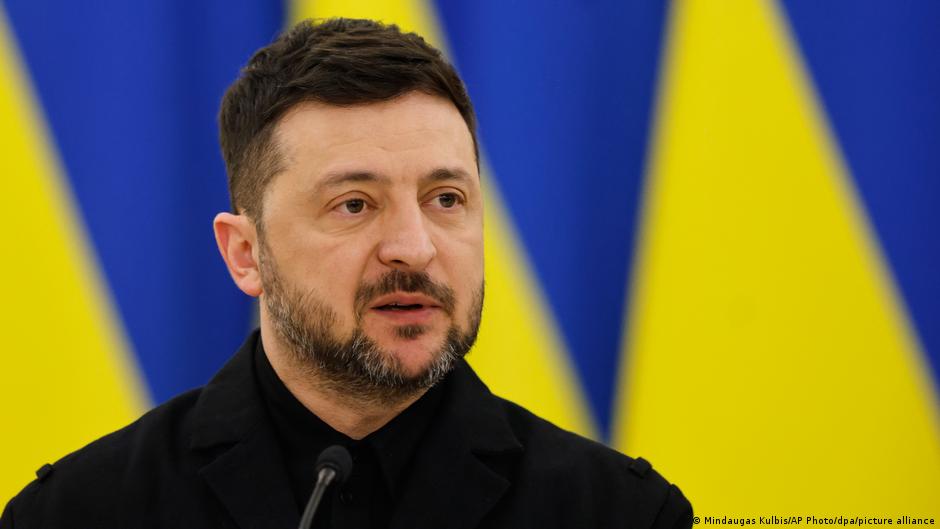
Ukrainian President Volodymyr Zelensky said North Korea is preparing to transfer about 10,000 more troops to Russia, a development that could sharpen Wall Street’s focus on defense contractors, Korean market exposure and geopolitical risk premiums tied to the war in Ukraine.
In his evening address on Monday, Sept. 28, Zelensky cited “new data” from a report by Ukraine’s military intelligence agency, the Main Directorate of Intelligence of the Ministry of Defense. He said more than 8,000 North Korean soldiers are already on Russian territory and that additional personnel are now being selected for training and later deployment to Russia.
“It is important that the governments of the countries from which Russia recruits people into its army counteract this,” Zelensky said. “We will inform every government.”
The remarks place North Korea’s role in the conflict back into the center of investor attention at a time when global equity markets are already sensitive to any sign of escalation involving Russia, Ukraine and the Korean Peninsula. For U.S. investors, the immediate market lens is likely to fall on defense names such as Lockheed Martin, RTX, Northrop Grumman, General Dynamics and L3Harris Technologies, as well as exchange-traded funds tracking aerospace and defense exposure.
Zelensky said Russian authorities “plan to increase” the recruitment of foreigners to participate in the war against Ukraine. According to South Korean intelligence estimates cited in the source report, North Korea has already sent about 15,000 troops to support Russia’s war effort. Pyongyang is believed to receive money, military technology and security guarantees from Moscow in return.
Defense Stocks and Sector Rotation
For Wall Street, the potential addition of North Korean manpower to Russia’s war effort is less a single-stock catalyst than a broader geopolitical input. Equity research desks typically assess such developments through several channels: expected defense budget durability, demand for munitions and air-defense systems, the risk of wider sanctions, and the potential impact on investor appetite for cyclical sectors.
A confirmed expansion of North Korean involvement could reinforce the case for continued Western defense spending, a theme that has supported parts of the aerospace and defense sector since Russia’s full-scale invasion of Ukraine. Investors may watch trading volumes in U.S. defense contractors and sector ETFs for signs that portfolio managers are rotating toward companies viewed as beneficiaries of elevated security spending.
At the same time, the market impact is not necessarily one-directional. Defense stocks can attract flows during periods of geopolitical stress, while broader equities may face pressure if investors judge that escalation risks are rising. In that scenario, market participants may reduce exposure to economically sensitive sectors and increase allocations to perceived defensive areas, including defense, energy security and select large-cap companies with resilient government revenue streams.
The Korean angle also matters for U.S. and global portfolios. Any renewed tension around North Korea can affect investor sentiment toward South Korean equities, Korean won exposure and companies with large supply chains or customer bases in the region. U.S.-listed investors may watch Korea-focused funds and shares of major South Korean companies traded through global channels, while also monitoring semiconductor and technology supply-chain names with exposure to Northeast Asia.
Seoul Dispute Adds Diplomatic Risk
Zelensky’s statement came against the backdrop of a dispute between Kyiv and Seoul that erupted days earlier. South Korean President Lee Jae-myung sharply criticized Ukrainian authorities, saying Zelensky had “violated an agreement on confidentiality” by publicly disclosing the transfer to Seoul of two North Korean soldiers captured during fighting with Ukrainian forces in Russia’s Kursk region.
Zelensky’s office responded that no nondisclosure agreement existed between the countries regarding that information. Seoul called that response false. On Sept. 28, South Korea’s foreign ministry summoned Ukraine’s acting ambassador. According to Yonhap, the deputy foreign minister conveyed Seoul’s “firm position” to the Ukrainian diplomat.
That diplomatic friction is relevant for markets because South Korea is both a major U.S. ally and a significant defense and technology economy. Any deterioration in coordination between Kyiv and Seoul could complicate the flow of intelligence, public messaging and policy alignment over North Korea’s involvement. Investors generally prefer clear allied coordination during security shocks; visible disagreement can increase uncertainty around the policy response.
Zelensky has previously warned of a much larger North Korean presence in Russia. In August, he said North Korea intended to place between 30,000 and 50,000 fighters on Russian territory. The latest figure of about 10,000 additional troops, alongside the claim that more than 8,000 are already in Russia, therefore adds to a running set of estimates that equity analysts may use when judging whether the conflict is becoming more internationalized.
For now, the investable implications remain centered on monitoring rather than certainty. Traders will be looking for confirmation from allied governments, evidence of sanctions responses, and signs of abnormal volume in defense and Korea-linked equities. Portfolio managers may also watch whether the news changes assumptions about the duration of the war, future Western military aid packages, and the procurement outlook for air defense, artillery, missiles and surveillance systems.
The core market question is whether North Korea’s reported troop transfers are viewed as an incremental development within an already prolonged war, or as a signal that Russia is widening its pool of manpower and deepening reliance on foreign support. The answer could shape near-term sector rotation, geopolitical risk pricing and the equity research view on defense contractors heading into the next round of policy and earnings updates.