Ukraine’s Zelensky Announces National Pantheon and Europe Order Amid Rising Poland Tensions
President Zelensky’s new honors plan reflects national pride but intensifies diplomatic strains with Poland, impacting market perceptions of Eastern European stability.
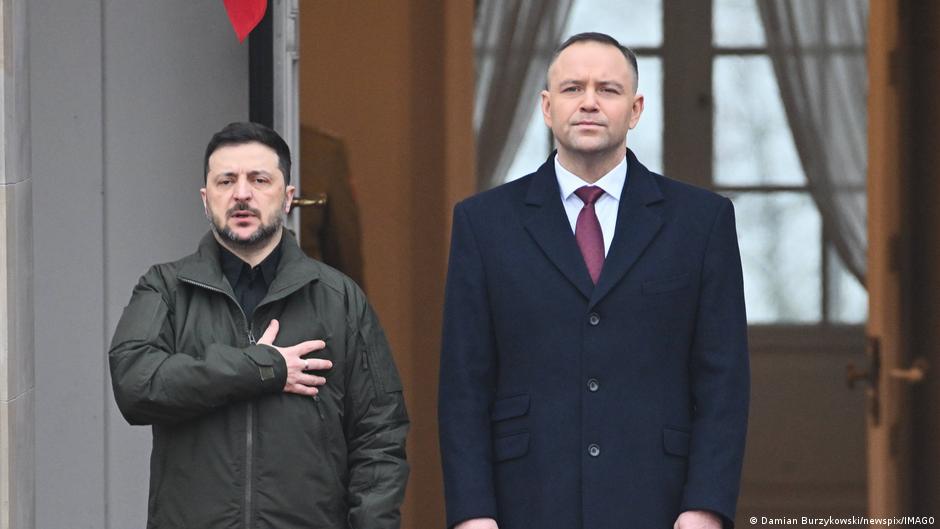
On June 28, Ukrainian President Volodymyr Zelensky proposed the establishment of a Ukrainian National Pantheon honoring historic heroes who have fought for Ukraine across centuries. At the same time, he called on the Ukrainian parliament to institute a new state decoration, the Order of Europe, to recognize those defending Europe's security and Ukraine's EU integration prospects.
Diplomatic Fallout and Market Implications
Zelensky’s announcement came amid escalating tensions between Ukraine and Poland, stemming from Ukraine’s recent decision to name a military unit after the Ukrainian Insurgent Army (UPA), a group linked to contentious and painful historical events during World War II. Poland has condemned this move, viewing the UPA as responsible for atrocities against Poles in the Volhynia massacre, officially recognized by Warsaw as genocide.
"No one will dictate how we live, whom to love, or which heroes to honor," Zelensky declared, underscoring Ukraine's sovereign right to shape its historical narrative despite external objections.
This diplomatic conflict led Poland to revoke its highest award, the Order of the White Eagle, from Zelensky, a rare and symbolic gesture that has visibly strained Ukraine-Poland relations. Prominent figures on both sides have returned honors in protest, and opposition politicians in Poland have called to halt Ukraine’s EU accession talks.
Market watchers have noted that the diplomatic rift risks unsettling a key regional alliance critical for Ukraine’s defense and European integration—factors that influence investor confidence and sector rotation strategies in Eastern European equities. The conflict has also attracted political opposition attention in Poland ahead of national elections, adding further uncertainty.
Sector and Trading Volume Considerations
Investors tracking Eastern European markets should monitor how ongoing geopolitical tensions affect defense sector equities and related industries. While Ukrainian defense companies may benefit from increased domestic support, the diplomatic discord with Poland—a major defense partner and EU member—could influence supply chains and joint initiatives.
Trading volumes in regional equities have shown sensitivity to geopolitical developments, with volatility spikes following announcements related to the diplomatic dispute. Equity research suggests that cautious investor positioning may persist until clearer diplomatic signals emerge.
Meanwhile, the Ukrainian government’s push to institutionalize national pride through the Pantheon and the Order of Europe signals a long-term commitment to solidify patriotic sentiment and European alignment, themes likely to shape market narratives around Ukraine’s political risk and investment climate.