South Korea-Ukraine Dispute Puts Defense Stocks Back on Wall Street Watch
A confidentiality dispute over two North Korean prisoners adds a fresh geopolitical variable for investors tracking Seoul’s Ukraine policy.
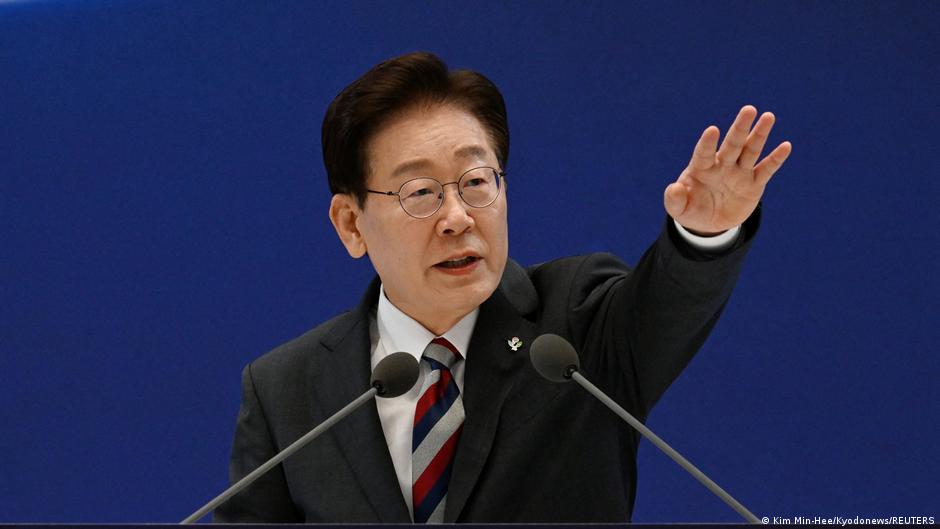
South Korea’s diplomatic clash with Ukraine is becoming a market-relevant story for Wall Street investors tracking defense shares, Korean equities and the broader rotation into geopolitical-risk trades. President Lee Jae Myung warned that Seoul would take “further measures” if Kyiv refuses to publicly acknowledge the existence of a confidentiality agreement linked to the transfer of two captured North Korean soldiers to South Korea and does not apologize.
Lee did not specify what those measures would be. In a post on X overnight Friday, October 2, he accused Kyiv of making Seoul look like “a liar” and framed the dispute as a matter of national dignity.
“If acknowledgment of the facts and a public apology continue to be rejected, we will take further measures. This is a matter of honor for the Korean people and state that we cannot ignore,” Lee wrote.
For investors, the immediate issue is not only the diplomatic language but the potential policy path it could affect. South Korea has so far provided Ukraine mainly non-lethal military equipment, including demining gear. Reuters has noted that some Western countries have recently pressed Seoul to supply lethal weapons to Ukraine as well. Any sign that the dispute slows, complicates or hardens Seoul’s approach to Ukraine could be watched closely by traders in defense, aerospace and industrial names tied to Korean security policy.
Defense Policy Enters the Equity Lens
The dispute began after Ukrainian President Volodymyr Zelensky said at the United Nations General Assembly in late September that Kyiv had transferred two North Korean prisoners of war to South Korea. Seoul sharply criticized Kyiv after that disclosure, saying the release of such information could endanger relatives of the prisoners in North Korea and negatively affect relations between Seoul and Pyongyang.
South Korea’s first vice foreign minister, Park Yoon-joo, also said Kyiv’s denial of an agreement undermined mutual trust and demanded official explanations and an apology from Ukraine. Dmitry Litvin, an adviser to the Ukrainian president on communications, said there had been no agreement between Kyiv and Seoul that information about the prisoners’ fate could not be disclosed. South Korea’s presidential office expressed “deep regret” over those assertions.
That back-and-forth matters for markets because South Korea sits at the intersection of several investable themes: the North Korea risk premium, Ukraine-related defense procurement, and the global debate over ammunition and arms supplies. Wall Street desks already monitor South Korean defense contractors and broader Asian security-linked equities when tensions rise on the peninsula or when allied governments revisit weapons export policies.
The source material does not name any companies or trading volumes, and Seoul has not announced a change in arms policy. Still, the dispute gives equity researchers a fresh catalyst to track in reports on sector rotation. Defense stocks often draw incremental attention when diplomatic tensions increase, while exporters and industrials can become more sensitive to headlines involving sanctions, weapons transfers, and alliance politics.
Kyiv Seeks to Contain the Dispute
Ukraine’s foreign minister, Andrii Sybiha, said in Kyiv that Ukraine is interested in resolving the dispute with South Korea as quickly as possible and continuing cooperation with Seoul. He spoke with journalists several hours before Lee’s publication.
“I would not like to call this an incident. Let’s say it is a diplomatic misunderstanding,” Sybiha was quoted as saying by RBC-Ukraine.
According to Sybiha, he has personally communicated daily in recent days with his South Korean counterpart. “I very much want this situation to be resolved in the near term, and we are working on it. For us, South Korea is an important country. And I very much hope for momentum, continuation and concrete results that we are truly achieving with them,” the Ukrainian minister said.
That conciliatory language may matter to investors looking for signs that the episode remains a diplomatic dispute rather than a rupture in cooperation. A quick settlement could reduce headline risk around Ukraine-related policy coordination. A prolonged dispute, by contrast, could complicate the debate over whether Seoul will expand support for Ukraine beyond non-lethal assistance.
AFP cited Shin Yul, a political science professor at Myongji University, as saying Seoul’s handling of the diplomatic conflict with Ukraine could be problematic in the context of South Korean domestic politics, given the current administration’s restrained stance toward its nuclear-armed northern neighbor.
On September 28, South Korea’s Yonhap news agency reported that the foreign ministry had summoned Ukraine’s ambassador over Kyiv’s disclosure of information about the North Korean prisoners of war. On September 30, AFP reported, citing South Korean lawmaker Youn Kun-young, that both prisoners had arrived in South Korea in mid-September. After questioning and security screening, authorities in Seoul are expected to decide whether to grant them protection and begin a resettlement process.
North Korea Troop Claims Add to Risk Premium
The dispute comes against a broader backdrop of North Korean involvement in Russia’s war against Ukraine. Last week, Zelensky wrote on social media that, according to his information, about 8,000 North Korean troops are currently in Russia and another 10,000 are preparing to be sent to Russia and from there to the war against Ukraine.
Those figures add to the strategic significance of the prisoner issue. For equity markets, the North Korea angle can amplify volatility around South Korean assets and raise investor sensitivity to defense spending, regional deterrence and alliance coordination. Traders watching the Korea discount, foreign flows into Seoul-listed equities, and global defense baskets may treat further statements from Lee’s administration as potential headline catalysts.
At this stage, no direct market measure has been announced by Seoul, and Lee’s threatened “further measures” remain undefined. That uncertainty is precisely why the dispute is likely to stay on Wall Street watchlists. The next market signal will be whether Seoul and Kyiv issue language that restores trust, or whether the confrontation feeds into a wider reassessment of South Korea’s Ukraine policy and its defense-sector outlook.