EU Denies Ukraine Request to Front-Load €90 Billion Loan Funding
Brussels rejected Kyiv’s bid for early loan disbursement, keeping investors focused on defense demand, fiscal risk and 2027 funding gaps.
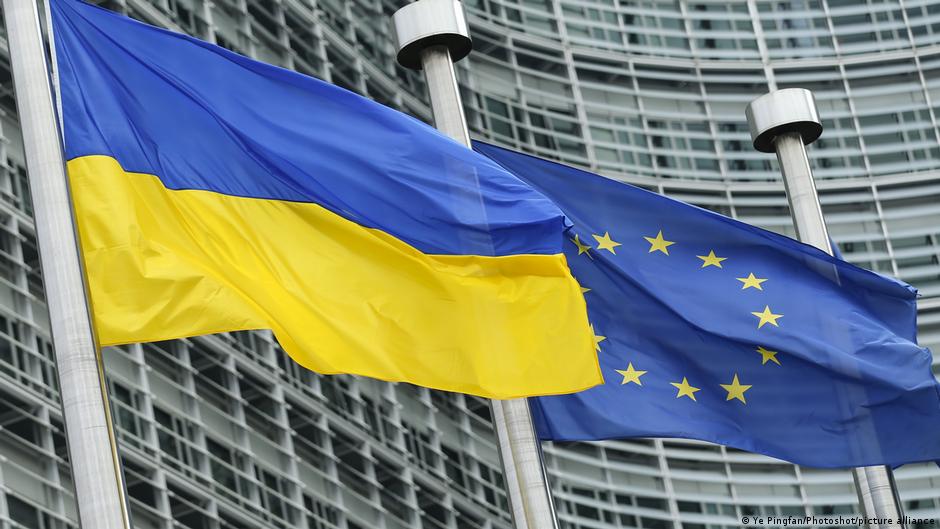
The European Union has rejected Ukraine’s request for an accelerated disbursement of part of a planned €90 billion loan, a decision that keeps the country’s military-financing gap in focus for investors tracking European defense stocks, sovereign-risk pricing and the broader rotation into security-linked equities.
Kyiv had asked Brussels to release part of the loan ahead of schedule to cover a shortfall in military funding this year, after higher wartime spending intensified pressure on the budget. According to sources familiar with the matter cited by Bloomberg on Thursday, October 1, EU officials concluded that an early release would not solve the underlying financing issue and could simply push the problem into 2027.
Accelerating the funds now “could only move the problem to 2027,” according to the account cited by Bloomberg.
The request followed what Bloomberg described as Ukraine’s unexpected admission over the summer that rising military expenditures had created an additional €27 billion funding gap. The EU loan is expected to cover two-thirds of Ukraine’s needs as the country continues defending itself against Russian aggression, while the remaining share would be provided by non-EU partners.
For equity markets, the decision matters less as a single budget headline than as another signal that Ukraine’s financing burden will remain a recurring macro variable through 2027. European defense manufacturers, infrastructure suppliers, energy-security names and banks with regional exposure have all been sensitive to developments in the war, EU fiscal commitments and NATO-related procurement expectations. The refusal to front-load the loan does not change the scale of the EU’s planned support, but it does reinforce the timing risk around disbursements and the need for additional partners to fill the gap.
Defense Stocks Stay Tied to Budget Visibility
The market read-through is clearest for defense and security-linked equities. Investors have spent much of the war repricing European defense contractors around higher order backlogs, replenishment needs, air-defense procurement and government commitments to increase military spending. Any sign that Ukraine’s financing pipeline is constrained can affect expectations for the cadence of procurement and the ability of Kyiv to commit to future supply contracts.
At the same time, the EU decision does not point to a withdrawal of support. Bloomberg reported that €45 billion from the 2027 loan is to be allocated “operationally,” but not before the beginning of next year. That timing detail is important for equity research desks and portfolio managers because it shifts attention from the headline loan amount to the calendar of cash availability. For companies tied to ammunition, missile defense, armored vehicles, communications systems and logistics, the market question is whether order flow remains steady or becomes more uneven as financing packages are negotiated.
The development may also affect sector rotation inside European equities. Defense shares have often traded as beneficiaries of sustained geopolitical risk, while cyclical industrials, consumer names and banks can respond more directly to concerns about fiscal strain, sanctions, energy costs and growth in the region. A delayed funding schedule may keep defense demand narratives intact, but it can also preserve a risk premium across assets exposed to Eastern Europe and EU budget politics.
Brussels Looks to Non-EU Partners
According to Bloomberg’s sources, European officials have approached other Ukrainian partners, including Canada, Norway and Japan, with a proposal to help cover the remaining financing needs. That international burden-sharing is now central to the investment debate. If non-EU partners step in, the market could view the funding path as more durable. If the gap remains unresolved, investors may price greater uncertainty into Ukrainian recovery-linked assets, regional debt markets and companies with exposure to reconstruction planning.
The loan structure also lands at a time when investors are monitoring the intersection of aid, reform conditions and multilateral financing. In September, European Commission President Ursula von der Leyen told Ukrainian President Volodymyr Zelensky on the sidelines of the United Nations General Assembly in New York that the EU still had €37 billion in budget support available for 2026. However, she directly linked the release of that funding to reforms by Kyiv aimed at combating corruption and the shadow economy, increasing tax revenues and aligning Ukrainian legislation more closely with EU standards.
That conditionality gives equity analysts another framework for assessing Ukraine-related risk. Reform progress can affect the timing of support from Brussels and the International Monetary Fund, while delays could complicate the financing picture. For publicly traded companies positioned for eventual reconstruction, from construction materials to power-grid equipment, budget predictability and institutional reform remain core assumptions behind longer-term investment cases.
IMF Timetable Adds Another Market Watchpoint
The International Monetary Fund is also central to the outlook. IMF spokesperson Julie Kozack said the fund is discussing the possible size of Ukraine’s budget deficit with Kyiv and its partners. The IMF is also working with Ukraine to combine the second and third reviews of an $8.1 billion financing program, equivalent to €7.23 billion, and expects to present them to the executive board by December 2026.
Kozack said further financing for Ukraine depends on obtaining sufficient and reliable assurances to cover the deficit. Bloomberg noted that at the end of September the IMF estimated Ukraine’s future financing gap at $30 billion to $35 billion in 2027, $17 billion in 2028 and $2 billion in 2029.
For Wall Street, those figures help define the scale of the issue. The gap is large enough to remain relevant for macro desks, currency strategists and global equity investors, even though Ukraine’s domestic equity market is not the main transmission channel. The more immediate trade is through European defense names, sovereign spreads, the euro, energy-security assets and broader risk sentiment toward companies exposed to the war’s duration and fiscal cost.
The EU’s rejection of accelerated funding therefore leaves markets with a familiar but unresolved equation: military spending needs remain high, the formal support framework remains substantial, and the calendar of disbursements is still a material risk variable. Until the EU, IMF and non-EU partners provide greater clarity on how the 2027 gap will be covered, investors are likely to keep Ukraine financing headlines embedded in defense-stock valuations and regional risk premiums.