Serbia Election Risk Puts Belgrade-Listed Stocks in Investor Focus
A 150,000-strong opposition rally and a narrow polling gap have raised the prospect of political change in Serbia’s October 25 election.

Serbia’s parliamentary election is emerging as a potential market-moving event for the country’s thinly traded equities, with political uncertainty rising after organizers said about 150,000 opposition supporters rallied in Belgrade on Thursday, October 22.
The demonstration took place ahead of the snap parliamentary vote scheduled for October 25. Protesters demanded an end to the rule of Aleksandar Vučić and urged voters to support the Student List, a movement that grew out of nearly two years of student-led protests and has become a significant political force.
For equity investors, the immediate focus is likely to be on domestic companies whose valuations are particularly sensitive to government policy, infrastructure spending, regulation and Serbia’s broader investment climate. Belgrade-listed names that may draw attention include oil and gas producer Naftna Industrija Srbije, airport operator Aerodrom Nikola Tesla, insurer Dunav Osiguranje and industrial group Metalac.
The source material reported no share-price movements or trading-volume figures linked to the rally. That absence is important in a relatively illiquid market: limited turnover can delay price discovery, while concentrated orders around a political event can amplify volatility. Investors will therefore need to distinguish between changes supported by meaningful volume and isolated trades in the sessions surrounding the vote.
Student List Holds Narrow Polling Lead
A survey by the New Serbian Political Thought project, published on October 20, showed the Student List with 44.5% support, compared with 42.7% for Vučić’s Serbian Progressive Party, or SNS. An equivalent poll at the beginning of October put the Student List at 44.4% and the governing party at 41.7%.
The figures suggest a close contest rather than a decisive shift. From an equity-research perspective, the narrow polling gap leaves several plausible outcomes in play, including continued SNS control, an opposition victory or a more complicated process of forming a government. Each scenario could produce a different market response, particularly for businesses exposed to public-sector decisions.
Most Serbian opposition parties have withdrawn from the race and called on voters to support the students. The Student List has no clear leader and will not field professional politicians as its candidates. Instead, the movement wants scientists, activists and public figures to serve as its representatives.
The election presents investors with an unusually wide political range: continuity under the governing party or a transition led by a decentralized student movement without professional politicians on its slate.
That unconventional structure may appeal to voters seeking institutional change, but it also gives analysts limited evidence on how a Student List-led administration would approach fiscal policy, state-owned enterprises, energy regulation or infrastructure contracts. Until more detailed policies are available, any stock-specific conclusions would remain speculative.
Infrastructure Tragedy Drove Protest Movement
The snap election followed protests that began after the collapse of a recently renovated railway-station canopy in Novi Sad in November 2024. Sixteen people were killed. Serbian independent media and opposition groups identified corruption as one of the principal causes of the tragedy.
Students became the main force behind the subsequent nationwide demonstrations, and the Student List emerged from that protest movement. The political focus on corruption and public works could increase scrutiny of procurement, construction oversight and infrastructure spending after the election, regardless of which party wins.
For sector allocation, that suggests investors may pay closer attention to companies connected to state investment, transportation and regulated industries. Financial companies could also react to any change in expectations for economic policy or institutional stability. Export-oriented industrial businesses may prove relatively less exposed to domestic political decisions, although broader risk sentiment could still affect their valuations.
Vučić Seeks Return to Prime Minister’s Office
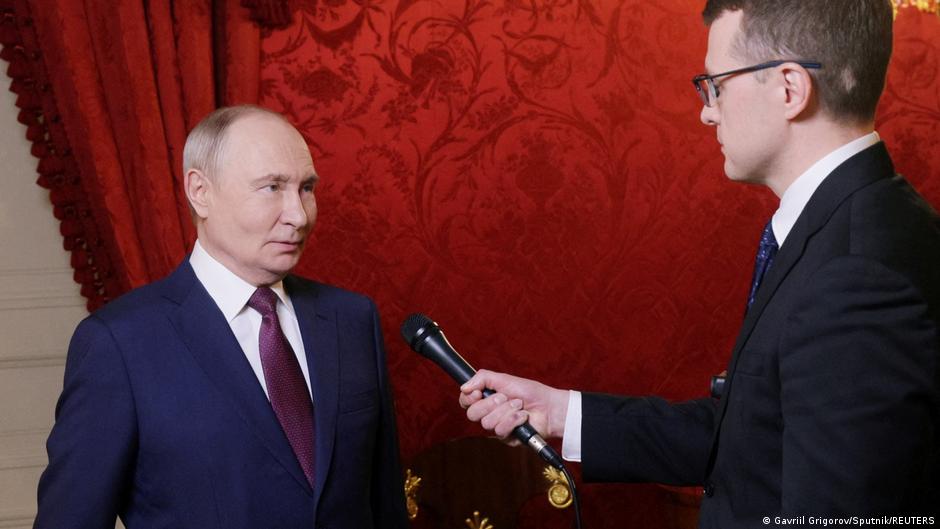
One of the students’ central demands since 2024 has been Vučić’s resignation. He has repeatedly said he would take that step, but he now intends, in practice, to change offices rather than leave power. Vučić is seeking the post of prime minister on October 25, and an SNS victory would keep him in government.
Serbia’s constitution gives the prime minister broader powers than the president, although Vučić became the most prominent figure in the governing establishment during his presidency. He served as prime minister from 2014 to 2017 before leaving the position after winning the presidential election. Since then, the premiership has continuously been held by members of his party.
For markets, an SNS win would point to political continuity, while a Student List victory could introduce a period of policy reassessment. The clearest trading signals will be the final vote, the speed of government formation and whether post-election moves in individual shares are confirmed by higher turnover. Until then, Serbia’s equities are likely to trade primarily as event-risk instruments rather than on newly disclosed corporate fundamentals.