Putin Rejects Front-Line Freeze as Investors Weigh Ukraine War Risk
Moscow signaled openness to US-mediated talks with Kyiv but rejected a ceasefire based on the current front line.
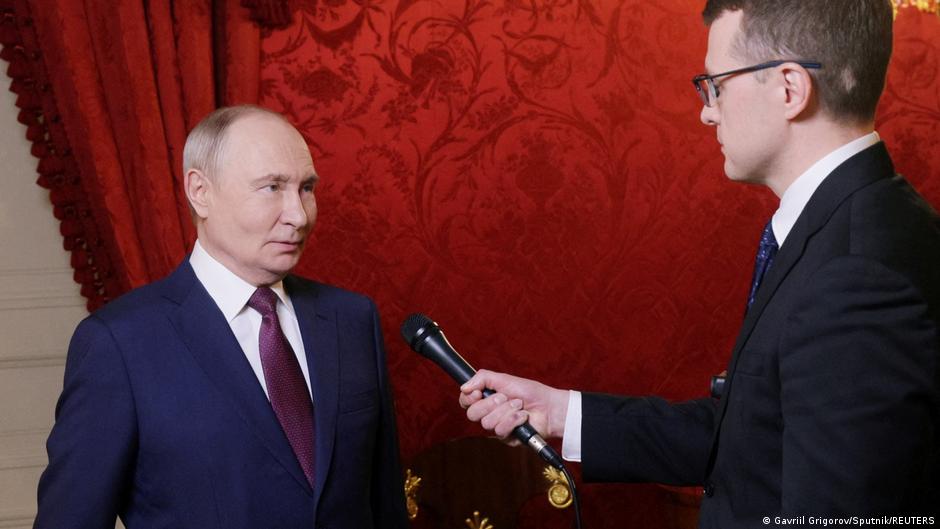
Russian President Vladimir Putin said Moscow was prepared to resume contacts with Kyiv through US mediation, while rejecting the idea of freezing hostilities along the current front line. The mixed signal leaves investors without a clear path toward de-escalation in a war that continues to influence European defense, energy and infrastructure stocks.
In an interview with Pavel Zarubin of Russian state media group VGTRK published on Thursday, Oct. 22, Putin said he had agreed during a meeting with US special envoy Steve Witkoff to renew dialogue with Ukraine under Washington’s mediation. He framed the purpose of such negotiations as establishing security arrangements for Ukraine and Russia after final peace agreements, rather than following a temporary suspension of combat.
“We are ready to resume these contacts to achieve this goal,” Putin said.
Moscow has not disclosed what level of representation it would send to talks with Kyiv following Putin’s meeting with Witkoff. Ukrainian President Volodymyr Zelensky has said he is ready for a three-way meeting with Putin and US President Donald Trump to discuss ending the war. The Kremlin has repeatedly rejected that format or attached conditions that Kyiv did not consider a serious basis for a meeting, including a proposal that Zelensky travel to Moscow.
Ceasefire Gap Limits Scope for a Market Repricing
The principal obstacle for markets assessing the diplomatic signal is the distance between the parties’ stated positions. Putin rejected Zelensky’s statement that Ukraine was prepared to freeze hostilities along the current line of contact, saying the contested area was “not their territory” but part of “historical Russia.”
Media reports previously said Trump supported freezing combat along the front line in the Donbas in 2025, before meeting Putin in Anchorage. That approach conflicts with Putin’s publicly stated demand that Ukraine surrender the entire Donbas region to Russia without a fight.
The absence of agreement even on the form of a ceasefire means the latest remarks do not establish a timetable for negotiations, a cessation of attacks or an agreed framework for territorial issues. For equity investors, that distinction matters: diplomatic contact may temper immediate geopolitical anxiety, but a durable rotation away from defense and energy-security exposures would generally require clearer evidence that operational risks are declining.
The source material provided no stock-price moves, trading-volume figures, analyst rating changes or equity-research target revisions linked to Putin’s comments. Any claim of a specific market reaction would therefore be premature. The most directly exposed watchlist nevertheless includes European aerospace and defense companies, energy producers, utilities, logistics operators, insurers and businesses with material operations or supply chains in Eastern Europe.
Previous meetings between a delegation selected by Putin and Ukrainian representatives produced no tangible progress toward ending the war. The latest contact also generated an immediate sign of disagreement: only hours after Putin met Witkoff, Russian presidential aide Yuri Ushakov said Russia was “completely dissatisfied” with the proposals brought by Trump’s negotiators.
Continued Strikes Keep Operational Risks in Focus
Putin also claimed that Russia “does not want to fight” Ukraine and shifted responsibility for the continuation of hostilities to Kyiv. He said Moscow remained willing to negotiate and described Russians and Ukrainians as one people, citing what he called recent genetic research. He did not explain how genetics would affect questions of national sovereignty.
Russian attacks on Ukraine did not decrease after the Putin-Witkoff meeting. On the day Zarubin’s interview was published, Ukrainian authorities reported Russian strikes on civilian sites, including a clothing market in Lozova in the Kharkiv region, Kyiv’s historic center, and roads and bridges across several regions. Two people were killed and 34 wounded in the strike on Lozova.
Those attacks reinforce the difference between negotiating rhetoric and conditions on the ground. Continued damage to transport links, commercial sites and urban infrastructure sustains risks for reconstruction planning, regional supply chains and companies exposed to higher security or insurance costs.
From an equity-research perspective, the next investable signal is likely to come from verifiable developments rather than further statements: confirmation of the negotiating level, an accepted venue and agenda, a measurable reduction in strikes, or movement toward a ceasefire mechanism. Until then, the diplomatic opening and the rejection of a front-line freeze point in opposite directions, leaving geopolitical risk embedded in European sector positioning.