Sanctioned Russian-Linked Tanker Distress Puts Oil Trades on Watch
The MYRA incident may refocus equity investors on sanctions enforcement, freight risk and disruption-sensitive European energy shares.
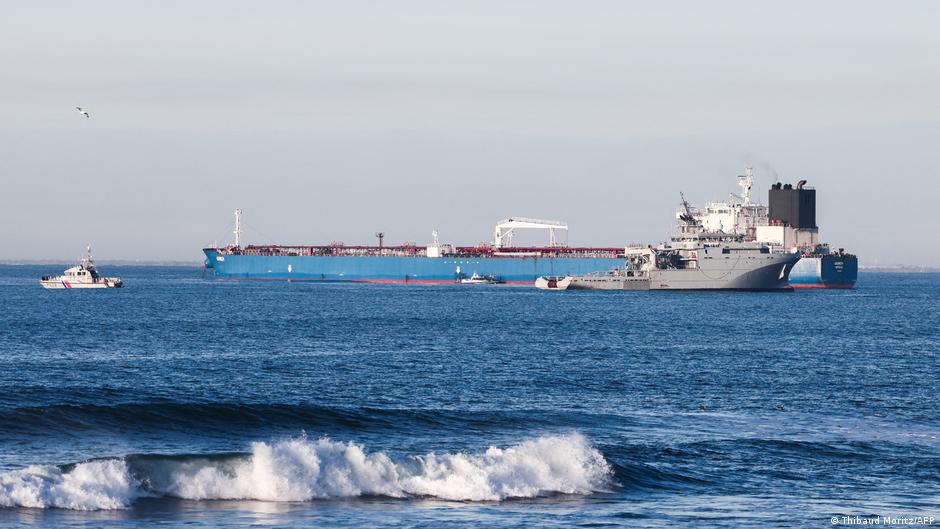
A sanctioned oil tanker associated with Russia’s so-called shadow fleet issued a distress signal in the North Atlantic off Ireland’s northwestern coast, creating a fresh event risk for traders watching European energy, tanker-shipping and oil-services equities.
The 75,000-ton MYRA transmitted the alert through the Inmarsat-C satellite system, maritime monitoring project SeaNews reported on Saturday, October 24. The UK Coastguard is coordinating the operation to assist the vessel.
Despite extreme weather, the tanker was continuing to travel at about 9 knots, or roughly 17 kilometers per hour, after departing from the Russian port of Ust-Luga. SeaNews said waves in the area reached 8.8 meters around the time of the distress call, while wind gusts were approximately 130 kilometers per hour. The vessel was estimated to be about 348 kilometers from shore.
Energy and shipping stocks enter the market watchlist
The available information does not establish that the incident has interrupted an oil cargo, affected benchmark crude prices or produced unusual trading volumes in any listed company. It also does not link MYRA directly to a publicly traded energy or shipping group. The immediate Wall Street implication is therefore one of monitoring rather than a confirmed earnings or supply shock.
For equity investors, the stocks most likely to draw attention are liquid proxies for European oil exposure and tanker freight conditions. That watchlist can include BP, Shell and Equinor among integrated producers, alongside tanker operators such as Frontline and Hafnia. These companies are not alleged to have any connection to MYRA; they are relevant only as publicly traded instruments through which investors often express views on crude supply, regional risk and shipping rates.
Trading-volume confirmation would be important before describing the episode as a market-moving event. A sustained increase in turnover across tanker shares, combined with higher freight-rate expectations or firmer crude prices, would signal that investors see wider consequences. Without those indicators, price moves in individual energy stocks could reflect broader market factors rather than the distress call itself.
Sanctions history raises enforcement questions
According to War & Sanctions, a database maintained by the Main Intelligence Directorate of Ukraine’s Defense Ministry, MYRA has been used to export Russian oil and petroleum products to third countries in circumvention of sanctions. Ukrainian intelligence associates the tanker with Fractal Marine DMCC, a company registered in the United Arab Emirates that it describes as one of the leading operators of Russia’s shadow fleet.
The database says MYRA has repeatedly called at the Russian ports of Ust-Luga and Primorsk, as well as ports in Senegal, Turkey, Brazil, Estonia and Denmark. The United States sanctioned the vessel on July 30, 2025, followed by the European Union on October 24, 2025. Switzerland and Ukraine added it to their sanctions lists on December 13, 2025, the United Kingdom did so on February 24, 2026, and Canada followed on March 25, 2026.
That record makes the rescue operation relevant to investors assessing the operational resilience of sanctioned shipping networks. Any extended immobilization, inspection or enforcement action could sharpen scrutiny of the fleet used to transport Russian oil, although no such outcome was reported in the information available about the distress signal.
Equity research view: limited direct impact, broader risk premium
From an equity-research perspective, a single tanker incident is unlikely by itself to alter profit forecasts for global oil producers or major listed shipping companies. The more consequential question is whether it points to a recurring vulnerability involving aging or heavily sanctioned vessels, severe-weather exposure and access to maritime assistance. A pattern of disruptions could tighten effective transport capacity and increase insurance, compliance and freight costs.
Ukrainian intelligence also alleges that MYRA belongs to the shipping network of Mohammad Hossein Shamkhani. He is the son of Ali Shamkhani, the former secretary of Iran’s Supreme National Security Council and an adviser to Iran’s supreme leader, who was killed in a joint US-Israeli operation in February 2026.
According to the Ukrainian agency, the younger Shamkhani controls a network of tankers, operators and shell companies used for money laundering and for transporting Russian and Iranian oil, including supplies destined for China. These are intelligence-service allegations, and the reported distress event does not independently verify them.
For Wall Street, the clearest near-term signals will be the tanker’s status, any effect on its voyage, subsequent government action and changes in crude prices, freight indicators and trading volumes. Until those emerge, MYRA represents a sanctions and logistics risk to monitor rather than evidence of a broad sector rotation. If the episode develops into a wider enforcement or supply story, tanker equities could respond to tighter capacity expectations, while integrated oil shares would be evaluated against any resulting change in crude benchmarks.