Italy Cost-of-Living Protests Put Luxury and Transport Stocks on Watch
Unrest in Milan and other Italian cities raises near-term operating risks for luxury retailers, transport groups and consumer-facing stocks.
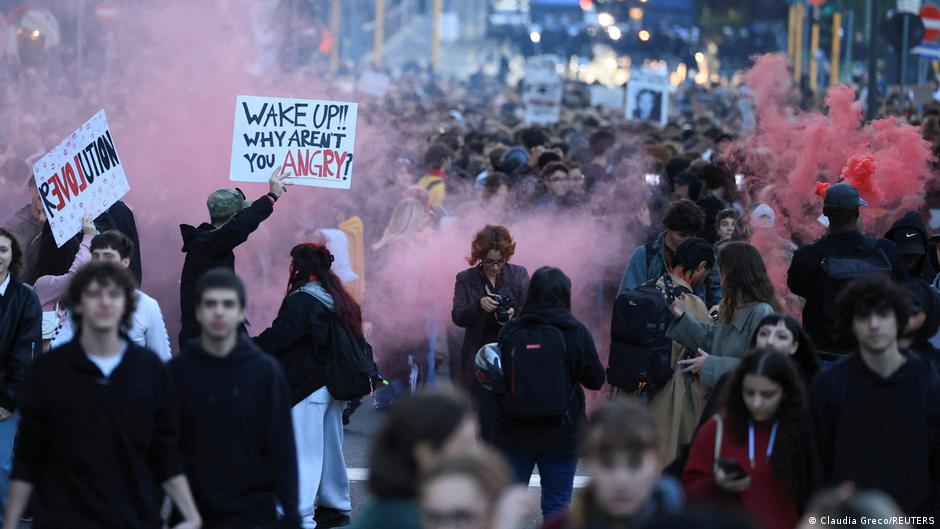
Renewed protests across Italy over the cost of living, fuel prices, military spending and Prime Minister Giorgia Meloni’s government are putting several equity sectors on investors’ watchlists, particularly luxury retail, transportation and other businesses exposed to urban consumer activity.
Demonstrations continued on Saturday, October 24, following protests on October 17 and 18 that descended into disorder. Police reported nine arrests and 371 preliminary detentions during the latest actions, including 110 involving minors.
The immediate implications for listed companies remain operational rather than financial, with no company in the source material reporting quantified losses, store closures or changes to guidance. Nevertheless, images of barricaded luxury storefronts in central Milan could sharpen scrutiny of European luxury shares when markets reopen, while disruption around railway stations may place transport operators and travel-related stocks under short-term observation.
Luxury Retail Faces Renewed Footfall Risk
Milan’s demonstrations were largely peaceful until the evening, when protesters clashed with law-enforcement officers in the city center. Police stopped a column of demonstrators and used batons. Fearing renewed disorder, owners of many luxury stores barricaded their windows.
For equity investors, Milan is the most market-sensitive location cited in the protests because of its importance to luxury shopping and Italy’s broader fashion industry. The defensive measures taken by store owners point to concerns about property damage and reduced customer traffic, although the source provides no evidence of damage to specific shops or disruption to individual publicly traded companies.
The episode therefore presents a sentiment risk rather than a basis for estimating earnings revisions. Analysts following luxury equities would need evidence of prolonged closures, weaker footfall or lower sales before incorporating the protests into revenue forecasts. A single weekend of disruption would normally have less significance than a sustained pattern affecting prime retail districts, tourism or high-value purchases.
The market question is whether localized security precautions develop into a broader and persistent drag on store traffic, travel and consumer confidence.
Trading-volume patterns may offer an early indication of how investors interpret the developments. Unusually heavy turnover in Italian consumer, luxury or travel-exposed shares could signal a reassessment of domestic operating risk, while normal volumes would suggest that investors continue to regard the unrest as localized. The source article, however, contains no stock-price, trading-volume or analyst-rating data.
Transport and Infrastructure Enter the Risk Frame
Authorities strengthened security after the earlier demonstrations, deploying 500 elite military personnel to Milan. Officials also simplified procedures for detaining minors and imposing financial penalties on their parents when property is damaged. Drones and helicopters were used to monitor demonstrations, patrols at railway stations were reinforced, and authorities closely tracked online activity to identify new calls for disorder.
Rail infrastructure became a focal point in Bologna, where police used tear gas and water cannon to prevent a column of demonstrators from approaching the railway station. In Turin, law-enforcement officers pushed protesters back with shields.
These incidents bring transportation and station-based commercial activity into the equity-risk discussion. Investors will be alert to any future interruption of passenger flows, train operations or retail activity around major terminals. No such operational or financial impact was quantified in the source, making it premature to project revenue effects for rail, infrastructure or travel companies.
The broader sector-rotation question centers on whether continued demonstrations encourage investors to favor defensive businesses over economically sensitive Italian equities. Consumer staples and other companies with relatively stable demand could attract attention if unrest persists, while discretionary retailers, leisure operators and domestic transport groups may face closer examination. Any rotation would still depend on evidence from market prices and volumes rather than the protests alone.
Nationwide Demonstrations Broaden Investor Focus
In Rome, a predominantly pro-Palestinian demonstration passed through the historic center. At one point, participants entered the Colosseum. Protest actions were also held in Naples and Florence, showing that the mobilization extended beyond the northern industrial centers of Milan, Bologna and Turin.
The geographic spread matters to equity research because a nationwide pattern could have wider consequences for tourism, retail footfall and consumer confidence than isolated clashes in one city. Even so, the demonstrations described in the source do not establish a measurable national economic impact.
For Wall Street investors, the principal indicators now are duration, geographic expansion and evidence of disruption to business operations. Analysts are likely to distinguish between temporary security measures and persistent unrest capable of changing earnings expectations. Until companies disclose material effects or market data show a sustained repricing, the protests remain a headline-driven risk for Italian and European equities rather than a confirmed fundamental shock.