Putin Backs Wider Drone Defense Roles as War Manpower Strain Deepens
The proposal would allow volunteers deemed fully unfit for military service to guard rear facilities from drone attacks, underscoring Russia’s recruitment pressure.
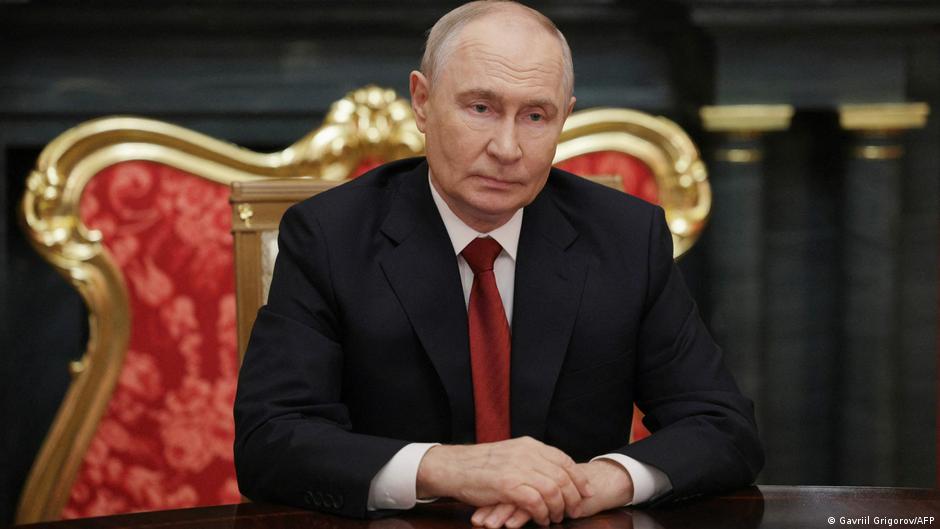
Russian President Vladimir Putin has endorsed a proposal to involve volunteers classified as fully unfit for military service in efforts to defend rear-area facilities from drone attacks, a move that points to mounting manpower pressure in Russia’s war against Ukraine and could keep investor attention fixed on Europe’s defense and security complex.
The idea was put forward by pro-Kremlin war correspondent Yevgeny Poddubny and backed by Putin at a meeting of the leadership of the ruling United Russia party, according to reports cited by The Moscow Times and Echo on Saturday, September 5. The proposal concerns citizens with the Russian military health category “D,” meaning “absolutely unfit for military service.”
Under current Russian law, people in that category cannot sign contracts with the Defense Ministry. The category is assigned in cases involving severe chronic illnesses and disabilities, including active tuberculosis, HIV infection, cancer, schizophrenia, missing limbs, blindness or deafness. Citizens with category “D” are removed from the military register, and their personal files are sent to archives.
For equity markets, the development is less about an immediate single-stock catalyst than about the persistence of a conflict economy in which drone defense, air-defense systems, sensors, electronic warfare and military logistics remain core areas of state demand. Investors have already treated the war in Ukraine as a structural driver for European defense spending, and any sign that rear-area protection is consuming more personnel and resources may reinforce that sector rotation.
Drone Defense Moves Further Into Russia’s Rear Areas
Poddubny said the request came from fighters who had received category “D” status as a result of combat wounds. He argued that such people were still capable of carrying out tasks in regional units, including helping repel Ukrainian drone attacks away from the front line. Putin supported the proposal at the same meeting.
People with category “D” are removed from the military register, and under current Russian law they cannot sign a contract with the Defense Ministry.
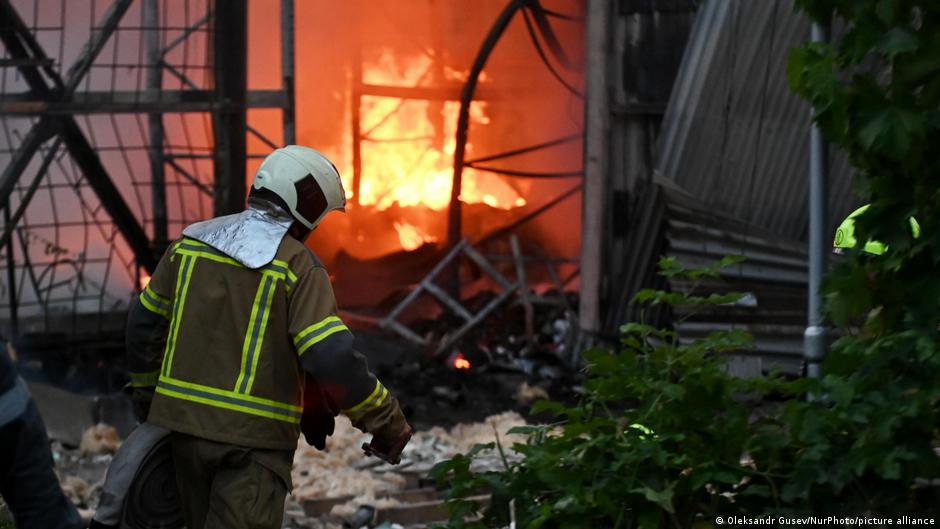
The proposal highlights how drone warfare has broadened the definition of the battlefield. Rear infrastructure, depots, air bases, refineries, logistics nodes and administrative facilities have become part of the security equation. That creates a continuing investment theme around layered air defense, counter-drone systems, radar, command-and-control software and battlefield communications.
Stock Press readers will likely view the report through the lens of defense-sector demand durability. European listed defense groups such as Rheinmetall, BAE Systems, Thales, Leonardo and Saab have been repeatedly linked by investors to higher NATO budgets and increased procurement cycles since Russia’s full-scale invasion of Ukraine. U.S. primes and suppliers, including Lockheed Martin, RTX, Northrop Grumman and L3Harris, are also frequently watched for exposure to missile defense, sensors and electronic systems.
The Russian proposal does not provide procurement numbers, budget allocations or contract awards, so it should not be read as a direct revenue signal for any individual company. But as an indicator of battlefield adaptation, it supports the broader market thesis that counter-drone and air-defense spending is unlikely to fade quickly. Trading volumes in defense names often rise around fresh signs of escalation, new mobilization concerns or changes in military doctrine, particularly when headlines imply a longer conflict horizon.
Mobilization Denials and Recruitment Pressure
The personnel angle is central. At the Eastern Economic Forum in Vladivostok on September 3, Putin again commented on rumors of a new mobilization wave in Russia. He said there was “no scenario that would require mobilization” and described the rumors as an “information attack” by the enemy ahead of State Duma elections, aimed at influencing the result.
It was Putin’s second recent statement on the issue. Earlier, after a Shanghai Cooperation Organization summit in Bishkek, he dismissed such concerns as “nonsense.”
At the same time, the 2022 partial mobilization decree has not formally been canceled and remains in force. Russians have reported receiving summonses, being called to military training and facing intensified recruitment efforts for the war against Ukraine. Pro-war Z channels reported in July that forced conscription to the front could affect 1.2 million Russians and could be accompanied by informal arrangements with neighboring countries that would prevent men of draft age from leaving Russia for adjacent states.
In August, according to the Institute for the Study of War, total Russian troop losses exceeded 40,000 for the second consecutive month. The Financial Times, citing sources, reported that the Kremlin and Russia’s Defense Ministry had instructed Russian regions to recruit 409,000 contract servicemen by the end of 2026 for participation in the war. To meet that target, authorities are increasing pressure on local officials.
That backdrop is relevant for investors because manpower constraints can influence the duration, intensity and cost profile of the war. A prolonged conflict tends to support defense budgets and security-related capital spending, while also sustaining volatility in energy, commodities, shipping and regional risk assets. It may also keep European fiscal policy tilted toward rearmament, an important factor for equity research teams covering industrials and aerospace-defense stocks.
Sector rotation may therefore remain sensitive to headlines that suggest either escalation or exhaustion. Defense equities can benefit from expectations of multiyear order books, but valuations already reflect a significant portion of that narrative in some markets. Equity research desks are likely to distinguish between companies with direct counter-drone, air-defense and munitions exposure and broader industrial names whose war-related upside is less immediate.
The latest Russian discussion does not establish a new mobilization wave. It does, however, show the Kremlin entertaining legal and practical workarounds to draw on a pool of people previously excluded from military service. For markets, that is another signal that drone defense and rear-area protection have become enduring operational burdens rather than temporary wartime exceptions.