New York Mayor Mamdani Unveils $29 Million Antisemitism Response Plan
The city’s expanded hate-crime strategy raises security spending and may draw investor attention to urban safety, nonprofits and municipal priorities.
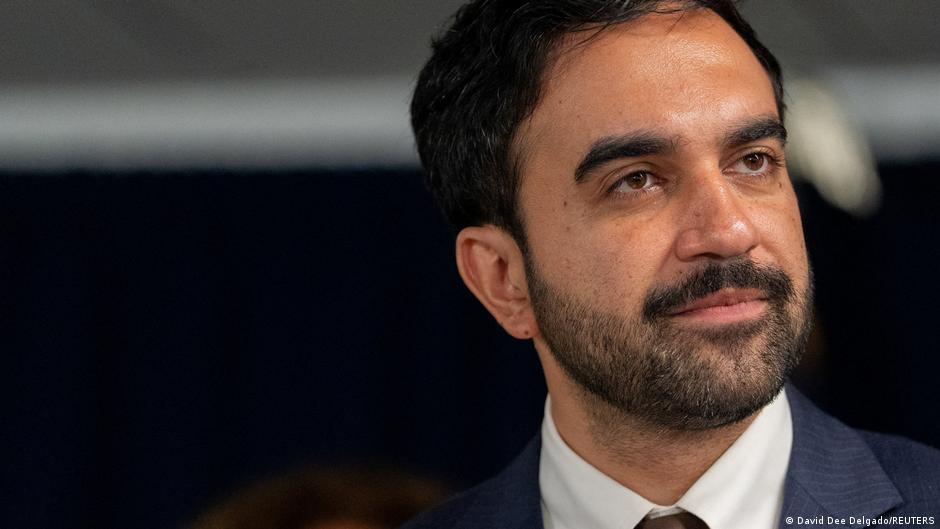
New York Mayor Zohran Mamdani on Tuesday, September 29, introduced a broad municipal strategy to counter antisemitism and hate crimes targeting Jews, a policy move with potential implications for investors tracking urban security spending, public-sector procurement and the politics of city budgets.
The plan would increase the city’s annual budget for combating hate crimes from $3 million to $29 million. It also calls for additional funding to protect synagogues and for the restoration of a task force focused on the security of Jewish houses of worship.
For Wall Street, the immediate read-through is not a single-stock catalyst so much as a signal about sector priorities in the nation’s largest municipal market. The source article does not name contractors, publicly traded vendors or procurement awards. Still, traders and analysts are likely to watch whether the policy translates into tenders for physical security, surveillance, facility hardening, training services, nonprofit support infrastructure or education programs.
The proposal arrives at a politically sensitive moment for Mamdani, who is known as a critic of Israel and has drawn opposition from parts of New York’s Jewish community. He also has Jewish supporters in the city. That tension gives the announcement a dual significance: it is both a public-safety initiative and a governance test for a mayor whose foreign-policy views have become part of local political debate.
Security Spending Moves Into Focus
The plan includes citywide public information campaigns against antisemitism and an expansion of educational programs on the Holocaust. Millions of dollars are also planned for Jewish cultural centers and nonprofit organizations, including a Holocaust memorial being created in Queens and the Center for New Jewish Culture in Brooklyn.
From a market perspective, the most direct question is whether the increased budget becomes visible in contract flows. Publicly traded companies exposed to municipal security, monitoring, facility services or education technology could become relevant only if they are selected through city procurement channels. No such awards were identified in the source material.
That distinction matters for equity research. A headline budget expansion can prompt short-term investor interest across a theme, but without named vendors, contract terms or timing, analysts generally treat the news as a policy indicator rather than a quantifiable revenue event. The trading implication is therefore likely to be more thematic than immediate, especially for diversified companies whose New York municipal exposure would represent only one part of a broader revenue base.
The broader sector rotation question is whether city and state governments continue directing more resources toward public safety, hate-crime prevention and institutional security. If that pattern persists, investors may compare companies with exposure to access control, video monitoring, cybersecurity for public institutions, emergency communications, guard services and civic education. The Mamdani plan adds one data point to that policy backdrop, but it does not by itself establish a revenue forecast.
“Although our Jewish neighbors make up only 12% of New York’s population, police statistics show that antisemitic crimes account for more than half of all recorded hate crimes,” Mamdani said in a video address posted on X.
He added that the situation was unacceptable and that city authorities had an obligation to change it, saying the municipal government would take a leading role.
Political Risk and Municipal Priorities
Mamdani is the first Muslim mayor of New York. His pro-Palestinian stance and criticism of Israel have made him a polarizing figure for some voters, including within the Jewish community. The announcement therefore may also be viewed through the lens of political risk: whether the mayor can maintain support for public-safety funding while navigating disputes over Israel, antisemitism and civil-rights enforcement.
Israeli Prime Minister Benjamin Netanyahu, speaking at the United Nations General Assembly in New York, called Mamdani an antisemite. During the 2026 election campaign, Mamdani said that if Netanyahu visited New York, he would seek his arrest based on a warrant issued by the International Criminal Court in 2024. After taking office as mayor, however, Mamdani acknowledged that he did not have the relevant authority.
For investors, that political backdrop is not incidental. Municipal spending decisions can be affected by public pressure, council negotiations, community response and legal constraints. A hate-crime strategy that expands budgets from $3 million to $29 million could attract scrutiny over how funds are allocated, which organizations receive support, and how results are measured. It may also become part of a larger debate over policing, nonprofit grants and the role of education in combating bias.
Trading volumes in directly related equities are difficult to assess from the source material because no market data, tickers or contractors were provided. A disciplined equity research approach would therefore avoid assigning near-term earnings impact to specific companies. The more supportable conclusion is that New York’s plan reinforces investor attention on public-sector security demand, particularly in large cities responding to hate crimes and threats against religious institutions.
In the near term, market reaction is likely to depend on whether the city releases procurement details, identifies implementing agencies, or names vendors connected to synagogue security, public campaigns, Holocaust education or cultural-center funding. Until then, the announcement is best read as a policy development with possible downstream implications for the security-services ecosystem rather than a confirmed stock-specific catalyst.
The plan also reflects a wider municipal balancing act: responding to crime statistics and community concerns while managing a politically charged debate over Israel, antisemitism and the mayor’s own record. For Wall Street, that makes the issue less about a single trade and more about how urban policy priorities can redirect public budgets toward safety, education and institutional resilience.