German Auto Export Raids Put Sanctions Risk Back on Luxury Car Stocks
Investigators in Germany and Austria suspect two businessmen used third countries to send cars and trucks to Russia in breach of EU sanctions.
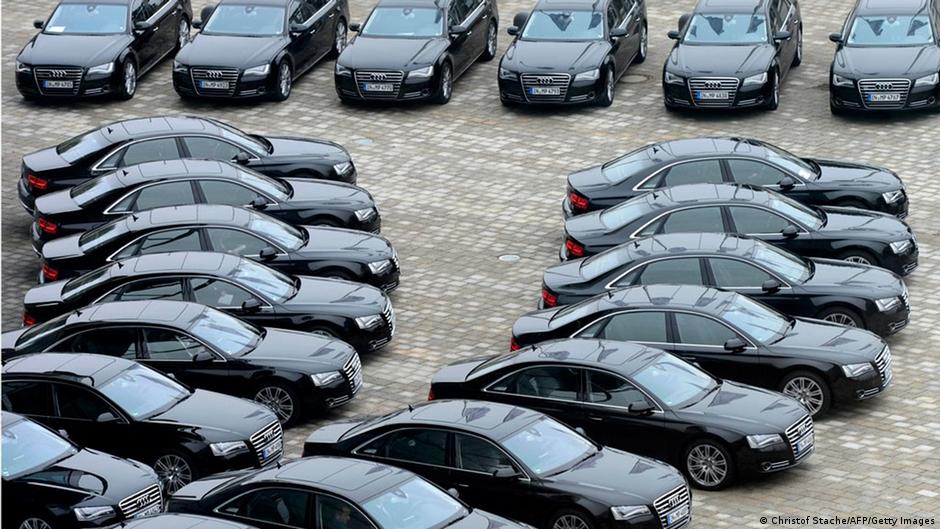
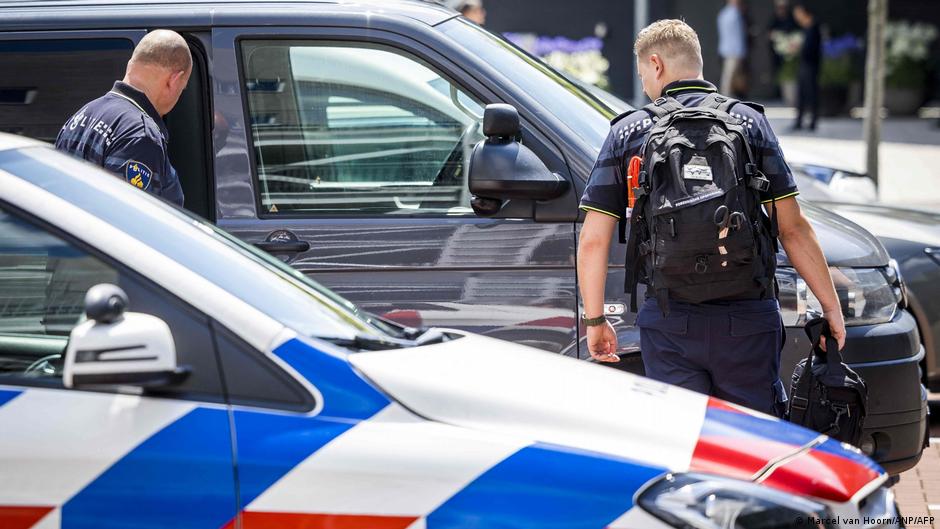
German and Austrian authorities have searched properties linked to two businessmen suspected of exporting vehicles to Russia through third countries in violation of European Union sanctions, a case that puts compliance risk back in focus for investors watching European luxury auto names and the broader sanctions-exposed trade complex.
The Kaiserslautern prosecutor’s office said on Tuesday, September 29, that the suspects are believed to have sent 53 passenger cars and six semi-trailer tractors to Russia from autumn 2022 through the end of 2024. Investigators allege the shipments were routed via third countries, including Belarus, Kyrgyzstan and Georgia, to conceal the final destination.
Authorities have seized or frozen assets worth about 7 million euros, which prosecutors described as the suspected proceeds of the illegal exports. The asset measures add a financial dimension to a case that is likely to be followed closely by equity investors, compliance teams and analysts covering European automakers, dealer networks and logistics channels.
Prosecutors said both suspects have so far exercised their right to remain silent, and the investigation is continuing.
Sanctions Enforcement Reaches the Dealer Channel
The searches took place on September 8 at residential and commercial premises in Neustadt an der Weinstrasse in the German state of Rhineland-Palatinate and in Vienna. Law enforcement authorities from Germany, Austria and Belgium took part in the operation. At the request of prosecutors, the Kaiserslautern district court authorized the seizure of assets estimated at about 7 million euros.
During the searches in Germany, authorities seized two vehicles, a Porsche and a Mercedes-Benz. In Austria, they seized 85,000 euros in cash. A further 278,000 euros was blocked in bank accounts in Germany, Austria and Belgium. Investigators also found three hunting rifles and ammunition at the Neustadt businessman’s premises, prompting an additional investigation into a possible breach of weapons laws.
For public equity markets, the case does not by itself establish wrongdoing by any listed manufacturer. The source material identifies the brands of two seized vehicles but does not allege misconduct by Porsche, Mercedes-Benz or any other automaker. The market relevance is instead in the enforcement signal: prosecutors are continuing to pursue alleged sanctions evasion involving high-value vehicles, and the cases increasingly point to the complexity of dealer, resale and re-export channels after cars have left primary distribution networks.
That distinction matters for investors. European auto shares are often traded on demand trends, China exposure, electric-vehicle margins, pricing discipline and capital returns. Sanctions cases add another layer: the risk that luxury goods and transport equipment can move through intermediary jurisdictions, potentially raising compliance costs or increasing scrutiny of dealer networks, logistics partners and export documentation.
Prior Convictions Underscore Legal Exposure
The latest investigation follows earlier criminal cases in Germany involving luxury vehicle exports to Russia. In March, a court in Wuerzburg sentenced a Bavarian car dealer to six years in prison for supplying 111 luxury cars to Russia in violation of sanctions. According to investigators in that case, the vehicles ended up with employees of the FSB, the FSO, Rosneft and the administration of the Russian president.
In July 2025, an employee of a car dealership in Hesse received a five-year prison sentence for selling 71 luxury cars to Russia, also in circumvention of sanctions. Those convictions suggest that German prosecutors are prepared to treat sanctions evasion in the auto trade as a serious criminal matter rather than a technical breach.
The cases are not isolated. In May 2025, it was reported that German prosecutors were investigating more than 40 cases connected with shipments of expensive cars to Russia. Media reports described German justice authorities as pursuing dishonest car dealers, while experts noted that only a small share of shadow deliveries was being stopped.
That enforcement backdrop may influence how equity research teams frame the sector. Analysts focused on premium automakers and dealer groups may not assign a direct earnings impact from a single raid, but repeated cases can affect the narrative around distribution controls, reputational exposure and the cost of monitoring end-user risk. For stocks tied to premium vehicles, the issue sits alongside broader investor debates over resilience in high-margin models and the durability of global luxury demand.
China Route Adds to Sector Complexity
The wider trade pattern is also relevant for market watchers. In February, Reuters reported that tens of thousands of cars, including German luxury vehicles, were being exported to Russia in circumvention of sanctions through China. Some of those cars were produced by foreign companies in China, while others were imported into China from abroad. New cars were reportedly registered as used vehicles, allowing sellers to avoid obtaining manufacturers’ permission for their sale to Russia.
For investors, that reported China route adds complexity to an already sensitive region for European automakers. China is both a crucial sales market and, according to the report cited in the source article, a conduit for some vehicles reaching Russia despite sanctions. That combination can complicate equity research discussions around governance, compliance systems and the visibility companies have over secondary market flows.
The latest searches may therefore have a broader market read-through than the number of vehicles alone suggests. The 53 passenger cars and six trucks cited by prosecutors are modest in unit terms, but the 7 million euros in alleged proceeds, the cross-border enforcement cooperation and the reference to multiple intermediary countries all point to a continuing official focus on high-value automotive trade.
Sector rotation implications are likely to remain indirect. The article provides no trading volume data, share-price moves or broker ratings linked to the raids. Still, the investigation reinforces a risk factor that can surface in due diligence for European luxury automakers, dealer groups, logistics providers and banks handling cross-border payments. In a market already sensitive to geopolitical exposure, sanctions enforcement remains one more variable for investors assessing valuation premiums in the auto sector.