France-Taliban Migrant Talks Put European Policy Risks on Investor Radar
The technical negotiations have no direct listed-company impact but could sharpen political risk across European transport and services sectors.
France is holding technical talks with representatives of the Taliban over the possible return of some Afghan migrants who lack permission to remain in the country, despite Paris having no diplomatic relations with Kabul and not formally recognizing the Taliban government.
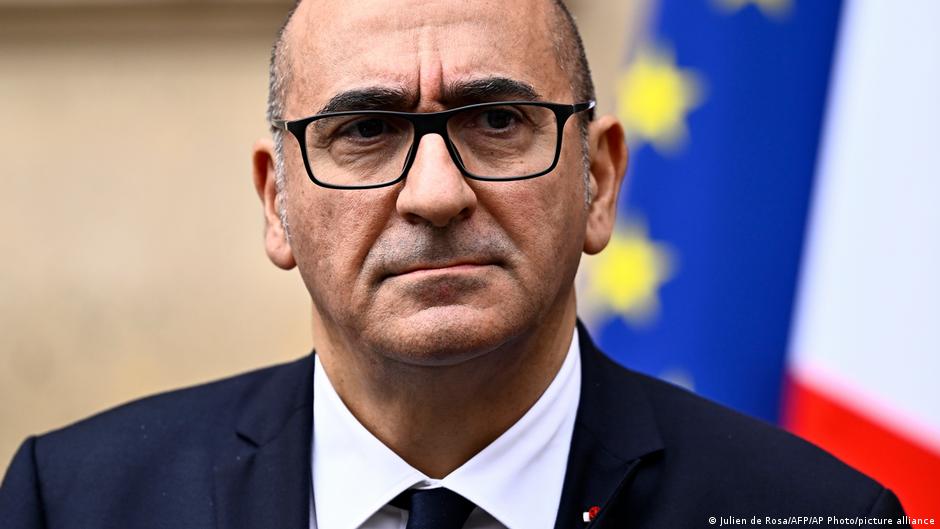
French Interior Minister Laurent Nuñez disclosed the discussions during an address to parliament on Monday, Nov. 2. The announcement introduces a fresh political-risk issue for investors monitoring European policy, although it does not identify any publicly traded company, contract, trading-volume shift or immediate earnings exposure.
“We are trying to secure the possibility of returning a certain number of Afghans who are in the country illegally. These are technical discussions,” Nuñez said, according to AFP.
The minister said other European countries, including Germany, also maintain similar contacts with the Taliban. France is among a group of about 20 European Union states—including Germany, Belgium and Sweden—that are seeking to accelerate the return of Afghan nationals, particularly people convicted of crimes.
Market impact remains indirect
For Wall Street, the development is best treated as a policy signal rather than a company-specific catalyst. The source material names no listed stocks and provides no figures for deportations, government spending, contracts or implementation costs. It also contains no evidence of unusual equity trading volumes or changes to analyst ratings. That limits the basis for any immediate revenue or valuation adjustment.
The sectors most likely to attract investor attention if the policy advances are those already sensitive to European government decisions, including transport, outsourced public services and security-related operations. At this stage, however, the talks alone do not establish that private-sector companies will receive new work or face material costs. Investors would need operational details—such as the scale, timetable and funding of any return program—before assessing potential exposure at the stock level.
The issue could also become part of a broader European political-risk debate. A coordinated approach among roughly 20 EU states may carry more policy significance than France’s bilateral technical contacts in isolation. Even so, the absence of diplomatic recognition and the humanitarian objections surrounding forced returns create substantial uncertainty about whether the discussions will produce an executable program.
Political and legal scrutiny rises
Nuñez said some Afghans in France “may represent a threat to public order,” making their deportation a government priority. Opposition politicians have challenged the initiative, warning that engagement with Taliban officials risks conferring legitimacy on the regime.
Léa Balage El Mariky, a lawmaker from The Ecologists party, accused the French government of beginning a “normalization of diplomatic relations” with the Taliban regime. She said the regime commits crimes against humanity through a policy she described as “gender apartheid.”
The criticism underscores a central policy tension: France says the contacts are technical, while opponents argue that even limited negotiations could have wider diplomatic consequences. For equity markets, such disputes generally matter when they alter regulation, public spending or the probability that government programs will proceed. None of those channels has yet been quantified in this case.
Human-rights concerns may further constrain implementation. In September, UN High Commissioner for Human Rights Volker Türk called for an end to forced returns to Afghanistan, citing the continuing humanitarian crisis and the deteriorating human-rights situation in the country.
Since returning to power in Afghanistan in 2021, the Taliban has imposed a series of restrictions on women and girls, including bans on secondary and higher education for most of them. The International Criminal Court previously issued arrest warrants for several senior Taliban figures over allegations of crimes against humanity connected to the persecution of women and girls.
What equity investors should watch
The next market-relevant information would be evidence that the talks have moved beyond preliminary contacts. Investors would be looking for an agreement, the number of people covered, participating EU governments, transportation arrangements and any public procurement attached to implementation. Without those details, assigning an earnings impact to individual stocks would be speculative.
Trading desks may also monitor whether the controversy becomes a broader test of France’s domestic political stability or EU coordination on migration. The immediate read-through is limited: no specific company has been linked to the negotiations, no sector has received a measurable financial benefit, and no trading-volume response was reported in the source.
Equity research teams therefore have little factual basis for revising forecasts solely on the announcement. The talks are more relevant as a developing policy risk that could eventually affect government-facing industries if France and other European states establish a formal return mechanism. Until then, the primary impact remains political and reputational rather than financial.