Flydubai Halts Israel Flights After 737 MAX 8 Incident, Putting Aviation Stocks in Focus
The suspension adds a geopolitical and safety overhang for airline and aerospace investors tracking Middle East routes and Boeing exposure.
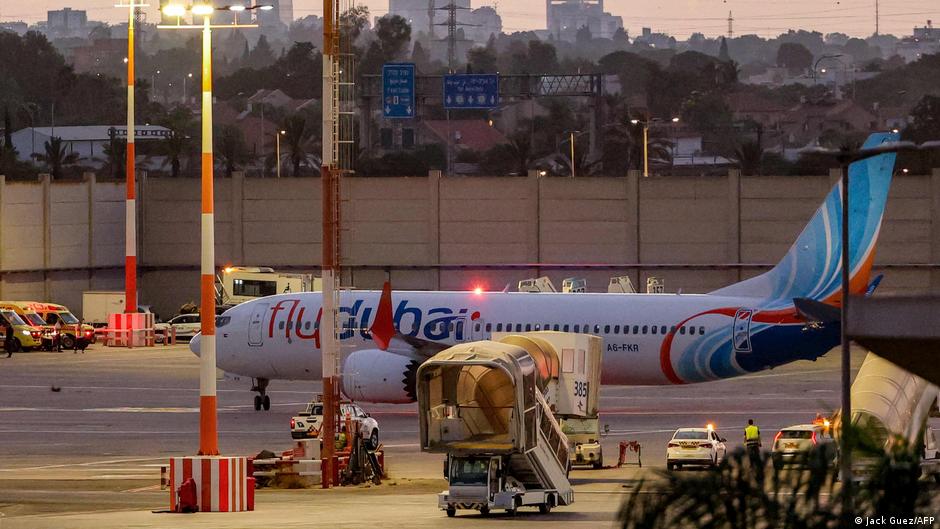
Flydubai has suspended all flights to and from Israel while authorities investigate an incident involving a Boeing 737 MAX 8 operating from Dubai to Tel Aviv, adding a fresh aviation-risk headline for investors already sensitive to Middle East travel disruption, airline capacity decisions and aircraft-safety narratives.
The carrier said the temporary halt would allow the relevant authorities to continue their work and establish the full circumstances of the incident. A Flydubai representative said late Wednesday, October 1, that the airline was closely coordinating its actions with the government of the United Arab Emirates and other stakeholders. A decision on resuming flights will be made as more information becomes available, the representative added.
The suspension followed an emergency landing by Flydubai flight FZ1073, which had been traveling from Dubai to Tel Aviv. The passenger aircraft landed at the airport in Tabuk, Saudi Arabia, at about 9:00 a.m. local time after a signal related to an attempted hijacking. The reported trigger was an alleged fight in the cockpit.
For Wall Street, the immediate market question is less about Flydubai itself and more about spillover: how investors price airline route risk, whether the episode affects sentiment toward the Boeing 737 MAX 8, and whether regional carriers or travel-linked equities face renewed scrutiny if flight suspensions widen or last longer than expected.
Airline Risk Returns to the Tape
Flydubai’s decision to halt Israel flights comes after Israeli Transportation Minister Miri Regev demanded the cancellation of all Flydubai flights to Israel following the morning incident. She called on the Civil Aviation Authority to investigate whether the UAE had violated an aviation agreement with Israel. That agreement, according to the report, states that only pilots holding passports from countries with diplomatic relations with Israel may land in the country. Oman does not have diplomatic relations with Israel.
The incident has implications for equity investors because airline stocks often react quickly to route suspensions, security incidents and geopolitical uncertainty, even when the companies directly involved are not listed on major U.S. exchanges. The broader read-through can extend to aircraft manufacturers, airport operators, travel platforms, fuel demand assumptions and insurers, especially when an incident occurs on a high-profile international route.
The aircraft involved was a Boeing 737 MAX 8. The report does not indicate any mechanical failure or aircraft-design issue, but the use of the MAX model means Boeing may still be part of traders’ headline screens. Aerospace investors tend to separate operational or security incidents from manufacturing or certification concerns, but intraday sentiment can be less precise when breaking aviation headlines cross the tape.
“The temporary suspension will allow the relevant authorities to continue their work and establish all the circumstances of the incident,” a Flydubai representative said.
According to the main version of events described in the source report, the co-pilot allegedly attacked the aircraft commander with a knife and attempted to take control of the plane. During the struggle, the aircraft descended sharply over Saudi territory, dropping from 9,410 meters to 5,105 meters in just 29 seconds.
There were 174 people on board the Boeing 737 MAX 8, including 27 children. Most passengers were Israeli citizens. Some passengers said they first heard shouting from the cockpit, then saw the cockpit door open and observed that one pilot had been wounded, with blood on his clothing. First aid was provided, and one passenger was a doctor. Crew members and passengers were also able to subdue the attacker.
Boeing, Carriers and Research Desks
From an equity research perspective, the episode is likely to be monitored under several buckets: airline security procedures, bilateral aviation agreements, Middle East route reliability, and reputational risk for operators flying between Gulf hubs and Israel. Analysts covering global airlines may focus on whether the suspension remains limited to Flydubai or prompts broader operational reviews. Analysts covering Boeing may emphasize that the reported facts center on cockpit violence and an alleged attempted takeover rather than the airframe.
The plane was ultimately landed in Saudi Arabia by two other pilots who were on board as passengers. CNN reported that the aircraft was landed by two reserve pilots who were supposed to operate the next flight. Israel Hayom wrote that they were a Ukrainian and a Russian citizen, though that information has not been officially confirmed. Other reports said the aircraft may have been landed by citizens of South Africa and New Zealand.
Israeli Prime Minister Benjamin Netanyahu later said Saudi authorities had arrested the pilot who wounded his colleague with a knife. Media reports identified the suspect as an Omani citizen. Sources from Israeli intelligence services cited by Britain’s The Telegraph did not rule out that he intended to take control of the aircraft and direct it toward a skyscraper in Tel Aviv. One source described the feared scenario as similar to September 11, in which a co-pilot kills the pilot and crashes the aircraft in Israel with all passengers on board, most of them Israelis. Israeli Defense Minister Israel Katz called the Flydubai incident an attempted jihadist terrorist attack.
The wounded pilot was identified as the captain, Indian citizen Smith Machchhar. Netanyahu wrote on X that despite serious injuries, Machchhar resisted, opened the cockpit door and enabled passengers and crew to neutralize the attacker, preventing a catastrophe in the air. Machchhar’s condition was described as stable.
After the emergency landing of FZ1073 in Saudi Arabia, Flydubai sent a second aircraft to transport the passengers to Israel. That plane landed at Ben Gurion Airport in Tel Aviv.
For traders, the next catalysts will be the duration of Flydubai’s suspension, any regulatory findings from Israel, the UAE or Saudi Arabia, and whether aviation-security agencies recommend additional measures. In the near term, the incident places airline-security risk back into the market conversation and may add to volatility in travel and aerospace names whenever new details emerge.