Drone Strike on Surgutneftegas Refinery Puts Russian Fuel Supply in Focus
The Kirishi facility processes about 7% of Russia’s crude, raising fresh operational and sanctions risks for energy-sector investors.
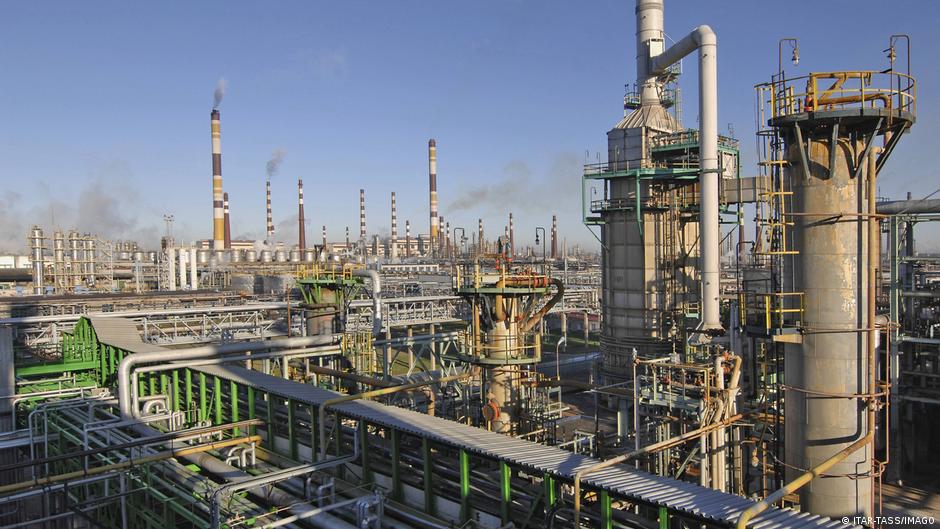
Ukrainian drones attacked the Kirishi oil refinery in Russia’s Leningrad region overnight on Monday, November 9, according to the Russian outlet Astra and Ukrainian monitoring channels on Telegram, which cited eyewitness accounts. The facility, known as KINEF, belongs to the Surgutneftegas group and accounts for about 7% of Russia’s total oil refining volume.
For equity investors, the incident places renewed attention on Surgutneftegas and the broader Russian energy complex, although the source reports did not provide a share-price reaction, trading-volume figures or an estimate of the latest damage. The immediate market question is whether the strike caused a temporary disruption or a more substantial loss of refining capacity at a plant that has already suffered repeated attacks.
Leningrad region Governor Alexander Drozdenko confirmed that an unmanned aerial vehicle had hit an industrial zone in Kirishi, but he did not identify the affected enterprise. Drozdenko said Russian air defenses had downed 113 drones over the region during the night. Videos posted on social media showed a fire on the refinery’s grounds.
KINEF has annual design capacity of 20 million to 21 million metric tons of crude and has processed about 18 million tons annually in recent years.
Astra reported that Kirishi residents heard air-defense activity and powerful explosions near the KINEF complex. Residents also reported the evacuation of an apartment building. Ukraine had not officially commented on the reported strike.
Operational Risk Returns to a Systemically Important Refinery
The refinery is located in Kirishi, approximately 100 kilometers southeast of St. Petersburg. It is one of Russia’s largest oil-processing facilities and plays a significant role in supplying fuel to the country’s northwest. Among its customers is St. Petersburg’s Pulkovo Airport, which receives aviation kerosene from KINEF.
That regional importance makes the facility’s operating status relevant beyond Surgutneftegas itself. A prolonged shutdown could tighten supplies of refined products in northwestern Russia and increase the burden on other domestic refineries and transport networks. Conversely, limited damage and a rapid restart would reduce the likelihood of a lasting effect on sector earnings or product availability.
KINEF’s scale amplifies those considerations. Its design capacity is estimated at 20 million to 21 million tons of crude per year, while recent annual throughput has been about 18 million tons. That represents roughly 7% of Russia’s total refining activity, meaning investors may treat verified evidence of reduced output as more significant than an isolated fire without material damage to processing units.
The plant’s recent operating history also raises the risk premium. KINEF has been targeted by Ukrainian drones several times in recent years. Following a strike in late August 2026, the refinery completely halted crude processing after two primary refining units were damaged. The latest reported attack therefore comes against a backdrop of demonstrated vulnerability rather than merely theoretical infrastructure risk.
Equity Research Focus: Damage, Downtime and Product Margins
For an equity-research assessment, three variables are central: which units were hit, how long any outage may last and whether regional refined-product prices respond. The source material does not establish the extent of the damage from Monday’s strike, and no company guidance on production, repairs or financial exposure was reported.
Surgutneftegas is the most directly exposed company because KINEF is part of its group. However, the event may also influence investor views of Russian oil producers and refiners as a sector. Repeated attacks can increase maintenance costs, complicate production planning and create wider uncertainty around refinery utilization. They may also encourage sector rotation toward energy companies or markets perceived as having lower physical-infrastructure and sanctions exposure.
Wall Street investors have limited direct access to many Russian equities, and the source article supplied no U.S. trading data tied to the incident. As a result, any near-term impact in international portfolios would more likely be assessed through broader energy benchmarks, oil-product markets and non-Russian refining stocks rather than through liquid U.S. trading in Surgutneftegas itself. No specific movement in those instruments was documented in the source.
Sanctions remain another material constraint. Surgutneftegas was placed under sanctions by the United States, the United Kingdom and the European Union in 2025, and KINEF was also named in sanctions documentation. Those restrictions already complicate the investment case by limiting market access and increasing compliance risks. The renewed physical threat adds a separate layer of uncertainty around the group’s capacity to maintain stable refining operations.
Trading desks will now look for confirmation of unit damage, evidence of reduced throughput and any official statement from Surgutneftegas. Until those details emerge, the incident is best viewed as an escalation of operational risk at a strategically important refinery, rather than as a quantified earnings event.