Trump-Putin Call on Russia Health Reports Puts Biotech and Metals in Focus
Investors are watching public health, aluminum and Russia-exposed assets after reports of a possible plague-linked death in Irkutsk.
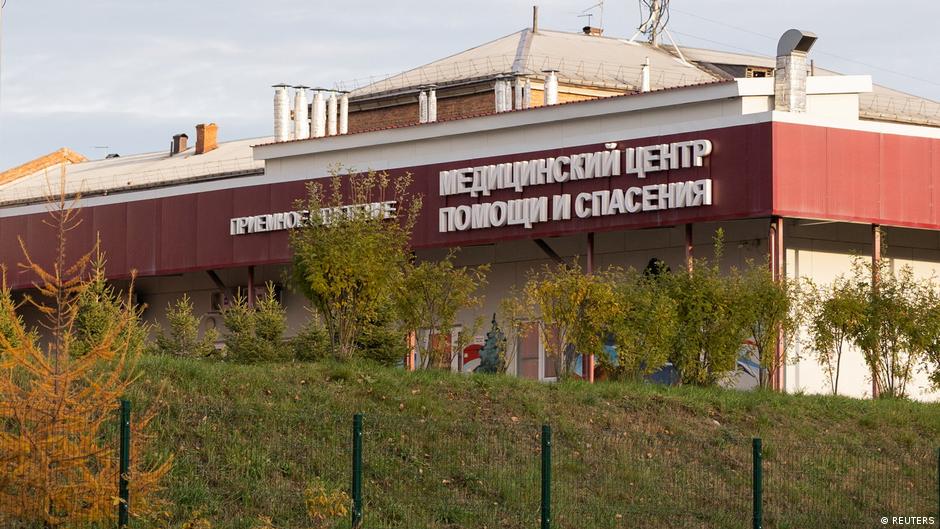
U.S. President Donald Trump plans to hold a phone call with Russian President Vladimir Putin after reports that a 28-year-old laboratory assistant at the Irkutsk Anti-Plague Institute may have died from plague, a development that has put public-health risk, Russia exposure and selected industrial supply chains back on investors’ radar.
The White House said on Tuesday, October 6, that the two leaders had a call scheduled in the near term. Trump made the comment in response to a journalist’s question about whether he had discussed the Irkutsk incident with Putin. The possible case centers on Darya Shipilova, a laboratory assistant who died overnight on October 2 at the Shelekhov district hospital in Russia’s Irkutsk region.
For Wall Street, the immediate market issue is not a confirmed outbreak but uncertainty. The World Health Organization has asked Russian authorities for additional information about the pathogen and the circumstances that triggered public-health measures. That request is likely to be closely followed by investors in health care, diagnostics, travel, metals and emerging-market equities, particularly as any change in risk perception around Russia can quickly feed into sector rotation and portfolio hedging.
WHO Seeks More Details as Russia Reports No Recent Plague Cases
WHO Director-General Tedros Adhanom Ghebreyesus said overnight on October 7 on X that the organization remains in contact with Russian health authorities and has offered technical support. According to Ghebreyesus, Russian officials told the WHO that no plague cases had recently been registered in the Irkutsk region.
Russian health authorities said an epidemiological investigation had been conducted, preventive and control measures had been taken, and identified contacts had been placed under medical supervision and tested.
Ghebreyesus added that Russian authorities informed the WHO that no high-threat pathogens had been detected among contacts and that medical monitoring of all identified contacts had been completed. At the same time, he said the WHO had requested additional information to clarify the cause of the severe pneumonia, the pathogen that prompted public-health actions, and media reports about a second employee with pneumonia of unknown origin.
Those details matter for equity markets because they separate a contained laboratory or hospital incident from a broader public-health event. Traders typically respond first to the possibility of disruption: demand for testing capacity, protective equipment and hospital readiness may become a short-term theme, while travel, transport and commodity-linked names can come under scrutiny if restrictions widen. The article did not cite any confirmed transmission beyond the reported contacts, and Russian authorities told the WHO that no plague cases had recently been registered in the region.
Risk Rotation Could Center on Health Care, Travel and Metals
Trump had earlier said on October 5 that the United States was “watching very closely” what was happening in Russia. Asked whether the White House would respond to reports from Russia, he said U.S. officials had only just heard about the matter and that Russian authorities were calling it pneumonia. He also said pneumonia used to be easier to treat, but that microbes and bacteria had become disproportionately stronger, adding that the United States would help Russia.
In equity research terms, the first read-through is likely to be event-risk positioning rather than a broad repricing. Health care investors may focus on diagnostics, infection-control suppliers and companies tied to hospital preparedness. The market may also watch vaccine and anti-infective developers, although the source report does not identify any commercial product need, procurement process or confirmed pathogen.
Travel and consumer sectors would be monitored for any signs of regional restrictions, but the reported measures so far are localized. The publication Lyudi Baikala reported on October 4 that Irkutsk city clinical hospitals No. 1, 3 and 10, as well as a maternity hospital and the Ivano-Matreninskaya children’s clinical hospital, had been closed for quarantine. Localized hospital quarantines may affect sentiment, but they do not by themselves establish a broader economic shock.
The metals angle is also important for investors. The source report states that a mask mandate was being introduced at the Irkutsk aluminum plant, known as IrkAZ, in Shelekhov. The measure was announced a day earlier by plant director Artem Fominykh. The article does not report a production halt or disruption, so any trading response in aluminum-linked equities or exchange-traded commodities would likely depend on whether investors see further operating constraints or merely precautionary workplace measures.
Russia-exposed assets may face headline sensitivity because the incident involves a state anti-plague institute, multiple public-health agencies and direct communication between Washington and Moscow. However, the known facts remain limited. The head of neighboring Buryatia, Alexei Tsydenov, wrote on Max that plague was the cause of Shipilova’s death, then later edited the post to add the word “possibly.” Russia’s consumer health regulator, Rospotrebnadzor, said the deceased woman had been diagnosed with pneumonia of unknown cause. Irkutsk regional governor Igor Kobzev referred to suspicion of a “particularly dangerous infection” without naming a presumed diagnosis.
For market participants, that leaves a familiar but delicate setup: official denials of recent plague cases, precautionary local measures, WHO requests for clarification and a potential Trump-Putin call that could elevate the geopolitical visibility of the story. Until more information is released, equity researchers are likely to frame the event as a watch-list catalyst rather than a base-case shock. Still, in a market where health scares can rapidly shift flows, trading desks will be alert to changes in volume across health-care suppliers, Russia-sensitive funds, travel names and aluminum-linked industrial exposures.