Romania Uncovers Alleged Russian Plot Targeting Arms Production
The suspected sabotage network raises operational-risk concerns for European defense manufacturers and critical infrastructure operators.
Romania’s domestic intelligence service said it had uncovered an alleged Russian-coordinated sabotage network that attempted to set fire to the Carfil weapons factory in Brașov, central Romania, on September 14. The disclosure adds a new operational-risk dimension for investors tracking Europe’s defense industry, although Romanian authorities did not report damage, production disruptions, trading volumes or any measurable effect on publicly traded defense shares.
The Romanian Intelligence Service, known as SRI, said on Monday, October 26, that the network was “directly coordinated by the intelligence services of the Russian Federation.” According to the agency, the suspected group had been assigned a broad set of potential targets across the region.
“Coordinators from the Russian Federation identified an extensive list of targets for the group: state-owned and private arms manufacturers, as well as other sites of military and industrial interest,” the SRI statement said, as quoted by Reuters.
Reuters was unable to immediately reach the Russian Embassy in Bucharest for comment. Moscow has repeatedly rejected similar accusations, according to the report.
Defense supply chains face a wider security risk
The suspects include two Belarusian citizens and one Ukrainian citizen. Two were detained in Germany while allegedly preparing similar acts of sabotage, while the third is wanted in Poland, Romanian broadcaster Știri reported. Bucharest is seeking their extradition to Romania.
The allegations are relevant to the equity research case for European defense companies because they point to threats extending beyond military demand and government procurement budgets. Factories, drone-production sites, satellite communications infrastructure and logistics networks may also face physical security risks. The source material, however, provides no company-specific share-price movements, analyst rating changes or abnormal trading-volume data linked to the Romanian announcement.
For Wall Street investors, the immediate read-through is therefore qualitative rather than a confirmed trading catalyst. A sustained campaign against European arms production could increase security, insurance and redundancy costs across the sector. It could also reinforce government support for protected production capacity and resilient supply chains. The eventual effect on individual stocks would depend on the ownership of targeted assets, the duration of any shutdowns and whether additional spending offsets higher operating costs.
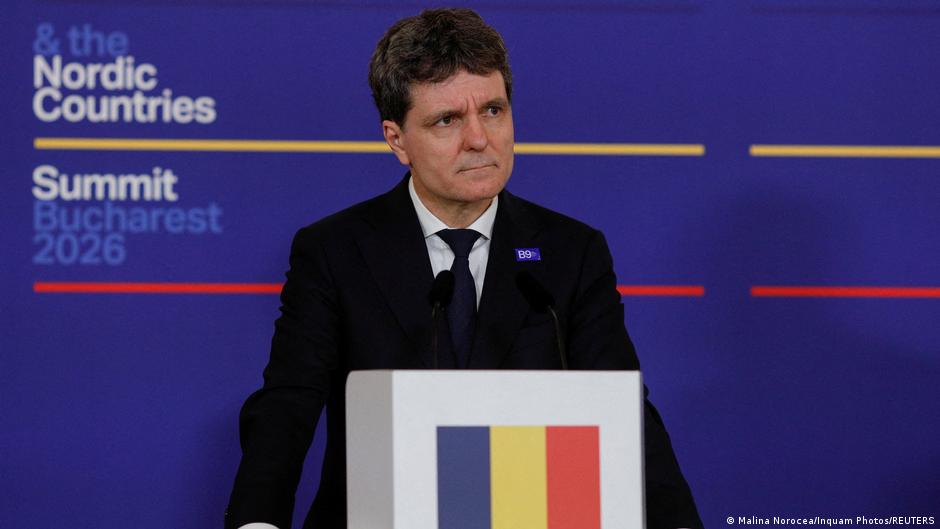
Romania is a member of both the European Union and NATO and shares more than 600 kilometers of land border with Ukraine. Romanian President Nicușor Dan has previously said the country is a target of hybrid warfare conducted by Russia to destabilize states supporting Ukraine’s defense against Russian military aggression.
Romanian Foreign Minister Dan Nicolaescu described the Brașov fire as “part of a broader sabotage campaign across Europe” directed against defense production, according to AFP.
Recruitment allegedly begins with minor assignments
SRI said people involved in such operations are commonly recruited through social media. Prospective recruits may initially be offered money for an apparently harmless assignment, including monitoring or photographing particular sites.
“Subsequently, the tasks become increasingly serious and may include acts of vandalism, arson or even murder,” the intelligence service said.
The Romanian case follows arrests made a year earlier by Poland and Romania. Eight people were then detained on suspicion of involvement in an alleged Russian plan to send parcels containing explosives to Ukraine.
The Wall Street Journal reported on October 20, citing three European officials familiar with U.S. intelligence findings, that Russian President Vladimir Putin had personally ordered an intensification of sabotage operations against NATO countries. According to the newspaper, an unsuccessful drone attack at Germany’s Leipzig airport on August 4 was among the first actions in that campaign.
Following the Leipzig incident, the Russian side allegedly warned the German government through an unofficial communications channel that Leipzig would not be the final target, according to people familiar with the exchange. The reported escalation in covert activity coincided with a lack of significant Russian military advances in Ukraine and more frequent Ukrainian strikes against sites deep inside Russian territory.
Further incidents followed across Europe. Drone-manufacturing businesses in Estonia and Poland were set on fire in August, while Slovak authorities reported preventing an arson attack against a similar production facility. Poland, Lithuania and Bulgaria also reported sabotage involving ground stations used by the Starlink satellite system.
Western officials believe the alleged campaign is organized by the Special Tasks Department of the Main Directorate of the Russian Armed Forces’ General Staff, a unit created after the start of Russia’s military invasion of Ukraine. The department is headed by Colonel General Andrei Averyanov. Western intelligence services also determined that Colonel Denis Smolyaninov, described as one of the unit’s senior officials, was involved in the Leipzig operation, according to the Journal.
For equity investors, the pattern may support closer scrutiny of defense companies’ geographic exposure, plant security and business-continuity provisions. Without disclosed production losses or market data, however, the Romanian announcement alone does not establish a basis for attributing moves in any specific stock or for concluding that investors have begun a measurable sector rotation.