Drone Threat Delayed Zelenskyy Flight, Keeping Defense Stocks in Focus
Norway’s prime minister said a drone threat in Moldovan airspace delayed the Ukrainian president’s flight to Oslo, underscoring persistent regional security risks.
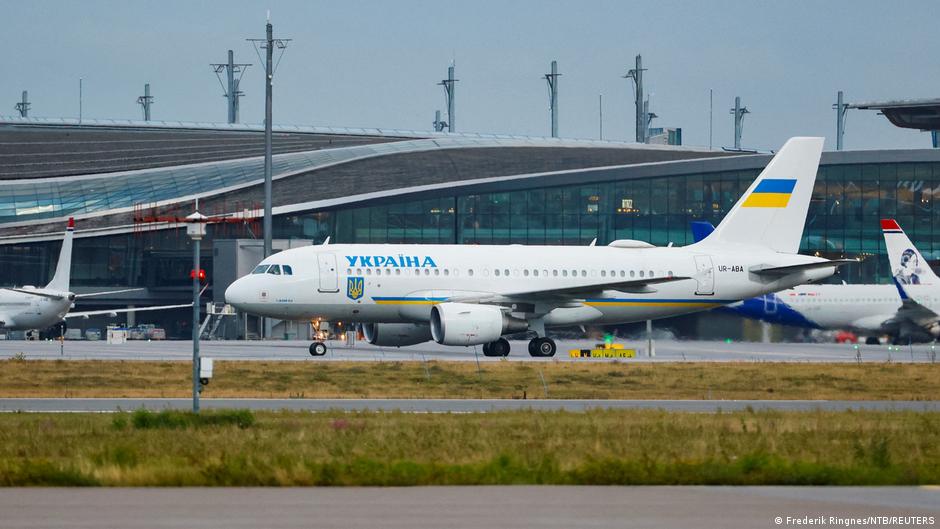
A reported drone threat near the travel route of Ukrainian President Volodymyr Zelenskyy added another geopolitical risk signal for markets already tracking the war’s spillover risks across Eastern Europe, defense procurement, airspace security and border infrastructure.
Norwegian Prime Minister Jonas Gahr Store said Wednesday, September 9, that Zelenskyy’s plane had narrowly avoided a drone-related threat when departing Moldova for Oslo. Zelenskyy’s office had not commented on the incident at the time of the report.
Speaking on Norwegian broadcaster NRK, Store said the Ukrainian president’s aircraft “almost collided with a drone” as it was due to take off from Moldova. He added that this was part of the reality in which Zelenskyy lives. Store did not specify where he received the information, and his remarks did not make clear whether the incident was accidental or represented a deliberate attempt to target Zelenskyy.
“This is the reality in which he finds himself,” Store said, according to the reported remarks.
The Norwegian prime minister’s office later clarified the statement, saying there had been a drone threat in airspace over Moldova the previous day, which delayed Zelenskyy’s plane on its way to Oslo. The office said it was not known how close the drones had been to his aircraft.
Defense and Airspace Security Remain Central Market Themes
For Wall Street, the incident reinforces a familiar trading framework: regional security shocks tend to keep investor attention on aerospace and defense contractors, drone-detection suppliers, radar systems, air defense platforms and companies tied to border surveillance. The source material did not report any direct market reaction, specific stock movement, trading volume change or equity analyst note tied to the incident.
Even without confirmed trading data from the report, the facts are relevant to investors because they point to continued demand drivers behind European defense spending. Airspace incursions, drone debris, border attacks and temporary flight suspensions all fit the security-risk profile that has supported interest in defense equities since Russia’s full-scale invasion of Ukraine.
The incident also highlights the dual-use nature of drone risk. Markets have increasingly treated unmanned systems as both a battlefield technology and a civil aviation risk. That creates a broader equity lens than traditional weapons platforms alone. Companies exposed to counter-drone systems, electronic warfare, airport security screening, command-and-control software and surveillance hardware may remain part of the same thematic basket watched by institutional investors.
A senior Ukrainian official told DW that while Zelenskyy’s aircraft was waiting to depart from Chisinau, a Russian jet-powered drone entered Moldovan airspace. The Ukrainian president’s departure was then postponed, and other flights were suspended. That sequence points to an operational disruption extending beyond one state aircraft, though the source did not quantify the number of delayed or suspended flights.
Zelenskyy arrived in Oslo from Moldova on the evening of September 8 to attend the funeral of King Harald V. After the ceremony, he met with Store. An official Norwegian government statement about their talks did not mention the drone incident.
Moldova Border Risk Adds to Regional Rotation Watch
Moldovan police said on September 9 that they had found a fallen drone equipped with a power unit. The impact with the ground caused an explosion and left a large crater. Police said the drone contained striking elements in the form of metal balls. No casualties were reported.
The same date matters for investors following regional infrastructure risk. According to the local regional military administration cited in the source, Russian drones attacked the Starokozache international road border crossing in Ukraine’s Odesa region, on the border with Moldova, during the night of September 9. NRK noted that the airport from which Zelenskyy flew to Oslo is about two hours by car from that border crossing.
That geographic linkage is important for market interpretation, even if it does not by itself establish a direct connection between the border attack and the flight delay. The facts show multiple drone-related developments around Moldova and the Ukraine-Moldova border within a narrow timeframe. For equity investors, such incidents can sharpen focus on Eastern European logistics, insurance risk, airlines with regional exposure and government procurement priorities.
Sector rotation tied to the war has often moved through several buckets: defense primes, European industrials, energy security plays, cybersecurity companies and selected aviation-security names. The source article does not identify listed companies or report broker commentary, so any stock-specific move would require separate market data. Still, the reported event fits the broader risk pattern that equity research desks monitor when assessing NATO-adjacent airspace threats and the durability of defense budget growth.
The lack of comment from Zelenskyy’s office also leaves key questions unanswered. Store’s initial remarks suggested a near collision, while the later clarification from his office framed the event as a drone threat that delayed the aircraft and said the proximity of drones to the plane was unknown. That distinction matters for markets because an attempted attack on a head of state would carry a different risk premium than an airspace incursion causing a precautionary delay.
For now, the verifiable market-relevant facts are narrower: a drone threat in Moldovan airspace delayed Zelenskyy’s flight to Oslo, a Ukrainian official said a Russian jet-powered drone entered Moldova’s airspace while the aircraft awaited departure, other flights were suspended, and Moldovan police separately reported finding an exploded drone with metal-ball striking elements. Those details are enough to keep regional security risk on investors’ screens, but not enough to support claims of a confirmed assassination attempt or a documented equity-market reaction.