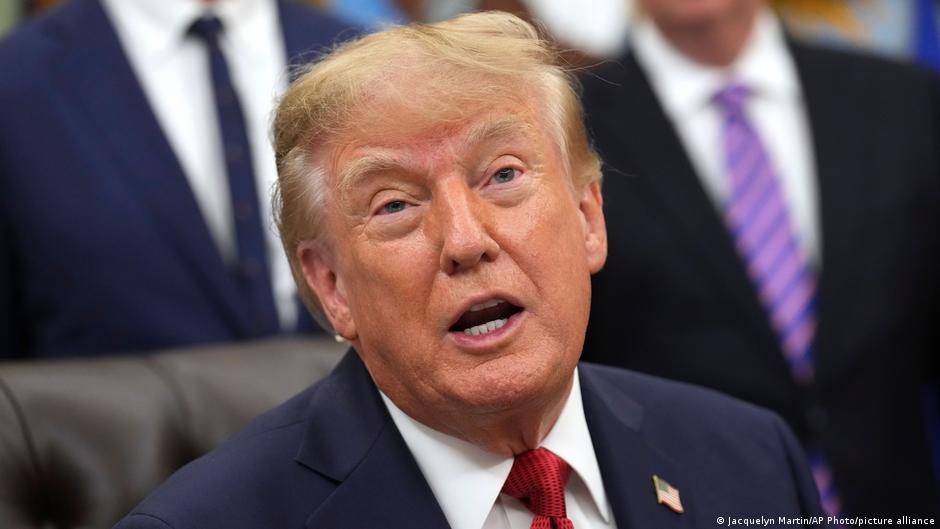
Bulgaria Election Heads to Runoff as Markets Weigh Ukraine Policy
Low turnout and divergent positions on Ukraine leave investors watching Bulgarian banks, energy, transport and defense-linked assets.
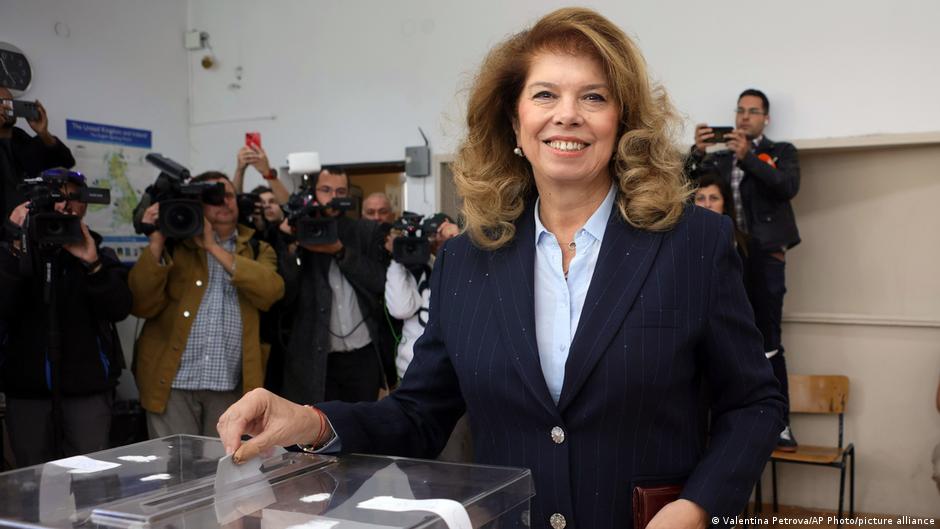
Bulgaria’s presidential election will proceed to a second round after no candidate secured the required absolute majority in the first ballot, extending political uncertainty for investors assessing the country’s exposure to the war in Ukraine and the wider Black Sea region.
With 95.3% of ballots processed, incumbent head of state Iliyana Yotova received 34.6% of the vote, according to Bulgaria’s Central Election Commission. Pro-Western former prime minister Andrey Gyurov placed second with 32%, leaving a narrow gap between the two leading candidates ahead of a runoff expected on November 1.
Turnout was only 22.2%, substantially below the required level of more than 50%. The weak participation adds another variable for equity investors because the second-round result may depend heavily on voter mobilization rather than a major shift in the candidates’ underlying support.
Market focus turns to Black Sea security risks
The source report provided no share-price moves, trading-volume figures or equity-research recommendations linked directly to the election. Even so, the contest has potential implications for Bulgarian and regional assets, particularly banks, energy companies, transport operators and businesses exposed to tourism or Black Sea trade.
The runoff carries added foreign-policy significance because of Bulgaria’s proximity to the theater of military operations in Ukraine. During October alone, four merchant vessels off Bulgaria’s Black Sea coast were reportedly struck by drones. A Starlink station outside Sofia was also damaged in an arson attack.
Yotova and Bulgaria’s government, headed by Rumen Radev, reacted cautiously to those incidents. They did not provide an unambiguous assessment or identify those responsible, an approach that also affected the election campaign.
For stock-market participants, further disruption to commercial shipping or communications infrastructure could raise perceived operational risks for transport, logistics, insurance and tourism-related companies. Conversely, a clearer security posture after the runoff could reduce some uncertainty, although the presidency’s formal powers are limited and the source offered no evidence of immediate changes to corporate earnings forecasts.
Ukraine policy separates the two candidates
The early phase of the presidential campaign featured few rallies, no televised debates and numerous personal attacks against the two main candidates. In the final weeks, however, their differences over support for Ukraine became the central issue.
Yotova favors a diplomatic conclusion to the war and sought to assure voters that Bulgarian troops would not be sent to Ukraine, even though such a deployment had not been the subject of broad public debate.
Gyurov has previously supported Ukraine and signed a security cooperation agreement with Kyiv while serving as prime minister.
That contrast gives investors a defined policy divide to monitor. A Gyurov victory could be read as reinforcing Bulgaria’s pro-Western orientation and security cooperation with Kyiv. A Yotova victory could signal a more restrained approach centered on diplomacy and caution over direct involvement. Neither outcome, on the information available, automatically implies a specific fiscal, regulatory or corporate-policy change.
From a sector-rotation perspective, heightened attention may fall on defense-linked suppliers and cybersecurity or communications businesses if the campaign intensifies concerns about drones, infrastructure damage and regional security. Banks and domestically focused companies may be more sensitive to the broader political environment, while transport and tourism shares could respond to changes in perceived Black Sea risk. These are areas to watch rather than reported market reactions.
Limited office still carries important powers
Although Bulgaria’s president has formally restricted authority, the office is not merely ceremonial. The president represents the country internationally, subject to certain exceptions, and serves as commander-in-chief. The officeholder also signs decrees appointing the prosecutor general and the heads of the highest courts.
The president can appoint an acting prime minister from a constitutionally defined closed list of eligible officials and has the power to veto legislation adopted by parliament. Those responsibilities mean the runoff can influence institutional appointments, foreign-policy signaling and the pace at which disputed legislation takes effect.
Equity analysts evaluating the result will therefore need to distinguish between presidential rhetoric and policies requiring action by the government or parliament. The closest near-term indicators will be second-round turnout, endorsements from eliminated candidates and any sharper commitments on Ukraine, Black Sea security or the response to the reported attacks.
Until the November 1 runoff, Bulgaria’s election is likely to remain a geopolitical risk event rather than a conventional earnings catalyst. With the leading candidates separated by 2.6 percentage points in the partial count and turnout exceptionally low, the final result remains open—and so does the market interpretation of Bulgaria’s future foreign-policy direction.