Brazil Election Dispute Puts Petrobras and Bank Shares in Focus
Lula da Silva’s narrow re-election and a challenge from Flavio Bolsonaro leave investors assessing policy and political risk.
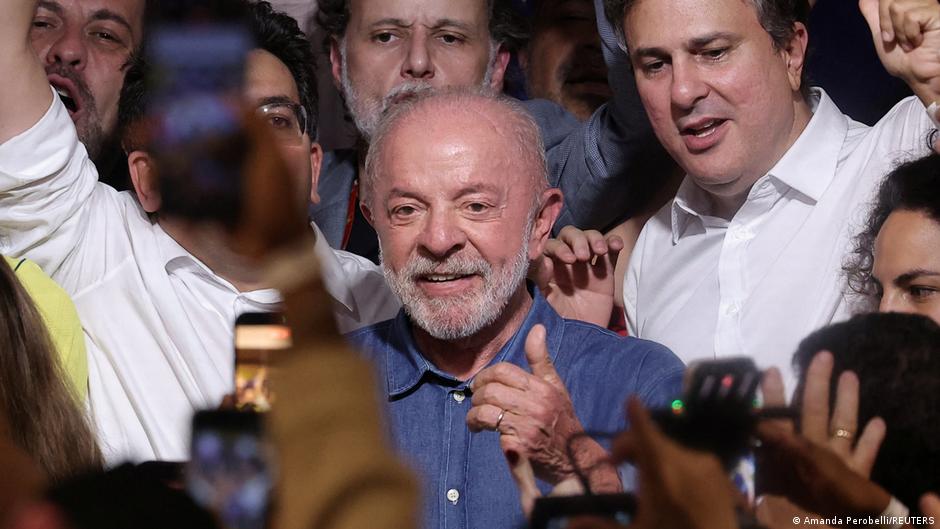
Brazilian President Luiz Inacio Lula da Silva won a second-round election held on Sunday, October 25, securing another term after a closely fought campaign dominated by concern over living costs, crime and economic instability.
Official results gave the 80-year-old center-left incumbent 51.8% of the vote. His opponent, right-wing populist Senator Flavio Bolsonaro, received 48.2%. Bolsonaro, the son of former far-right President Jair Bolsonaro, refused to concede and called for the result to be annulled.
The narrow margin and the immediate challenge introduce a new layer of political uncertainty for investors assessing Brazilian equities. The central market question is whether the dispute will be resolved quickly through established institutions or develop into a prolonged confrontation that raises the risk premium attached to Brazilian assets.
Petrobras, banks and domestic stocks enter the spotlight
On Wall Street, attention is likely to center on U.S.-listed Brazilian companies and exchange-traded funds offering broad exposure to the country. Petroleo Brasileiro, commonly known as Petrobras, will be a particular focus because investors often examine the state-controlled oil producer through the lens of government policy. Vale, the major Brazilian mining company, also provides a heavily traded route for global investors seeking exposure to the country.
Financial shares including Itau Unibanco, Banco Bradesco and Banco Santander Brasil could serve as gauges of domestic confidence. Investors will be watching whether political uncertainty changes expectations for credit conditions, consumer activity or economic policy. Utilities and other companies tied closely to Brazil’s internal economy may also attract attention as traders reassess the outlook following the vote.
No stock-price moves, trading-volume figures or brokerage rating changes were provided in the election account. That makes the immediate equity research view less about revising company earnings forecasts and more about monitoring political risk, policy continuity and the institutional handling of Bolsonaro’s challenge. Any unusual increase in American depositary receipt or Brazil-focused ETF volumes would offer a clearer indication of how strongly international investors are repositioning.
For equity investors, the key near-term issue is not only who won the vote, but whether the challenge produces a sustained period of uncertainty.
Sector rotation could depend on how markets interpret Lula’s fourth, nonconsecutive presidential term. A view that his victory reinforces existing policy direction may support companies perceived as benefiting from continuity. Conversely, concern about government intervention, fiscal pressures or political disruption could encourage investors to favor exporters and businesses with substantial foreign-currency revenue over domestically focused shares.
Late extension becomes focus of election challenge
Flavio Bolsonaro cited an extension of voting hours in demanding that the election results be cancelled, according to the account. Earlier, both Lula and Bolsonaro had requested longer opening hours for polling stations because of public transportation problems and adverse weather conditions in some parts of Brazil.
Supreme Court Justice Cristiano Zanin ultimately ordered voting to remain open for two additional hours. The decision was issued only three minutes before polling stations had been scheduled to close. The circumstances surrounding that extension now form the basis of Bolsonaro’s refusal to accept defeat.
The dispute follows an election that produced a first in Brazilian history: Lula became the first candidate to win the presidency after finishing second in the first round. The campaign unfolded amid corruption scandals, economic instability and allegations of interference by the United States.
Public celebrations began after the result was reported. Fireworks and vuvuzelas were heard in Rio de Janeiro, while thousands of people wearing red, the color of Lula’s Workers’ Party, took to the streets of Sao Paulo to celebrate his victory.
Investors await institutional response
The market impact will now depend on the durability of the challenge and the response from Brazil’s courts and other institutions. A rapid confirmation of the official outcome could allow investors to shift their attention toward Lula’s policy agenda and the composition of his administration. A prolonged dispute, by contrast, could keep political-risk considerations prominent in valuations.
Lula will assume the presidency for a fourth time, with the terms having been served nonconsecutively. His re-election effort was difficult as voters grappled with the cost of living and rising crime. Those same pressures will remain relevant to companies exposed to household spending, borrowing and investment inside Brazil.
For Wall Street desks, the most informative signals will be movements and trading activity in Petrobras, Vale, the large Brazilian banks and broad Brazil ETFs. Equity analysts will also be looking for evidence about fiscal priorities, state-company governance and the incoming administration’s response to the economic concerns that shaped the campaign. Until the election challenge is resolved, political developments may remain the primary catalyst for Brazilian stocks.